
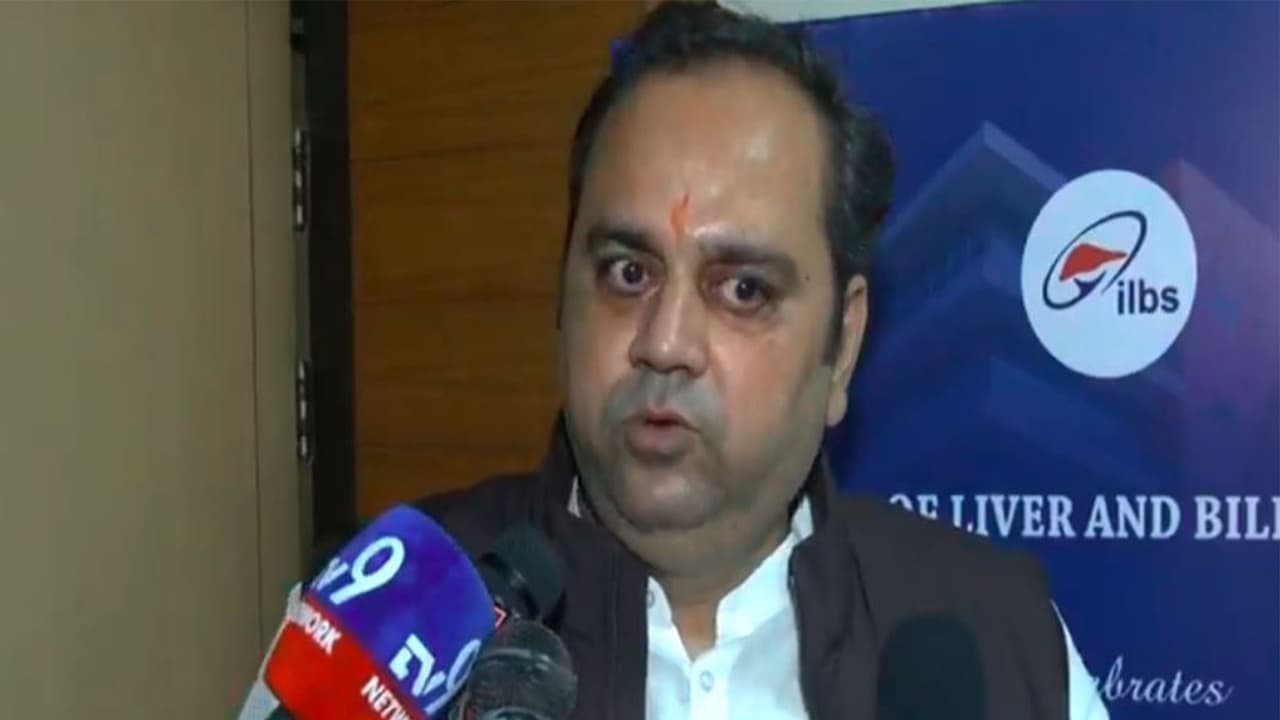
Delhi Health Minister Pankaj Kumar Singh praised the ILBS for treating 44% more EWS patients under the current government. He also highlighted the introduction of new medical tech. Meanwhile, the Delhi govt is revamping the city's drainage system.
ILBS Sees Marked Improvement
Delhi Health Minister Pankaj Kumar Singh on Wednesday said the Institute of Liver and Biliary Sciences (ILBS) has seen marked improvement under the current government, with a sharp increase in patients from economically weaker sections receiving treatment and the introduction of latest medical technologies, addressing gaps he said were neglected by previous administrations. Speaking to the media on the 16th Foundation Day celebrations of ILBS, the Health Minister said that earlier governments had ignored the institution, but the current government, led by Chief Minister Rekha Gupta, has ensured focused development and expansion of healthcare services.
"Things were ignored by the previous governments. Since our government came to power, I think ILBS has been progressing. They are treating 44% more patients from economically weaker sections. They are also bringing in the latest technology. We will be proud of the fact that ILBS is a part of the Delhi Govt," Pankaj Singh said. The event was attended by senior doctors, health officials, and institute staff, who reflected on ILBS's journey and achievements over the past 16 years.
Delhi Govt Strengthens Drainage System
Meanwhile, the Delhi Government, under the leadership of Chief Minister Rekha Gupta, has taken a major and far-reaching step to strengthen the city's drainage system as part of its resolve to develop Delhi into a modern, global and developed capital. Four major drains, Mundka Halt-Supplementary Drain, MB Road Storm Water Drain, Kirari-Rithala Trunk Drain, and the Storm Water Drain along Rohtak Road (NH-10) are being developed as key components of the 'Drainage Master Plan'.
The Delhi government has accelerated the construction and expansion work of these major trunk drains. The Chief Minister informed that the 'Drainage Master Plan' for Delhi's sewerage and drainage system was originally prepared in the 1970s. Despite rapid population growth and large-scale construction activity, the plan did not undergo the required revisions, resulting in an increasingly severe drainage situation over the years. She said that the present government has introduced effective changes keeping in view Delhi's geographical conditions, recurring waterlogging and population pressure, and drainage infrastructure is now being constructed accordingly, so that the national capital does not face waterlogging and related problems in the future.
(Except for the headline, this story has not been edited by Asianet Newsable English staff and is published from a syndicated feed.)