
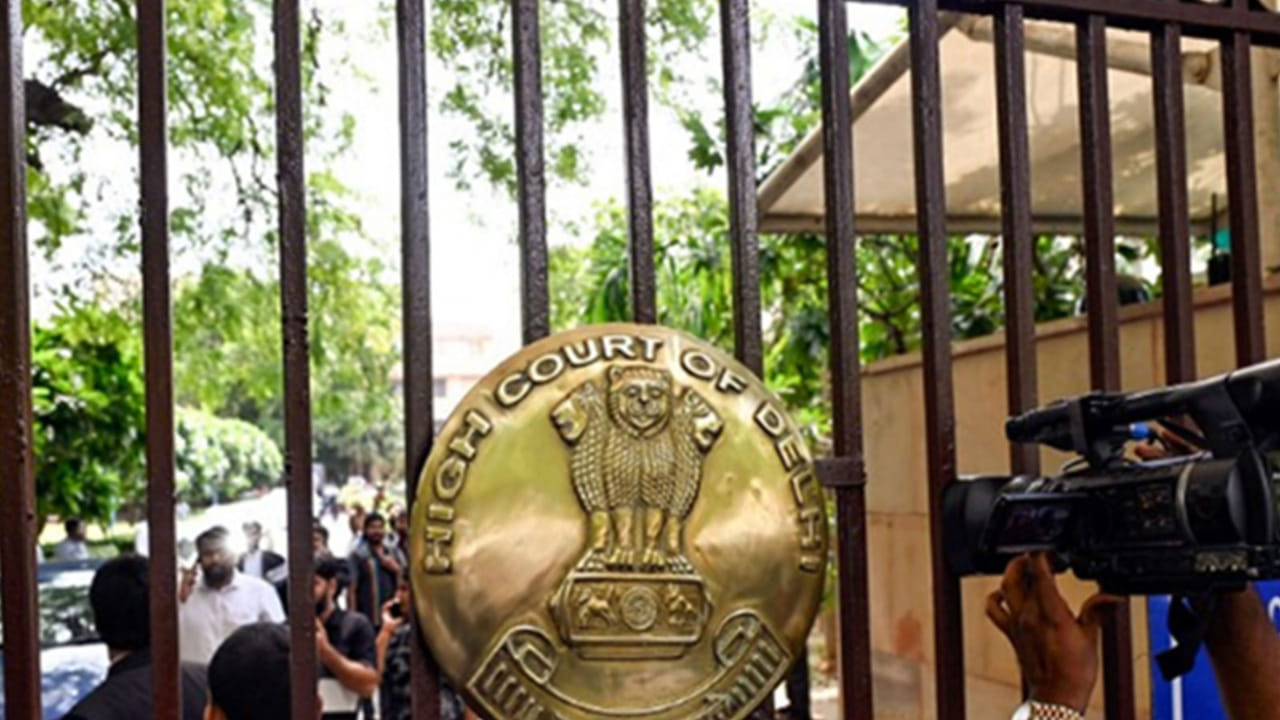
The Delhi High Court upheld a Presidential order commuting a death sentence to life imprisonment without remission, ruling that the President acted within constitutional authority after considering all relevant materials regarding the convict's plea.
Delhi High Court Dismisses Death Row Convict Plea Against Commutation
The Delhi High Court has dismissed a plea filed by a death-row convict challenging the President of India’s decision to commute his death sentence to life imprisonment without any possibility of further remission, holding that the constitutional authority has the power to direct imprisonment for the remainder of a convict’s natural life. A division bench of Justices Navin Chawla and Ravinder Dudeja held that the President had considered all relevant materials before taking the decision and that the court could not substitute its own opinion for that of the constitutional authority while exercising the limited power of judicial review.
The court was hearing a petition filed by Jitendra alias Jitu Nainsingh Gehlot, who had challenged the condition attached to the President’s September 18, 2016 order commuting his death sentence to life imprisonment, directing that he remain in prison for the rest of his natural life without any further remission by any authority. Gehlot was convicted for his involvement in the brutal murders of seven members and associates of a Pune-based family, including five women, one of whom was pregnant, and two children, during a robbery at their residence in August 1994. The murders included those of two young children. The Supreme Court had earlier upheld his death sentence, observing that the case fell within the category of the rarest of rare cases.
In his petition before the Delhi High Court, Gehlot argued that the condition barring further remission was unconstitutional and that his sentence should be commuted to ordinary life imprisonment, subject to the remission powers available to the appropriate government under the law. He also relied on the delay of more than 15 years in the disposal of his mercy petition and contended that he had undergone prolonged solitary confinement during his incarceration. The High Court acknowledged that there had been an inordinate delay in deciding his mercy petition, which was submitted in June 2001 but decided by the President only on September 18, 2016. The bench noted that the prolonged delay had kept the convict under the shadow of the death penalty for more than 15 years and observed that this circumstance could have been sufficient ground for commuting the death sentence to life imprisonment.
However, the court pointed out that the President was fully aware of the delay and had specifically sought the opinion of the then Attorney General of India on the applicability of the Supreme Court’s judgment in Shatrughan Chauhan v. Union of India. The Attorney General had recommended commuting the death sentence to life imprisonment, while the Ministry of Home Affairs had recommended rejection of the mercy petition. “The Hon’ble President proceeded to consider both these views and finally passed the Impugned Order whereby, while the death sentence of the petitioner has been commuted, a sentence for the remainder of the natural life with no remission has been directed against the petitioner,” the bench observed.
The court further held that the power to impose imprisonment for the remainder of a convict’s natural life without remission was recognised by the Supreme Court’s Constitution Bench judgment in Union of India v. V. Sriharan. It observed that in exceptional cases, considering the gravity of the crime and the nature of the offence, a sentence for the remainder of natural life without remission could be imposed and such a condition could not be held unconstitutional. The bench also reiterated that judicial review of decisions taken by the President or Governor under Articles 72 and 161 of the Constitution is limited. Such decisions can be examined on grounds including non-application of mind, mala fide exercise of power, consideration of irrelevant factors, exclusion of relevant material or arbitrariness.
“Once we find that the Hon’ble President of India had all the relevant inputs and took into consideration all the relevant factors before passing the Impugned Order, this Court cannot substitute the opinion of the Hon’ble President of India only on the ground that it itself may have decided the Mercy Petition in a different manner,” the bench said. Clarifying the distinction between judicial review and an appellate examination, the court said its power was not that of an appeal against the President’s decision.








