
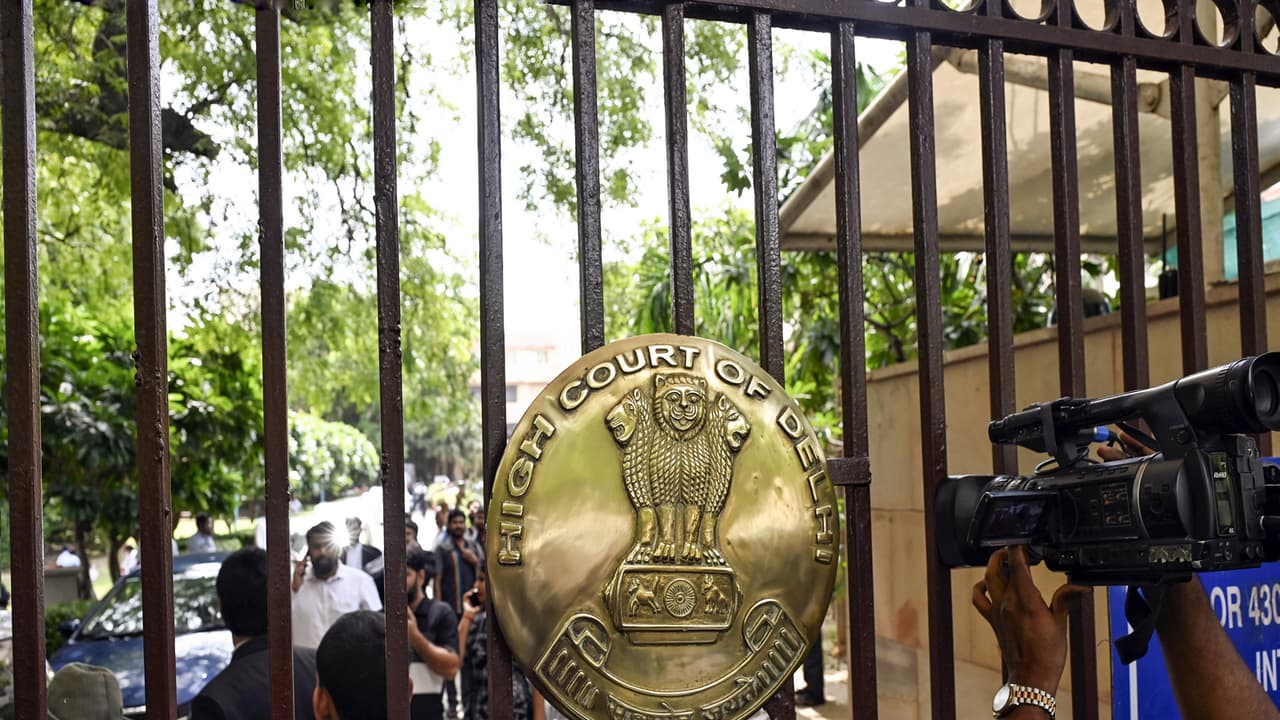
The Delhi High Court has dismissed an appeal by Japan's Hirotsu Bio Science, affirming the rejection of its patent for a nematode-based cancer detection method. The court deemed it a non-patentable diagnostic process under Section 3(i) of the Patents Act.
The Delhi High Court has dismissed an appeal filed by Japan-based Hirotsu Bio Science Inc., upholding the rejection of its patent application for a nematode-based cancer detection method on the ground that it constitutes a non-patentable diagnostic process under Section 3(i) of the Patents Act, 1970.
In a judgment delivered on January 17, 2026, Justice Tejas Karia affirmed the order passed by the Assistant Controller of Patents and Designs, which had refused the grant of a patent for the invention titled "Cancer Detection Method Using Sense of Smell of Nematode".
Court's Examination and Rationale
The Court examined the complete specification and claims of the application and noted that the invention proposes detecting cancer by analysing the chemotactic response of nematodes to biological samples such as urine, cells, or tissues. The specification claimed exceptionally high accuracy, including detection of early-stage cancers, and described the invention as a "cancer diagnosis system."
In Vitro vs. In Vivo Distinction Held Irrelevant
Rejecting the appellant's argument that the invention merely involved in vitro detection rather than diagnosis, the Court held that Section 3(i) does not distinguish between in vivo and in vitro diagnostic methods. It observed that any process capable of identifying the presence or absence of a disease, even if further confirmation may follow, would fall within the statutory exclusion.
Appellant's Arguments Countered
Hirotsu Bio Science Inc. contended that its method only indicated cancer risk and did not involve medical judgment or clinical decision-making. However, the Court found that the method involved all essential steps of a diagnostic process, including data collection, comparison with standard values, and drawing conclusions indicative of disease presence.
The Court further held that labelling the process as "screening" or "supporting documentation" could not override the substance of the invention, especially when the specification itself described the method as highly accurate and suitable for clinical cancer diagnosis. The judgment emphasised that while claims define the scope of protection, they cannot be interpreted contrary to the complete specification. The Court relied on earlier precedents to hold that embodiments disclosed in the specification must be examined to determine whether the invention is per se diagnostic in nature.
It also rejected the argument that diagnostic exclusion should apply only to methods performed by medical practitioners, observing that the purpose of Section 3(i) is to prevent monopolisation of diagnostic processes irrespective of who performs them.
Controller's Decision Upheld
Upholding the Controller's decision dated August 29, 2023, the Court dismissed the appeal, concluding that the claimed invention clearly falls within the ambit of non-patentable diagnostic methods under Indian law. (ANI)
(Except for the headline, this story has not been edited by Asianet Newsable English staff and is published from a syndicated feed.)