
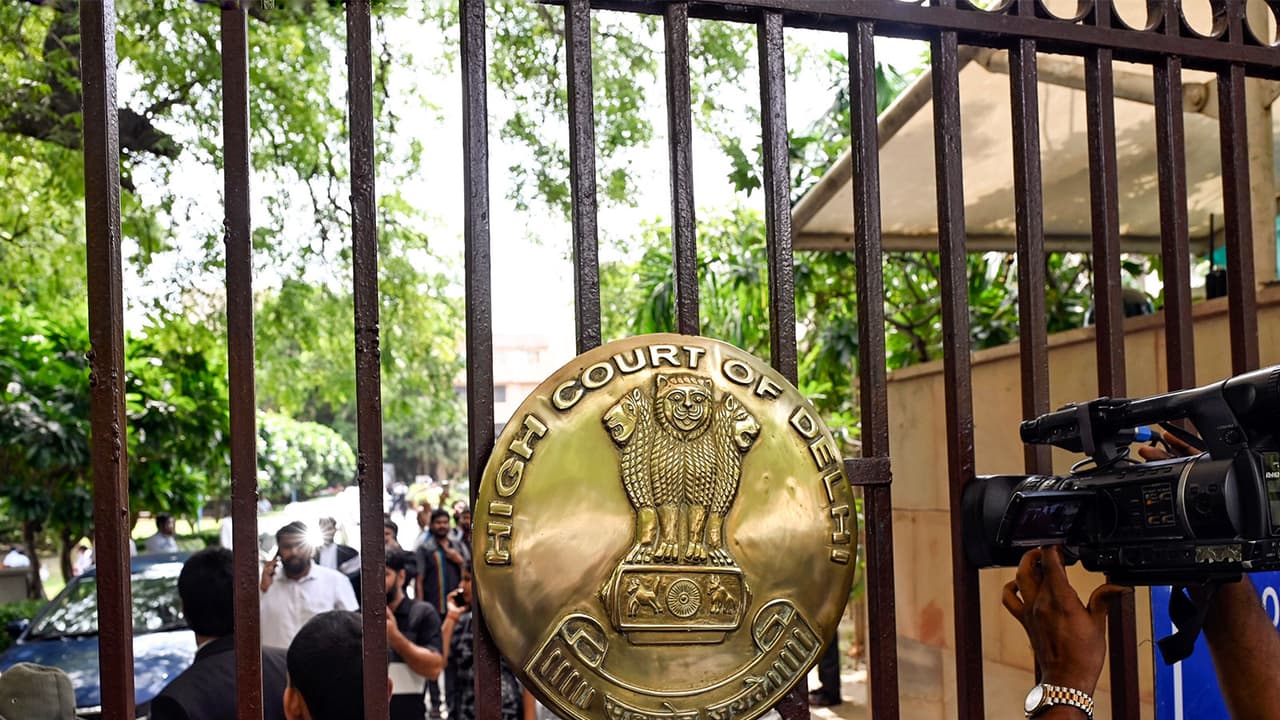
The Delhi High Court ordered framing of an additional charge under the SC/ST Act against an accused in a 2016 minor gang rape case. The court found prima facie evidence that the accused was aware of the victim's caste identity.
The Delhi High Court has directed the framing of an additional charge under the Scheduled Castes and Scheduled Tribes (Prevention of Atrocities) Act against one of the accused in a 2016 case involving the alleged gang rape of a school-going minor, holding that prima facie material showed he was aware of the girl’s caste identity.
Justice Saurabh Banerjee, in a judgment pronounced on September 17, modified the 2017 trial court order to the limited extent of directing that an additional charge under Section 3(1)(w) of the SC/ST Act be framed against the accused. The remaining part of the trial court order was left undisturbed.
Case Background
The court was dealing with a revision petition filed by the victim challenging an earlier order passed by the Special Court under the POCSO Act at Karkardooma Courts. She had sought the addition of charges under Section 328 of the IPC, Section 14(3) of the POCSO Act, and Sections 3(1)(e), (r) and (w) of the SC/ST Act.
According to the case, the minor had gone to her school on March 31, 2016, to collect her Class 10 result, when she was allegedly taken away from outside the school by accused Tarun, who took her to the 5th Pushta area in Usmanpur. Another accused, Sumit Dedha alias Shannu, allegedly arrived in a car, after which the girl was taken to Noida, where she was allegedly raped and threatened against disclosing the incident.
The High Court noted that the girl had reiterated her allegations in her statement recorded under Section 164 of the CrPC, in which she also alleged that the second accused had raped her and that a third accused had recorded a video of the incident and attempted to rape her. The trial court had earlier framed charges relating to kidnapping, criminal intimidation and offences under the POCSO Act, but had not framed charges under Sections 328 and 366A of the IPC, Section 14(3) of the POCSO Act, or the relevant provisions of the SC/ST Act.
High Court's Rationale on SC/ST Act
Justice Banerjee observed that the SC/ST Act was enacted to protect members of Scheduled Castes and Scheduled Tribes from caste-based indignity, discrimination and atrocities, describing it as a legislative manifestation of Articles 14, 15, 17 and 21 of the Constitution.
The court rejected the argument that the absence of a caste-related allegation in the victim's initial complaint, coupled with a delay of about six months in raising it, was by itself sufficient to rule out the application of the SC/ST Act. It observed that the victim, being a school-going minor allegedly subjected to gang rape, would have been under immense shock, trauma and humiliation, which could affect her ability to recollect and articulate every aspect of the incident immediately.
Prima Facie Awareness of Caste Identity
The High Court distinguished between the different provisions of the SC/ST Act, holding that their ingredients were not identical. Concerning Section 3(1)(w), which concerns sexual conduct involving a woman from an SC/ST community where the accused is aware of her caste identity, the court said it was not necessary at the charge stage to establish that the act was committed solely because of her caste, and that mere knowledge of her identity could be sufficient to attract the provision.
In the case of the accused against whom the charge was added, the court found prima facie material indicating such awareness. It noted that he and the victim were acquainted and lived in the same locality, and that his own statement had described the victim as his girlfriend, which the court held was relevant for drawing the statutory presumption of knowledge of her caste identity. The court also referred to the victim's interrogation report, in which she alleged that he had taunted her with a caste-related remark, holding that this material was sufficient to frame the additional charge.
The court, however, declined to extend the charge to the co-accused, noting that the victim had stated she did not know him before the incident and had met him for the first time that day, with no material showing he was aware of her caste identity.
Decision on Other Requested Charges
The High Court also refused to revive charges under Sections 3(1)(e) and 3(1)(r) of the SC/ST Act, finding no prima facie material that the alleged acts were committed with the intent to publicly humiliate, insult or intimidate the victim specifically because of her caste.
On the allegation that the victim had been forced to consume beer mixed with a stupefying substance, the court found no material to support a charge under Section 328 of the IPC, noting that neither an empty bottle nor any such substance was recovered, and the medical examination did not indicate administration of any intoxicating substance.
The court similarly declined to interfere with the discharge under Section 14(3) of the POCSO Act, observing that apart from the victim's allegation regarding the recording of a video, there was no supporting material, mobile phone recovery, or other electronic evidence establishing that such a recording existed. (ANI)
(Except for the headline, this story has not been edited by Asianet Newsable English staff and is published from a syndicated feed.)