
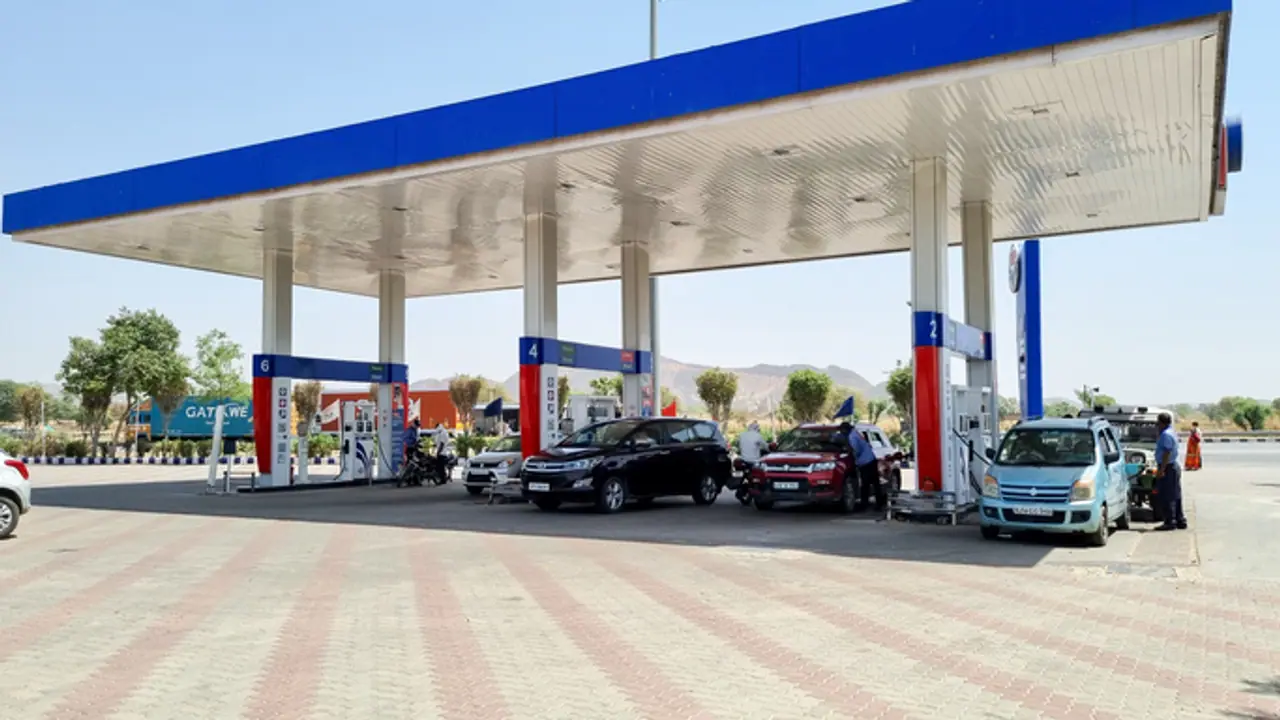
The Delhi government has asked pollution control authorities to pause the fuel ban for End-of-Life vehicles, citing problems with camera systems. Petrol dealers and BJP leaders have also raised legal and practical objections to the move.
The Delhi government has requested the Commission for Air Quality Management (CAQM) to pause the new fuel ban on End-of-Life (EOL) vehicles, started from July 1.
Environment Minister Manjinder Singh Sirsa wrote a letter to the CAQM asking them to hold off on Direction No. 89, the order that stops petrol pumps from supplying fuel to older vehicles. Sirsa said the rule should not be enforced until Automatic Number Plate Recognition (ANPR) systems are working smoothly across the entire National Capital Region (NCR).
“We are confident that the ongoing multi-pronged efforts of the Delhi Government will achieve substantial improvements in air quality,” the letter said.
BJP MP raises concerns over camera issues
BJP MP Parvesh Verma also raised serious questions about the implementation of the ANPR camera system, which is key to identifying old vehicles. Verma said the technology is not yet reliable and called the rule unfair if only applied in Delhi.
“Vehicles should be banned based on their pollution levels, not just their age,” Verma said. He added that areas like Gurugram and Noida are not enforcing this rule. “When it is applied across the NCR, we will also consider it,” he added.
Key concerns raised by Delhi government on fuel ban for old vehicles
The Delhi government, in its letter to the Commission for Air Quality Management (CAQM), listed several challenges in implementing the fuel ban for End-of-Life (EOL) vehicles. Key points include:
Issues with ANPR camera system
- Technological glitches: Problems with camera placement, malfunctioning sensors, and non-functional speakers at fuel stations.
- Lack of system integration: ANPR is not fully integrated with databases of neighbouring NCR states.
- Identification failure: ANPR system struggles to detect EOL vehicles with faulty or missing High-Security Registration Plates (HSRP).
- Incomplete coverage: Many fuel stations still lack reliable ANPR installations.
Need for region-wide implementation
- Cross-border fuel leak: If only Delhi enforces the ban, vehicle owners may start refuelling in nearby cities like Gurugram, Faridabad, or Ghaziabad, creating illegal fuel markets.
- No implementation in NCR states: Neighbouring districts haven’t started installing ANPR systems, making standalone enforcement in Delhi ineffective.
Ongoing pollution control measures
Mass plantation drive: Plan to plant 70 lakh trees/shrubs across the city in 2025.
- PUC tightening: Stronger enforcement of Pollution Under Control certification, especially for out-of-state vehicles.
- Anti-smog tech: Mandatory anti-smog towers in high-rise commercial buildings; use of road cleaning and sprinkling systems.
- Real-time alerts: Preventive SMS alerts on EOL status sent to Delhi-registered vehicles and those from other states to avoid NCR entry.
High Court hears petrol dealers' plea
On Wednesday, the Delhi High Court issued notices to the Delhi government and CAQM after the Delhi Petrol Dealers Association filed a plea challenging the rule.
According to the directive, from July 1, fuel stations across Delhi must not supply petrol or diesel to End-of-Life vehicles. The Delhi Transport Department, along with traffic police, is responsible for enforcement.
But the petrol dealers say the responsibility is being wrongly pushed onto them. Their lawyers argued that dealers have no legal power to stop vehicle owners and are now being penalised for non-compliance that may happen by mistake.
“In essence, petrol pump dealers are being required to enforce directions for which they do not have any authority in law,” said lawyers Anand Varma, Adyasha Nanda, and Apoorva Pandey in court.
The issue has also sparked a debate on whether bans should be age-based or pollution-based and how technology like ANPR cameras must be reliable before enforcing such rules.
