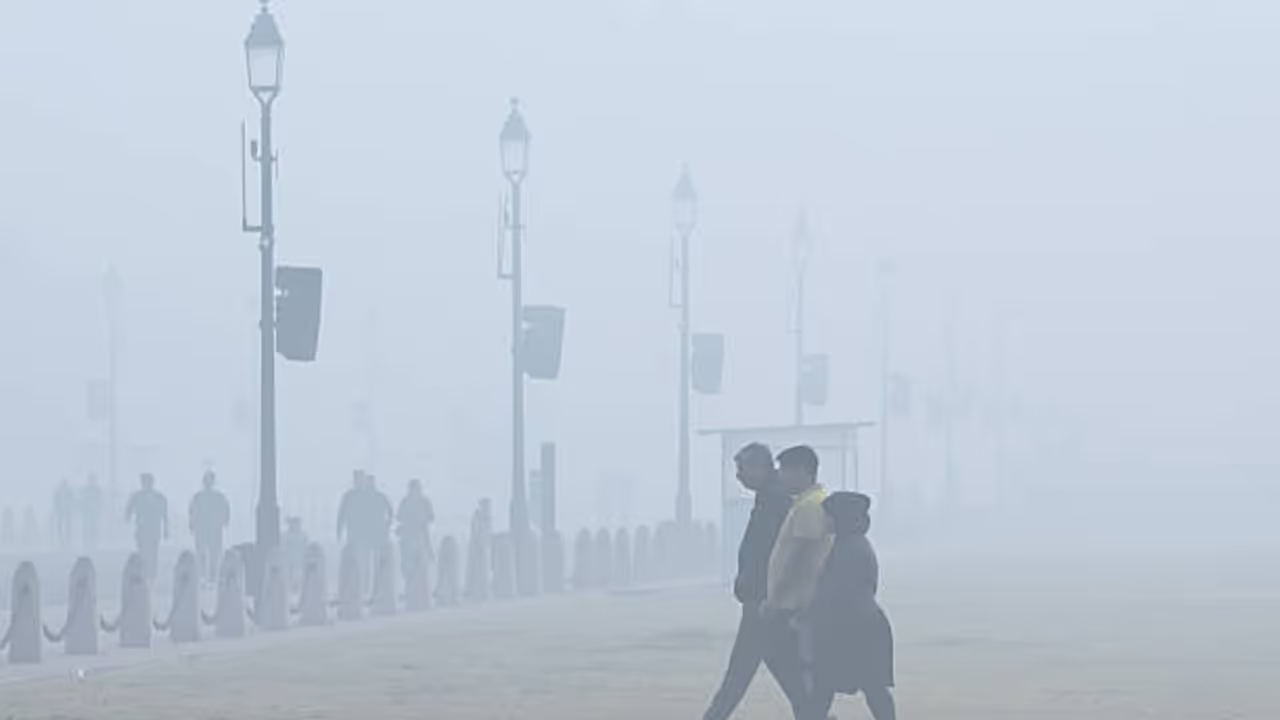
Delhi AQI Today: Delhi recorded its most polluted Diwali in five years, with the average AQI reaching 376. A day after the celebrations, toxic air, dense fog and poor visibility continued to affect several parts of the national capital
Delhi witnessed its most polluted Diwali in five years on November 8, with the city's average Air Quality Index (AQI) touching 376, according to Central Pollution Control Board (CPCB) data.
The situation remained concerning the following morning. At 10 am on November 9, Delhi's overall AQI stood at 371, marking the highest post-Diwali reading recorded since 2021.
Of the 51 monitoring stations that reported data, 14 registered air quality in the severe category, while four recorded poor levels. The remaining 33 stations fell under the very poor category. Delhi Technological University (DTU) emerged as the most polluted monitoring location, recording an AQI of 439.
Related Articles

For comparison, Delhi's average AQI on Diwali stood at 345 in 2025, 328 in 2024, 218 in 2023 and 312 in 2022. The corresponding reading in 2021 was 382.
Dense Fog and Smog Reduce Visibility Across Delhi
The pollution crisis was accompanied by a thick blanket of smog and fog on Monday morning, significantly reducing visibility across the capital.
According to India Meteorological Department (IMD) data, visibility at Safdarjung dropped to just 50 metres at 6.30 am, compared with 700 metres recorded a day earlier. At Palam, visibility fell to 400 metres from Sunday's 800 metres.
Conditions gradually improved as the morning progressed. By 9 am, visibility had increased to 500 metres at Safdarjung and 900 metres at Palam.
Weather officials described the conditions as a combination of smog and fog. Calm winds and dry weather were among the factors responsible for preventing pollutants from dispersing, leaving the city covered in a persistent haze.
Firecracker Violations and Weather Conditions Add to Pollution Concerns
Despite restrictions on firecracker use, several neighbourhoods in Delhi reported fireworks during Diwali celebrations. Areas including Pitampura, Burari, Mayur Vihar and parts of Lutyens' Delhi witnessed firecracker activity.
Authorities had permitted only certified green firecrackers during designated time slots on November 7 and 8. The permitted windows were 6 am to 7 am and 8 pm to 10 pm. However, reports of fireworks outside these hours raised concerns about compliance with the restrictions.
The pollution situation could also be aggravated by factors beyond local celebrations. Vehicular emissions, construction-related dust, stubble burning in neighbouring states and unfavourable meteorological conditions are contributing to Delhi's deteriorating air quality.