
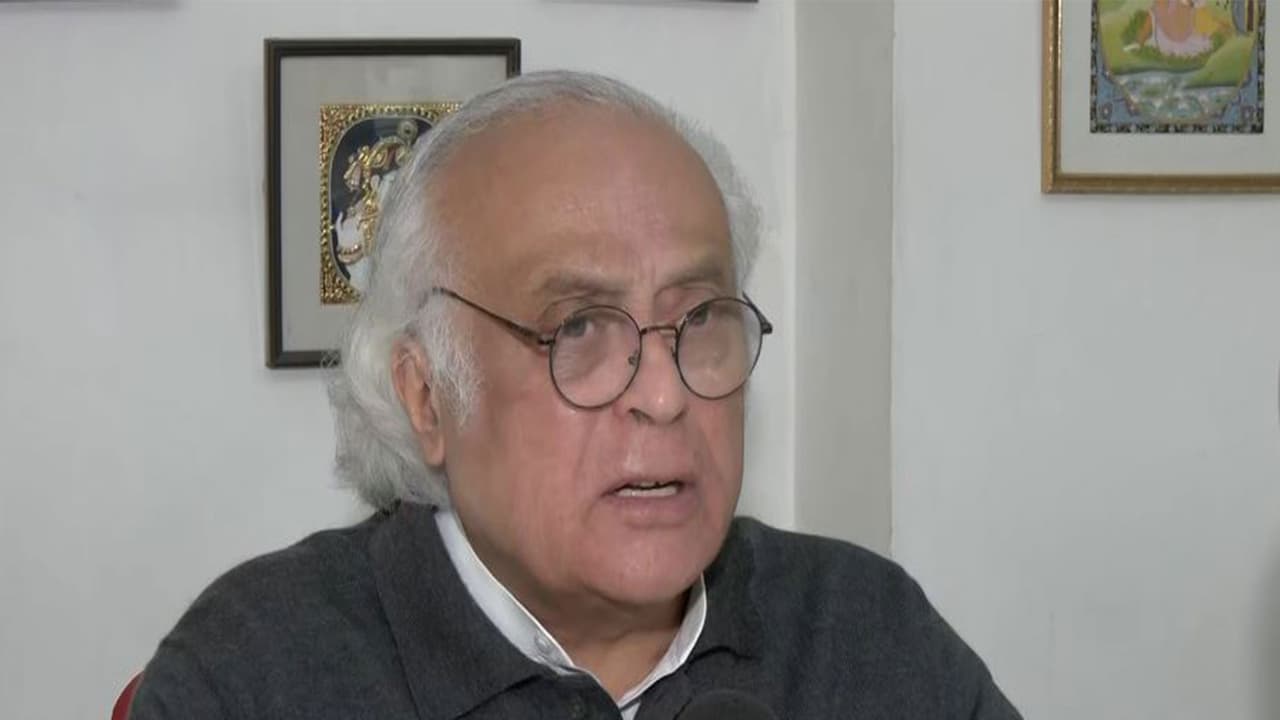
Congress leader Jairam Ramesh accused PM Modi of silence on Israel's actions. He claimed the West Asia conflict provides cover for Israel to pursue 'Greater Israel', citing brutalities in Gaza and land registration changes in the West Bank.
Congress general secretary in charge of communications, Jairam Ramesh, on Saturday accused Prime Minister Narendra Modi of remaining silent on Israel's actions in the region.
In a post on X, Ramesh said the current West Asia conflict is providing cover for Israel to pursue its vision of "Greater Israel" and eliminate hopes for a Palestinian state The Congress leader claimed that Israel has continued its brutalities on Gaza, began operations to create a large buffer zone in southern Lebanon, while also taking steps to convert its annexation of the West Bank to firm occupation.
Ramesh: West Asia War a Cover for 'Greater Israel'
"Today is the 28th day of the US-Israel aerial bombings of Iran and Iran's counter-offensive. In the past four weeks, while the world's gaze has been on the Strait of Hormuz and energy infrastructure in the Gulf countries, Israel has (i) continued its brutalities on the people of Gaza; (ii) begun operations to create a large buffer zone for itself in southern Lebanon; and (iii) taken decisive steps to convert its annexation of the West Bank to firm occupation. The current West Asia war is providing cover for Israel to move ahead on its vision of Greater Israel and also finishing off any hope for a Palestinian state," he wrote on X.
Criticism of PM Modi's Silence
He criticised PM Modi for not speaking out against these actions, especially since the Israeli cabinet had approved land registration in the occupied West Bank just before PM Modi's visit to Israel. "The US-Israel bombardment of Iran began just two days after Modi left Israel. What is not realised is that just a few days before he arrived there, the Israeli cabinet had approved land registration in roughly half of the occupied West Bank for the first time since 1967. This would lead to the dispossession of lakhs of Palestinians. But Modi does not have the courage to raise his voice and speak truth to his good friend Benjamin Netanyahu," he added.
Details of Israel's West Bank Policy Change
In February, Israeli Defence Minister Israel Katz and Finance Minister Bezalel Smotrich announced a series of security cabinet decisions to "dramatically" change land registration and property acquisition procedures in the West Bank, as reported by the Times of Israel.
As per the Oslo II Accords, signed in 1995 by Israel and the Palestinian Authority, the West Bank is divided into three areas- A, B and C, wherein Area C is under full Israeli control, Area B is under Palestinian civilian control and Israeli security control, and Area A is under full Palestinian control, Times of Israel mentioned.
According to the Times of Israel report, the two ministers in a joint statement said that the decisions "are intended to remove decades-old barriers, repeal discriminatory Jordanian legislation, and enable accelerated development of settlement on the ground".
Times of Israel further reported that the approved plan ordered the publication of land registries in the West Bank, which means that property lists will be open to the public, and potential buyers will be able to identify landowners and approach them for purchasing. Till now, land registration in the West Bank had been classified. It further mentioned that the cabinet action also repealed a legal provision that prevented non-Muslims from buying real estate in the area. According to Al Jazeera, human rights groups and analysts have criticised the move as a "de facto annexation" and a continuation of long-standing settlement policies, warning it may lead to increased settler violence, loss of Palestinian land rights, and heightened tensions with Jordan. The initiative covers roughly 58% of unregistered land in Area C, and while Palestinians can theoretically file claims, practical and legal barriers make success unlikely.
Conflict Context
The conflict in West Asia began with Israel-US strikes on Iran on February 28, killing Supreme Leader Ayatollah Ali Khamenei. As Iran retaliated, it widened the ambit of the conflict, affecting its neighbours in the region. (ANI)
(Except for the headline, this story has not been edited by Asianet Newsable English staff and is published from a syndicated feed.)