
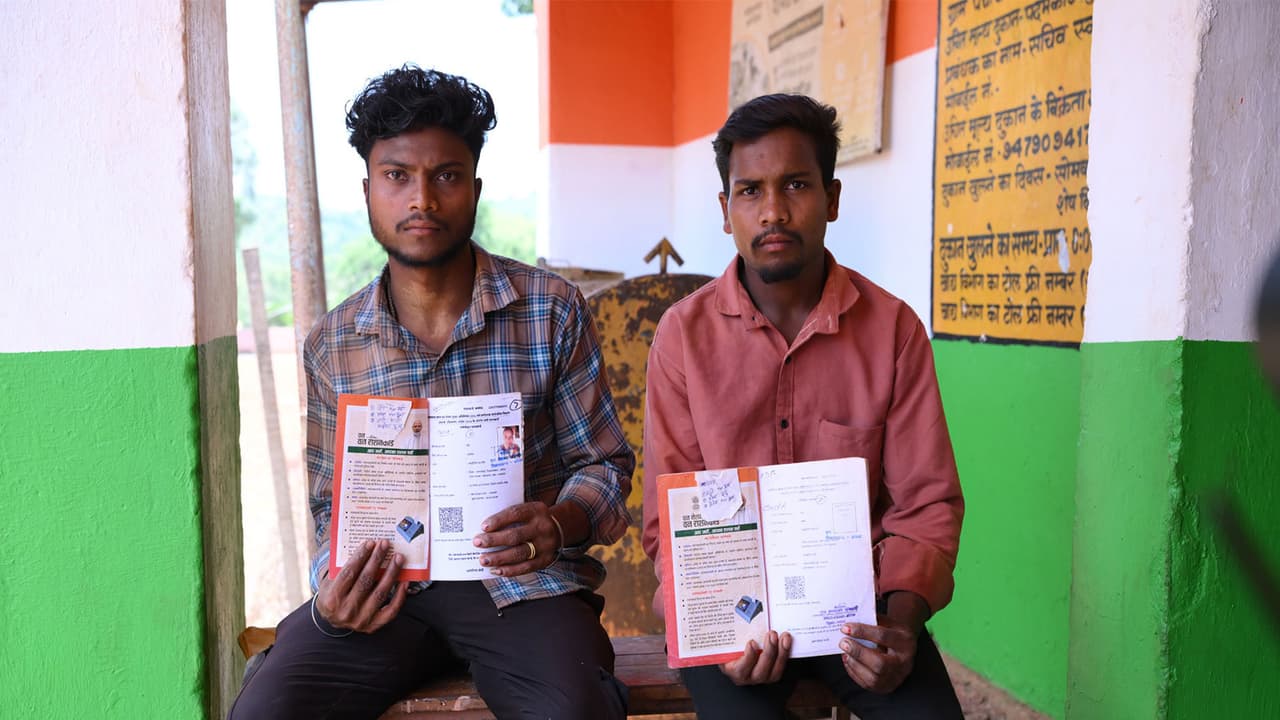
Chhattisgarh's Narayanpur administration is pre-stocking three months of food grains in remote Abujhmad to counter monsoon-induced isolation. This move ensures ration supply, saving villagers long treks and marking a shift from the Naxal era.
In view of challenges posed by monsoon, coupled with the geography of Abujhmad, Chhattisgarh's Narayanpur administration has initiated advance storage of food grains in Public Distribution System (PDS) outlets and gram panchayats for ensuring smooth supply in remote areas.
Combating Monsoon and Geographical Hurdles
Even after the eradication of Naxalism, the geography of Abujhmad still poses a major challenge for the administration and incessant rain during the monsoon makes the situation worse. With the onset of the monsoon, the paths leading to many villages get blocked due to raging streams and rivers, making both the transport of food grains and the movement of people extremely difficult.
To deal with the situation, the district administration has initiated the advance storage of three months' worth of food grains in all Gram Panchayats and PDS outlets. Additional storage has been specifically arranged in more than 14 PDS shops that frequently lose connectivity during the rainy season.
Government's Vision and Growing Trust
"It is the vision of the Chhattisgarh Government, as well as Chief Minister Vishnu Deo Sai that people living in remote and sensitive areas should have access to basic amenities right in their own villages. With this objective, advance storage is being carried out ahead of the monsoon so that no family has to travel long distances for food grains," said Narayanpur Collector Namrata Jain.
She further elaborated that the administration has approved 14 new PDS shops in the region. The construction of these buildings is currently underway. Until then, rations are being delivered to the villagers through alternative arrangements.
Where villagers once had to undertake journeys lasting several days through forests and hills just to fetch rations, today, the food grains are reaching their very villages, said Jain, elaborating that this advance storage being carried out in Abujhmad before the rains is not just a system of food grain distribution; it is a story of growing trust between the government and the villagers. This transformation shows that the path of development is now reaching even those villages that were once counted among the most inaccessible and neglected regions of the country, she added.
"The change is not happening on its own--it is driven by the empathetic vision and strong willpower of the Chief Minister, ensuring that rations reach the last person in the state, a mission that the Narayanpur district administration is fulfilling with equal responsibility," she stated.
Voices from the Ground: Villagers Express Relief
According to local PDS shopkeeper Gajendra Singh Nag, the administration has ensured the timely storage of rations. "Earlier, disrupted transportation during the rains would affect distribution. My shop supplies rations to cardholders from 18 villages. These villages become inaccessible during the rains due to rivers, streams, and difficult mountainous terrains. However, this time, a three-month stock is available in advance, ensuring that villagers will get their rations on time," Nag said.
Under this three-month distribution, two packets of chana (chickpeas), two packets of salt, two packets of jaggery, and one kg of sugar are being provided per month, he said.
"Earlier, the entire family had to set aside two to three days just to fetch rations and had to walk several kilometers to bring it back," said Ramesh, a resident of Padamkot. "Now, with the ration available close to the village, both time and effort are being saved", said Ramesh while extending gratitude towards the district administration and the state government.
"During the rainy season, rations used to be our biggest worry and many times, due to blocked routes, we couldn't get food grains on time," said a resident of Kutul village, Rambati. She further said that this time, with the ration arriving in advance, the whole family feels relieved. "We thank the government for this. The most significant change is regarding security: The most important thing is that when Naxalism was prevalent in this area, those people would take away half of our ration, leaving very little for our family. But now, the government has eliminated naxalism, and we are getting our full ration, which is enough to feed the entire family," she added. (ANI)
(Except for the headline, this story has not been edited by Asianet Newsable English staff and is published from a syndicated feed.)