
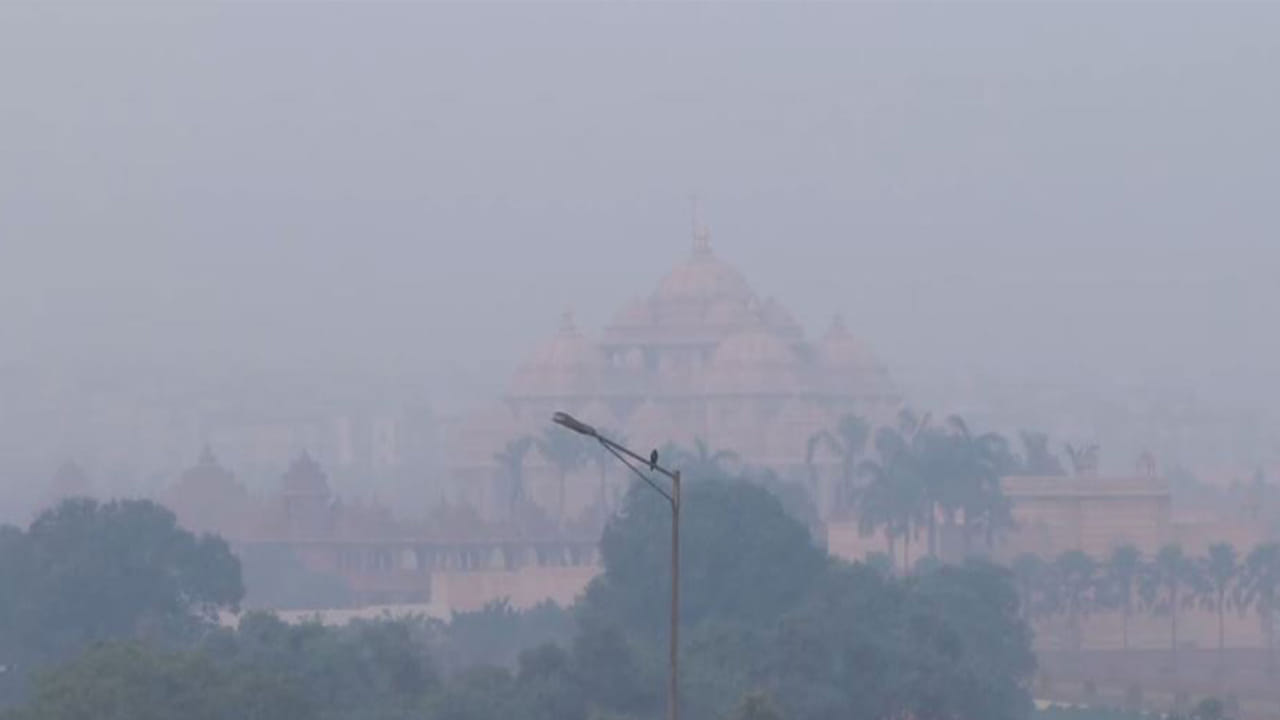
The CAQM has introduced district-level action plans for Delhi-NCR, setting a 15-20 percent air pollution reduction target by 2027. The move mandates designated officers for accountability across all pollution-control measures.
CAQM Sets 15 Percent Pollution Reduction Target for Delhi-NCR by 2027
The Commission for Air Quality Management (CAQM) has introduced district-level action plans for the first time and set a mandatory minimum target of 15 per cent, with a potential reduction of up to 20 per cent, in annual average air pollution levels across Delhi-NCR for 2027. It has also directed that officers responsible for implementing pollution-control measures be identified by name and designation to ensure accountability.
The Commission has written to the Governments of Delhi and other National Capital Region (NCR) states, calling for the preparation of comprehensive Annual Action Plans for 2027 at the State, District and Municipal Corporation (MC) levels. The move aims to shift the focus from listing pollution-control activities to achieving measurable outcomes through clearly defined targets, timelines, monitoring parameters and responsibility at the ground level.
According to the CAQM letter, the Annual Action Plans for 2027 must contain sector-wise actions designed to achieve tangible improvements in air quality and contribute towards an overall reduction of 15-20 per cent in annual average pollution levels, including AQI, PM2.5 and PM10, compared with 2026. The Commission has directed that the plans cover major pollution sources, including vehicular pollution, road dust, industrial emissions, construction and demolition (C&D) activities, municipal solid waste management, crop residue management, diesel generator sets, crematoria and other local pollution sources.
For the first time, District-Level Action Plans will be prepared as an integral part of the annual planning framework, in addition to the existing State and Municipal Corporation-level plans. The initiative is intended to facilitate focused implementation of pollution-control measures at the grassroots level, monitor progress, identify gaps and enable timely corrective action.
The CAQM letter stated, "For the year 2027, Annual Action Plans shall also be prepared at the District level, in addition to the State and Municipal Corporation (MC) levels." It further said that the plans must have clearly defined sector-wise actions with measurable targets, timelines and monitoring parameters. Emphasising accountability, the Commission has directed that every action point should identify the responsible department or agency and a specific officer tasked with its implementation and monitoring. "The name, designation and contact details of the concerned nodal officer shall be provided against each action to ensure clear accountability," the letter stated.
The Commission will also communicate additional action points to the concerned States, districts and Municipal Corporations for inclusion in the 2027 plans, over and above the measures already included in the 2026 action plans. These additional interventions will be based on past experience, emerging requirements and the objective of achieving sustained improvement in ambient air quality. The letter further clarified that actions pertaining to Development Authorities in urban areas will form part of the respective Municipal Corporation Action Plans.
The Annual Action Plan-2027 will be submitted and monitored through the Commission's online portal, as was done for the 2026 plans. The formats for preparing the plans at all three levels will also be made available on the CAQM portal. The Commission has asked the State Governments to direct all Municipal Corporations, District Commissioners/District Magistrates and other concerned agencies to begin preparatory measures well in advance. The respective Annual Action Plans for 2027 must be finalised and submitted to the Commission by December 5, 2026, the letter stated.
The CAQM said the preparation and implementation of the sector-specific Annual Action Plans for 2026 at the State and Municipal Corporation levels had been regularly reviewed to monitor progress, identify gaps and challenges, facilitate coordination among agencies and ensure timely execution of prescribed measures. "Dealing with air pollution requires sustained and concerted efforts based on airshed approach," the Commission said in its communication. The latest initiative seeks to strengthen the existing framework by bringing district-level planning, quantified pollution-reduction targets and clearly assigned responsibilities into the annual action plans, with the larger objective of ensuring sustained improvement in air quality and making the air breathable for citizens across Delhi-NCR and adjoining areas.








