
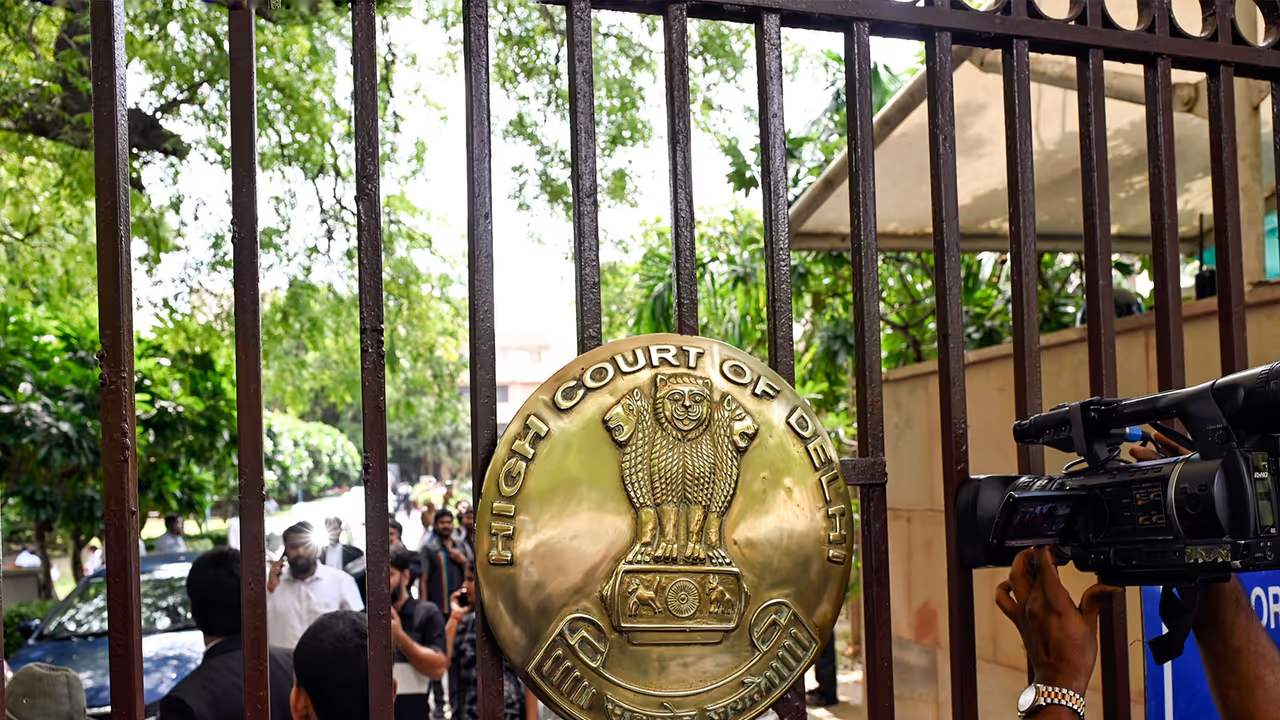
The Delhi High Court dismissed a PIL seeking to include lawyers' dependent parents in a welfare scheme, holding that framing such policies is an executive function. The court stated it cannot compel the state to modify the scheme's terms.
Court Rules Scheme Modification is an Executive Matter
The Delhi High Court declined to entertain a public interest litigation (PIL) seeking extension of benefits under the Chief Minister's Advocates Welfare Scheme to eligible lawyers' dependent parents, observing that a writ of mandamus cannot be issued to compel the State to modify the terms of a welfare scheme.
The Court held that the framing and scope of such schemes are matters of policy and rest within the executive domain. It also underlined the principle of autonomy to contract between two parties, including the State, noting that courts cannot rewrite eligibility conditions through judicial directions.
Petitioner Withdraws PIL to Make Representation
The petition had assailed the exclusion of dependent parents from the definition of "family" under the scheme, which presently provides medical insurance and allied benefits to practising advocates, their spouses and dependent children. It was argued that the exclusion failed to reflect the realities faced by many lawyers, particularly first-generation practitioners who financially support their parents.
During the hearing, the petitioner sought permission to withdraw the plea, stating that a representation would first be made to the competent authorities seeking reconsideration of the policy. Taking note of this submission, the High Court permitted the withdrawal of the PIL. The Court clarified that while the judiciary cannot direct the expansion of the scheme, the government remains free to examine such requests at the administrative level in accordance with the law.
(Except for the headline, this story has not been edited by Asianet Newsable English staff and is published from a syndicated feed.)