
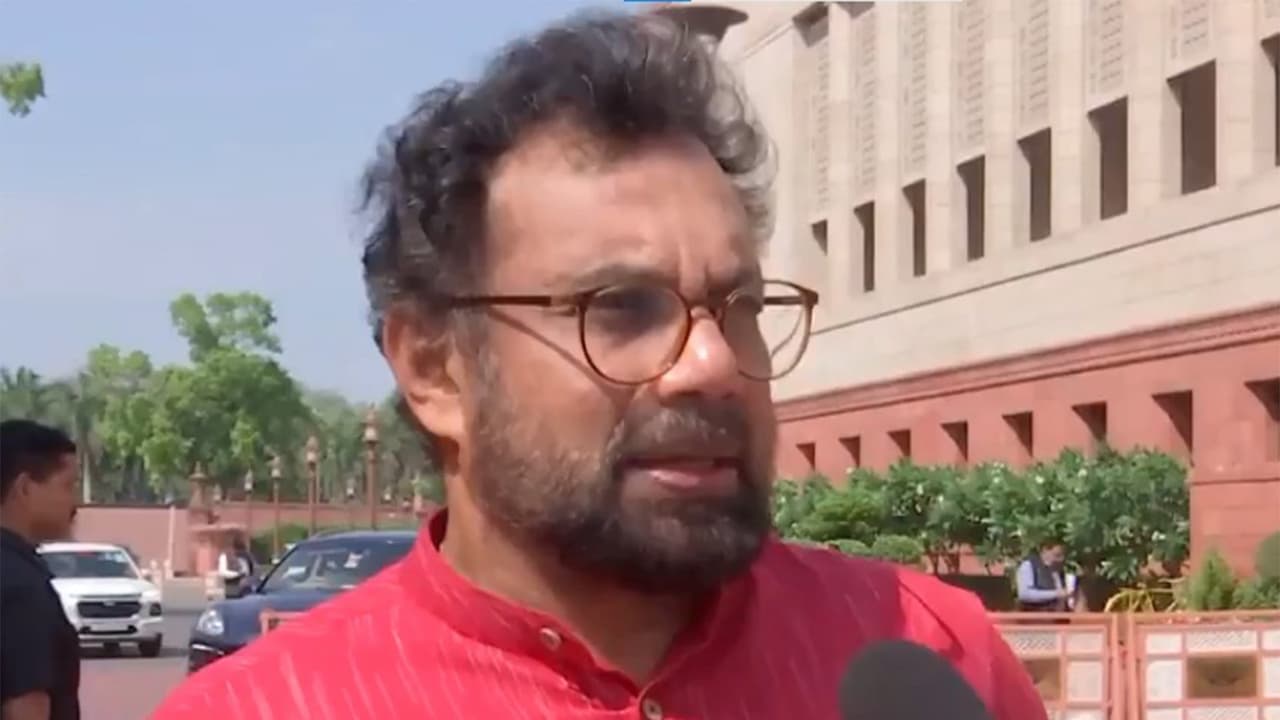
CPI(M) MP John Brittas slammed PM Narendra Modi's speech on the West Asia situation as a "partial account," stating the opposition wasn't allowed to seek clarification. PM Modi had called for a united voice for peace and highlighted the crisis's impact.
'Partial Account of Facts': Brittas on PM's Speech
Communist Party of India (Marxist) MP John Brittas on Tuesday expressed dissatisfaction over Prime Minister Narendra Modi's speech in Rajya Sabha on the West Asia situation, stating that the opposition wasn't allowed to seek clarification over the issue. Speaking to ANI, Brittas stated that whenever the Prime Minister or any other leader speaks in Parliament, the opposition is allowed to seek clarification. The CPI(M) MP stressed that PM Modi spoke on the current crisis, but didn't mention the reason behind the same. "It is unfortunate that we were not allowed to seek clarification... Whenever the Prime Minister or any other leader makes a statement, we are allowed to seek clarification. Our question was why this government is silent on this war?... The Prime Minister was silent, he only spoke on the crisis but said nothing about why this crisis occurred... This statement was a partial account of the facts," said Brittas.
PM Modi Calls for United Voice for Peace
Prime Minister Modi in his address today for a united voice promoting peace and dialogue globally, as the ongoing West Asia conflict disrupts trade, energy supplies, and affects the safety of millions of Indians in the Gulf. Addressing the Rajya Sabha, PM Modi said, "It has been more than three weeks since the war in West Asia started. The war has caused a serious energy crisis in the world. For India, too, this situation is concerning. The war has impacted our trade routes. With this, the routine supply of petrol, diesel, gas and fertilisers has been affected."
The Prime Minister informed that since the outbreak of the war, he has held multiple phone discussions with leaders of the region and confirmed India's continuous engagement with all Gulf countries, Iran, Israel, and the United States. "Around one crore Indians live and work in the Gulf countries, and ensuring the safety of their lives and livelihoods is also a major concern for India. Many ships from around the world are stranded in the Strait of Hormuz, and a large number of Indian crew members are on board them, which is also a major concern for India. In such a difficult situation, it is necessary that from this Upper House of India's Parliament, a united voice for peace and dialogue should go out to the entire world," he said.
"Since the start of the war, I have held two rounds of phone conversations with the heads of state of most countries in West Asia. We are in continuous contact with all the Gulf countries, and we are also in touch with Iran, Israel, and the United States," PM Modi said.
India Prioritising Safety of Citizens
The Prime Minister said that India is prioritising the safety of its citizens during the West Asia conflict, noting that over 3,75,000 Indians have been safely evacuated so far, including more than 1,000 from Iran, while urging all sides to seek a peaceful resolution. "Any threat to human life in this war is not in the interest of humanity, so India is making constant efforts to encourage all sides to reach a peaceful solution as soon as possible. In times of crisis, the safety of Indians both in the country and abroad is our top priority. Since the war began, more than 3,75,000 Indians have safely returned to India. From Iran alone, more than 1,000 Indians have returned safely so far, including over 700 young people who were studying medicine. Our government is working with full sensitivity during this time of crisis," he said.
"Through diplomacy, India is trying to ensure safe commutation of the country's ships even in a war situation. India has opted for a solution through dialogue to resolve this issue," PM Modi said.
West Asia Conflict Enters Fourth Week
The ongoing conflict in West Asia has entered its fourth week, disrupting trade routes through the Strait of Hormuz. Tensions escalated following the killing of 86-year-old Iran's Supreme Leader, Ayatollah Ali Khamenei, in joint military strikes by the US and Israel on February 28. In retaliation, Iran targeted Israeli and US assets across several Gulf countries, causing further disruptions to the waterway and impacting international energy markets as well as global economic stability.
Meanwhile, Arab News today cited Israeli media outlet Yedioth Ahronoth to report that Iran's Supreme Leader, Mojtaba Khamenei, was prepared to negotiate with the Americans. Ahrnaooth cited a conversation between Iranian Foreign Minister Abbas Araghchi and US intermediary Steve Witkoff, which was approved by the highest level in Iran. (ANI)
(Except for the headline, this story has not been edited by Asianet Newsable English staff and is published from a syndicated feed.)