
The 12th BRICS Parliamentary Forum in New Delhi concluded with a strong emphasis on people-centric governance, fostering collaboration among member and partner nations to address poverty, terrorism, and development challenges effectively.
BRICS Forum Focuses on People-Centric Development
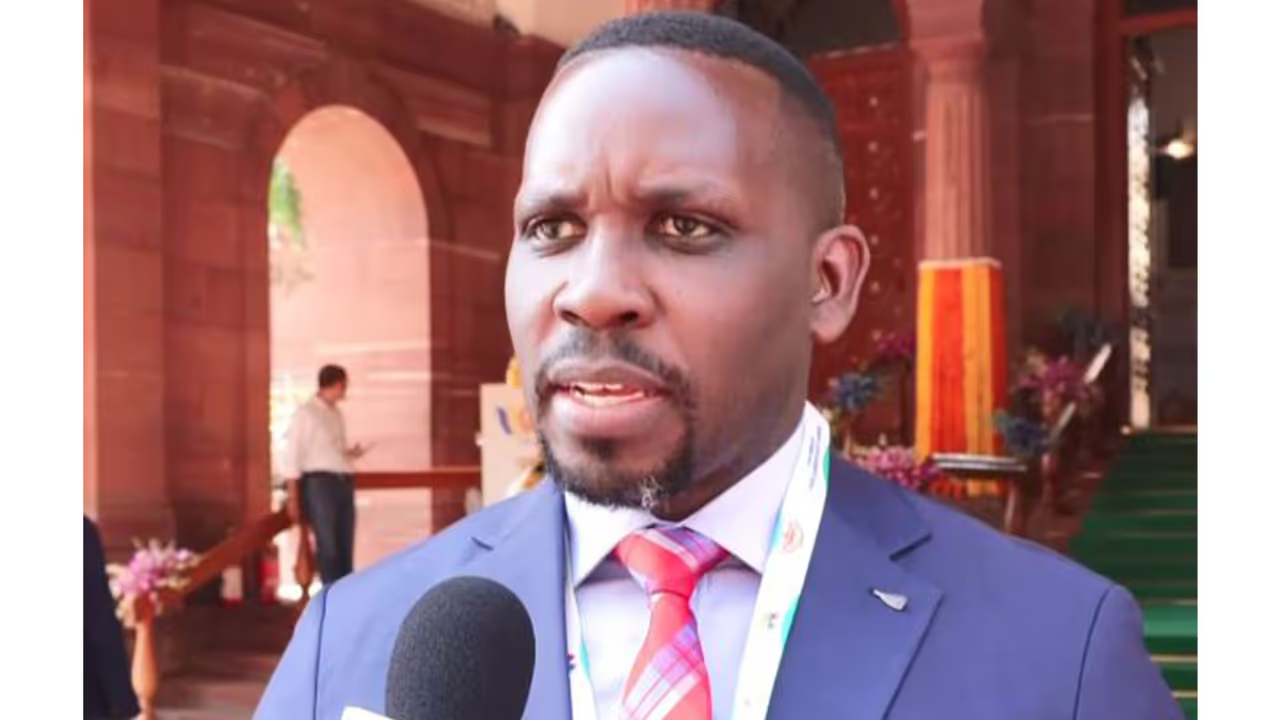
Leadership must focus on people's interests to help countries develop and address challenges such as poverty, governance issues and terrorism, Uganda MP Joel Ssenyonyi said on Tuesday on the second day of the 12th BRICS Parliamentary Forum in New Delhi. Speaking on the concluding day of the forum, Ssenyonyi described the gathering as an important platform for member and partner countries to connect, learn from one another, share experiences and make commitments towards people-centric governance.
“This Parliamentary Forum has been a very pivotal one for parliaments, for member states, and partner states like Uganda, where I come from--to come, connect, learn from each other, share experiences, and also make certain commitments. I like the theme of this summit: fostering parliaments to be people-centric in all that we do as parliaments--in the laws that we pass, in the budgets that we pass, the policies, and all of that,” he told ANI.
Emphasising the importance of placing people at the centre of policymaking, Ssenyonyi said parliamentary decisions should serve the interests of the people whom elected representatives represent. “Whatever we do should be about the people that we represent, for all the member states and the partner states. That's how countries get to develop; that's how countries get to thrive--when the focus is on the people, that whatever is done is for the good of the people,” he said.
He added that the commitments made during the forum would need to be implemented after delegates returned to their respective countries. “And yes, commitments have been made; we've got to get back home and ensure we do that,” he said.
Strengthening India-Uganda Bilateral Ties
Speaking about India-Uganda relations, Ssenyonyi highlighted the longstanding ties between the two countries and said parliamentary platforms such as the BRICS Parliamentary Forum could further strengthen bilateral cooperation. “The relationship between Uganda and India has gone on for several years. Incidentally, we have a huge population of Indians in our country, Uganda--about 40,000 Indians live in Uganda. And so we've got that strong bond. We live together harmoniously. Of course, there were past situations, but now we are able to connect,” he said.
Ssenyonyi said the forum also provided an opportunity for countries to review progress on commitments and hold one another accountable for their implementation. “You know that when we make commitments like we are making here--to go back home and be people-centric--maybe at the next summit, the engagement gets to be: 'Okay, so we made these commitments; how far have we moved in actualising these commitments?' So, that's what friendships should be about,” Ssenyonyi said.
Addressing Global Challenges Through Leadership
On global challenges, including economic difficulties, poverty, governance issues and terrorism, the Ugandan MP said leadership played a crucial role in finding solutions. “Yeah, of course, we've got to fight many ills. There are many challenges that most of our countries are struggling with--poverty, governance challenges, terrorism, and all of that. It's normally a leadership question,” he said.
He stressed that people should feel that their leaders cared about their welfare and were committed to protecting their interests. “And so as leaders, we've got to find solutions and remedies to all of these challenges. And that's why a theme which is saying we should be people-centric is a very important one--so that the people feel leadership cares about them, that the leaders have their best interests at heart. And that goes a long way in remedying the many challenges that we grapple with,” he added.
India’s Role in Representing the Global South
Meanwhile, BJP Rajya Sabha MP Ajeet Gopchade, speaking on the concluding day of the forum, said that under India's leadership, 21 nations had come together to represent the Global South. “Under India’s leadership, these 21 nations have come together as a powerful voice, representing the voice of the Global South,” he said.
Drawing on shared colonial histories, Gopchade said, “Actually, regarding BRICS--just as Western nations once ruled over our country, they also ruled over these nations as well. We do not wish to speak against Western countries. But what our country is doing, what we are doing, how the voice of the Global South is rising, and on our economic, cultural, and numerous other fronts—the growing dialogue and coordination between each other is a major success of BRICS. All these countries want to come together on a single platform to become powerful, and they are indeed becoming powerful."
He said member nations were cooperating across sectors. “With countries like China, Russia and many others involved, we are exchanging ideas, strength and capabilities through this platform. Across multiple fields, be it science, research or technology, all these nations are joining hands, supporting one another, and helping each other in times of crisis,” he said.
Looking ahead to the next summit in China, he said, “Our people and the entire world are witnessing the strength within this organisation today through our nation. And I would say that these 21 nations, acting as the voice of the Global South--by the time the upcoming summit in China takes place, our country will have advanced much further."
"The way our nation is marching forward as a superpower, with our GDP growth continuously rising, our economic expansion accelerating, and our country’s youth progressing, a very strong message has been sent to the world through BRICS under the leadership of the Honourable Prime Minister," Gopchade added.
Political Criticism of the Opposition
On the INDIA bloc’s November 1 rally at Ramlila Maidan against the Special Intensive Revision (SIR) and the Election Commissioner, Gopchade launched a sharp attack on the Opposition. “There is no patriotism in their hearts, there is no affection in their hearts, they possess no love for the nation. Because on the very day our Sikh brothers and sisters were massacred in broad daylight, on that 'dark day', they are organising this INDIA bloc rally. This reflects their rebellious mindset and a distorted mentality; it is a sign of mental perversion,” he said.
He also targeted the choice of venue. “They are going to hold it at Ramlila Maidan, yet they do not even visit or seek the blessings of the Ram Mandir. Who says they are devotees of Lord Ram? It is just like the saying: ‘Munh mein Ram, bagal mein chhuri’. They go to Ramlila Maidan, but they will not pay respects to Lord Ram,” he said.
On the SIR, he said, “These people have nothing to do with the SIR; they have no genuine concern, because in reality, they are the actual vote thieves. They ruled this country for 70 years only by stealing votes.”
Conclusion of the 12th BRICS Parliamentary Forum
The 12th BRICS Parliamentary Forum was hosted by the Indian Parliament on October 26-27 under India’s 2026 BRICS Chairship, chaired by Lok Sabha Speaker Om Birla. Centred on the theme “Strengthening Parliaments for People-Centric Development,” the gathering brought together parliamentary leaders and delegations from member and partner nations to deliberate on institutional resilience, ethical AI, digital transformation and global governance reform.
Delegations representing 11 BRICS member countries and 10 partner nations arrived in New Delhi to participate. Representatives from Uganda, Cuba, Brazil and Russia were among those welcomed at the Parliament complex by officials and Members of Parliament. Birla delivered the inaugural address at the ceremony, which began at 10 am on Monday.
India currently holds the BRICS presidency, with the forum providing a platform for lawmakers from member and partner nations to exchange views on shared challenges and strengthen cooperation. Russia and Brazil are full members of BRICS, while Uganda and Cuba became partner countries in 2025. (ANI)
(Except for the headline, this story has not been edited by Asianetnews Editorial staff and is published from a syndicated feed.)
