
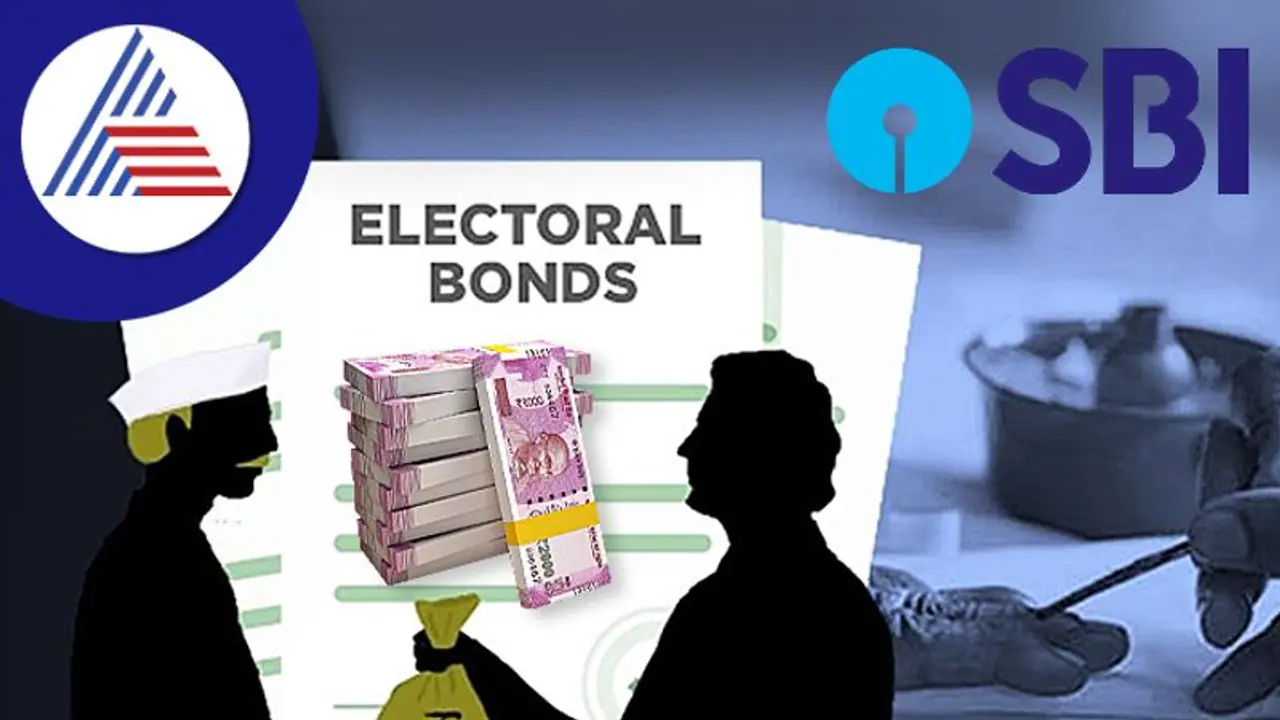
Challenges and implications arise as prevailing banking norms hinder disclosure of electoral bond subscribers' names, while the Supreme Court orders their publication to promote transparency in political funding.
The disclosure of subscribers' names for electoral bonds may face obstacles due to prevailing banking norms, as reported by sources in the Times of India. The scheme, designed to cleanse the political party funding system and encourage the influx of legitimate funds, is under scrutiny. Authorities are presently examining the order and evaluating diverse options to navigate its consequences. Concerns have been raised about potential legal challenges arising from the decision to publish such details.
On Thursday, the Supreme Court declared electoral bonds unconstitutional and ordered the State Bank of India (SBI) to cease issuing them. Furthermore, the court mandated the publication of critical information, including details of bond purchasers, political parties receiving the bonds, purchase dates, purchaser names, and denominations. The Election Commission has been directed to make these details available on its website.
As per the report, various strategies to purify the political funding system have been explored in the past, with the introduction of electoral bonds aimed at eradicating black money and promoting the use of legitimate funds for political purposes. However, concerns persist that "black money" could once again infiltrate political party financing during the upcoming Lok Sabha elections.
During its issuance, the government specified that electoral bonds would function as bearer instruments akin to promissory notes and interest-free banking instruments. According to a press statement from the Department of Economic Affairs, both Indian citizens and entities incorporated in India would be eligible to purchase the bonds.
Electoral bonds could be acquired in various denominations, including multiples of Rs 1,000, Rs 10,000, Rs 1,00,000, Rs 10,00,000, and Rs 1,00,00,000, from designated branches of the State Bank of India.
The government had specified that the purchaser must comply with all Know Your Customer (KYC) norms and make payments from a bank account. Notably, the electoral bond would not carry the name of the payee, aiming to maintain a level of anonymity for the contributors.
The Supreme Court's decision to scrap electoral bonds underscores the ongoing challenges in creating a transparent and corruption-free political funding system. As legal challenges loom, the government finds itself at a crossroads, needing to reassess and potentially reform its approach to ensure a balance between political funding transparency and adherence to prevailing banking norms.
