
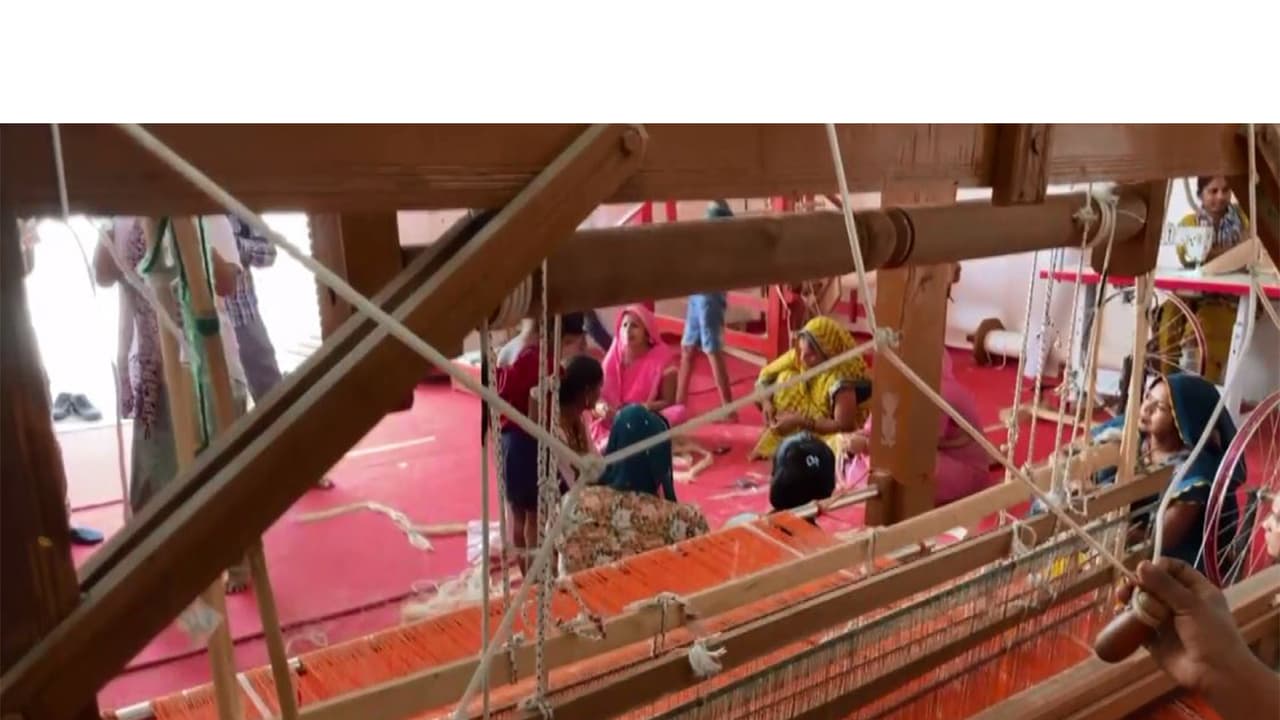
In Ayodhya, women are creating eco-friendly hats and other items from banana fibre to combat the heatwave. A training program aims to provide them with sustainable livelihoods by repurposing discarded banana stems into sellable products.
Amid the ongoing heatwave, women in Ayodhya are crafting eco-friendly hats, gamchas and ritualistic items using banana fibre as part of a training programme aimed at providing sustainable livelihoods and relief from extreme summer conditions.
Programme's Objective: Self-Reliance and Sustainability
Surya Kumar Tripathi, an official involved in the training programme for making hats, cotton towels, purses, and bags from the banana fibres, said that the main objective of the programme is to make the women self-reliant and utilise their free time to manufacture these products against the heatwave. He explained that banana stems, which are usually discarded after harvesting the fruit, are being repurposed to extract fibre using machines, which is then used to make a variety of products, including summer hats, yoga mats, temple mats, folders, purses and bags. "As part of our master training program, we are teaching rural women how to create eco-friendly products. Banana cultivation is quite prominent in our region. Usually, after harvesting the fruit, farmers throw away the banana stems. We extract fibre from those discarded stems using a machine. From that fibre, we prepare various items. Right now, keeping the upcoming summer season in mind, these women are making various types of summer hats. Along with hats, they also make eco-friendly yoga mats, temple mats, folders, purses, and bags. The main objective is to provide employment opportunities to rural women who usually sit idle at home after finishing their household chores. Through this initiative, we train them so they can utilise their free time to manufacture these products, sell them in the market, and become self-reliant," he said.
The Craft: From Banana Stem to Finished Product
Anita, a handloom weaver from Ayodhya, said that the hats and cotton towels (gamchas) are made after extracting the fibre from banana and take at least an hour and a half to make one peice of the item. She added that the banana fibre keeps the hats and cotton towels cool and provides relief from the summer heat. "This is made from banana fibre. First, we extract the fibre, and then we make a braid. After making the braid, we make the hat. It is getting quite hot in the summer. Keeping the summer in mind, we make gamchhas (traditional cotton towels) and hats from this, so that people can get relief from the heat. It takes at least an hour to an hour and a half to make one hat. Some of our sisters extract the fibre, some start making the braids, and some start making the hats. That's how they are made. It provides a lot of cooling. Wearing this gives a lot of relief from the heat. We have received training for this," she said.
Another handloom weaver, Himanshu, said that the fibre is extracted from the banana stems through a machine. It is then washed with shampoo and dried in the sun before using it to weave items such as hats. "We bring banana stems from the field. After that, we clean it, peel it, and extract the fibre using a machine. Then, we wash it with shampoo. After washing, we dry it in the sun. Once dry, we clean the fibre and make braids from it. Using those braids along with a needle and thread, we sew the hats. We took training for it," she said.
Himanshu, the weaver, added that one hat costs around Rs 400 to RS 500. Apart from hats and gamchas, the women in Ayodhya are also engaged in making slippers, jewellery, purses, mats for worship, decorative hangings (jhalar), kits, pen holders and several other eco-friendly products from banana fibre, helping both in income generation and environmental sustainability. (ANI)
(Except for the headline, this story has not been edited by Asianet Newsable English staff and is published from a syndicated feed.)