
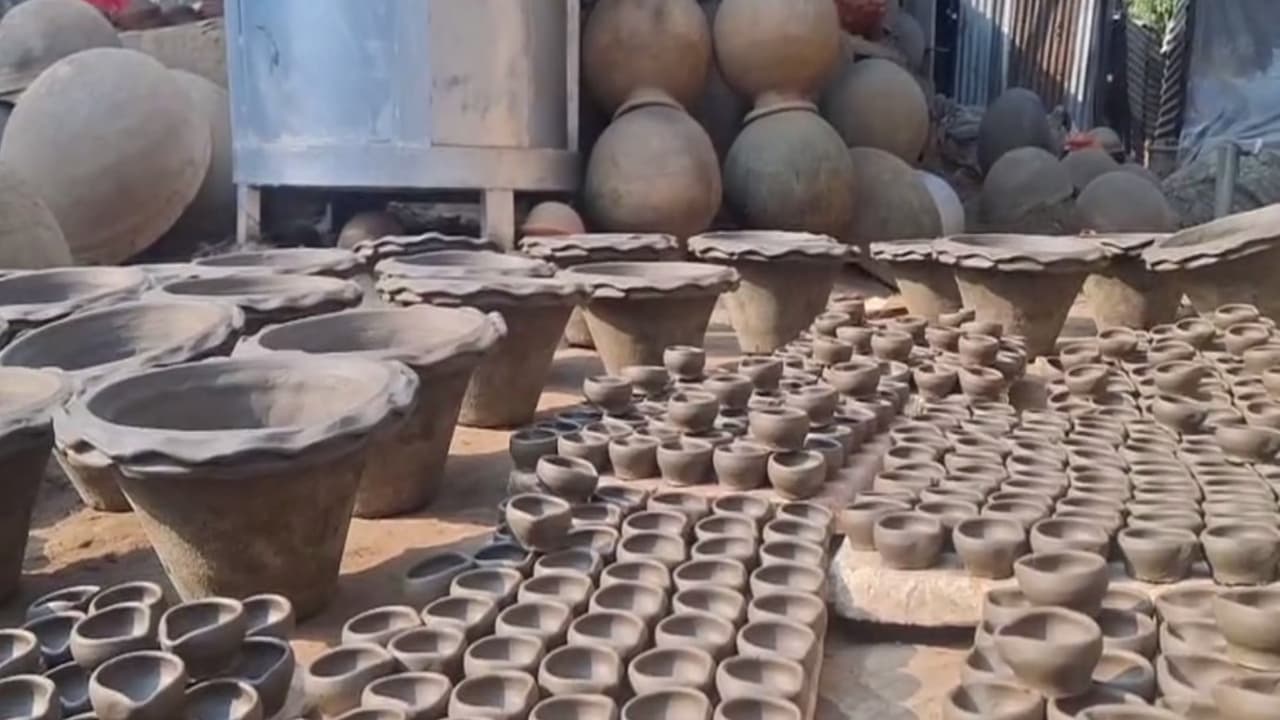
Asharikandi's famed terracotta art is set to feature in Assam's Republic Day 2026 tableau. The GI-tagged craft, rooted in a rich history, represents Atmanirbhar Bharat and is driven by hundreds of women artisans in the Dhubri district.
Bringing pride to Dhubri district and Assam as a whole, the famed terracotta village of Asharikandi is set to shine once again on the national stage. The traditional terracotta art of Asharikandi will be showcased as part of Assam's tableau at the Republic Day Parade 2026 in New Delhi.
The announcement was made by Assam Chief Minister Himanta Biswa Sarma in a social media post on Thursday. In his message, the Chief Minister stated that the terracotta art of Asharikandi, to be featured in the Assam tableau, will vividly portray the rich heritage of river-based civilisation and reflect the spirit of Atmanirbhar Bharat (Self-Reliant India).
The Origins of Asharikandi's Terracotta Art
Located around 14 kilometres from Dhubri town, Asharikandi has earned recognition not only across Assam and India but also internationally as a unique terracotta village. The roots of the craft date back to the early 19th century, when several potter families migrated from East Bengal (present-day Bangladesh) and settled in Asharikandi, attracted by the availability of raw materials, affordable transportation and favourable economic conditions. Over time, the craft evolved by blending local folklore, myths, legends and traditional beliefs, giving rise to a distinctive artistic style that later came to be known as Assamese terracotta art.
The Turning Point: Sarala Bala Devi and 'Hatima'
Initially, the artisans had no defined commercial vision for the craft. However, a new era began with the efforts of noted woman artisan Sarala Bala Devi. Her iconic terracotta creation, popularly known as "Hatima", depicting a woman with a child in a cradle, earned nationwide acclaim and won her the prestigious President's Award in 1982. This recognition brought Asharikandi's terracotta art into the national spotlight and introduced a fresh creative dimension to Indian clay art.
Women at the Forefront of a Silent Revolution
Inspired by Sarala Bala Devi, many women from Asharikandi began actively participating in terracotta art. At present, most households among the village's 134 families are involved in the craft. Of the approximately 600-700 artisans in the village, at least 400 are women, making them the backbone of what is often described as a silent economic revolution. The village presently hosts eight women self-help groups and a cooperative society, Asharikandi Doll Making Cooperative Society, working exclusively on terracotta production.
National Recognition and Surging Demand
Asharikandi's terracotta art received the Geographical Indication (GI) tag in 2024, further enhancing its prestige and authenticity. In 2020, Prime Minister Narendra Modi, in his Mann Ki Baat address, referred to Asharikandi's terracotta dolls while encouraging citizens to support the Vocal for Local and Atmanirbhar Bharat initiatives.
Following the Prime Minister's call to reduce plastic use, demand for Asharikandi's clay tea cups and other eco-friendly products has increased significantly nationwide. During Diwali 2025, Asharikandi artisans created a record by producing over one crore earthen lamps, marking a significant milestone for the village.
Economic Growth and Future Ambitions
According to Binay Bhattacharyya, Founder Director of the North East Craft and Rural Development Organisation (NECARDO), an NGO which is working in Asharikandi with the help of various government agencies along with UNDP projects, the systematic efforts toward infrastructure development, marketing and capacity building began in Asharikandi in 2003 A survey conducted in 2016 revealed that the annual trade of terracotta products had crossed Rs 12 crore, a figure that has since increased by at least two to two-and-a-half times. From the current year onwards, the village has set an ambitious target of producing terracotta goods worth at least Rs 100 crore annually.
With its inclusion in the Republic Day tableau, Asharikandi's terracotta heritage is expected to gain further national and international exposure, potentially creating far-reaching socio-economic benefits not only for the village but for the entire Dhubri Asharikandi, once considered one of the most backward villages of Assam, has today emerged as a shining name on the national and international art map through its distinctive terracotta craft.
A 30-Year Journey of Socio-Economic Transformation
The 30-year journey of Asharikandi's terracotta industry is not merely a story of art, but a powerful narrative of perseverance, socio-economic transformation, and grassroots creativity.
What began as a modest livelihood activity among ordinary lower-middle-class families gradually evolved into a recognised art form. With limited resources but immense dedication, local artisans shaped clay into stories of culture, tradition, and rural life.
Over the years, innovation in design, form, and theme helped Asharikandi's terracotta transcend local markets and gain visibility at state-level fairs, national exhibitions, and eventually international platforms. Today, Asharikandi terracotta stands as a proud symbol of Assam's rich folk heritage.
The journey reflects how determination, skill, and collective effort can uplift an entire community, turning a remote village into a global cultural identity. Asharikandi's three-decade-long upward journey continues to inspire artisans and rural communities across the region. (ANI)
(Except for the headline, this story has not been edited by Asianet Newsable English staff and is published from a syndicated feed.)