
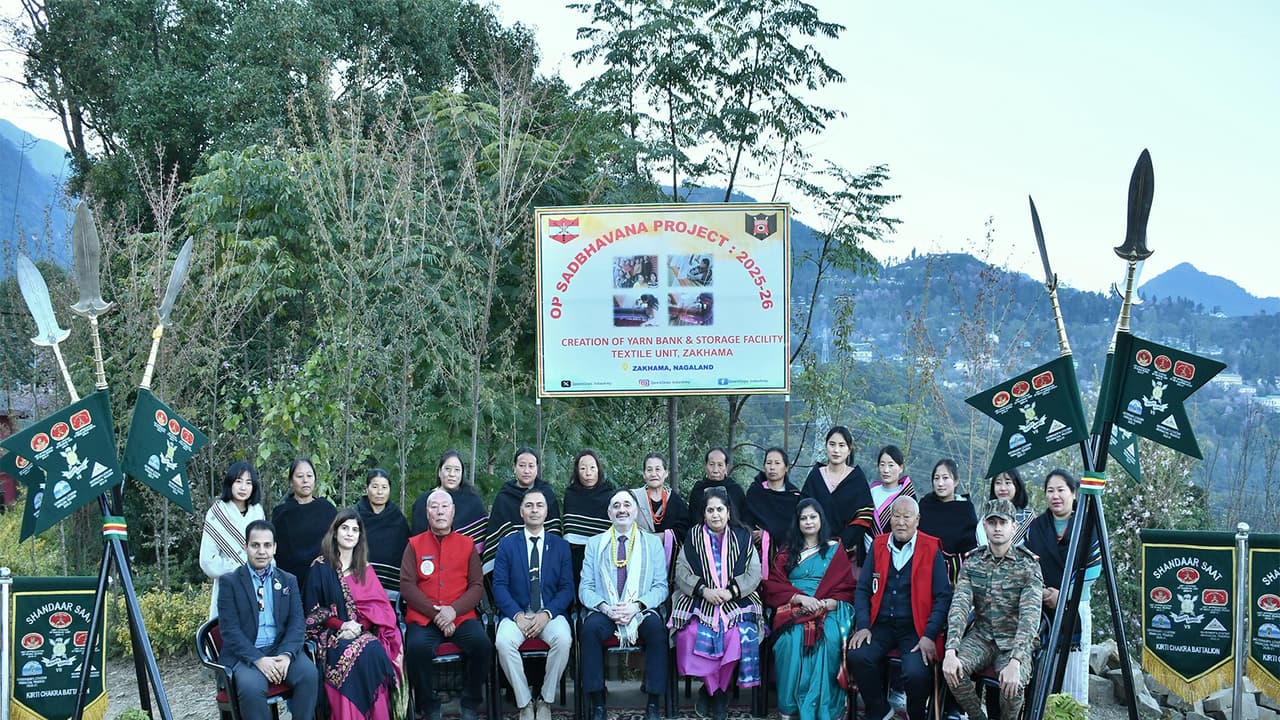
GOC Spear Corps Lt Gen Abhijit S Pendharkar visited the Army-backed textile unit in Zakhama, Nagaland. The unit, part of Operation Sadbhavana, empowers over 30 families, preserves Naga art, and fosters economic self-reliance for women weavers.
GOC Applauds Weavers at Army-Supported Unit
General Officer Commanding (GOC) Spear Corps, Lieutenant General Abhijit S Pendharkar, visited the Army-supported textile unit at Zakhama village in Nagaland's Kohima district, a centre enabling livelihood generation and cultural preservation for local communities.
According to a release, during the visit on Saturday, Lt Gen Pendharkar interacted with the women weavers, praising their craftsmanship and applauding the Army's efforts in strengthening economic self-reliance and fostering stronger Military-Civil relations in the region. The weavers also expressed gratitude for the support that has enabled them to achieve financial independence and contribute meaningfully to their households.
Empowerment Through Operation Sadbhavana
The textile unit, which was established by the Red Shield Division under the Indian Army's Operation Sadbhavana initiative, is currently benefiting more than 30 families from Zakhama and neighbouring villages by providing structured skill training in handloom weaving.
The initiative aims to empower local women, preserve indigenous Naga art forms and create sustainable income opportunities.
The release stated that the unit produces culturally significant textiles blending traditional tribal motifs--including the iconic patterns used in Tsungkotepsu shawls--with modern materials to meet both domestic and international demand for authentic handmade products.
Future Growth and Market Expansion
The Army is also assisting the unit by supplying looms and raw materials, offering professional training, and helping artisans access wider markets through social media outreach and other linkages.
The release further stated that plans are currently underway to expand the unit's reach by strengthening branding and marketing capabilities, integrating e-commerce platforms, and promoting the textiles through major cultural events, including the Hornbill Festival. The unit has already earned recognition for producing high-quality woven products, with efforts ongoing to tap national and international markets.
The release further described the textile unit as a model example of collaborative development, contributing to local empowerment, preservation of Naga heritage and regional harmony. (ANI)
(Except for the headline, this story has not been edited by Asianet Newsable English staff and is published from a syndicated feed.)