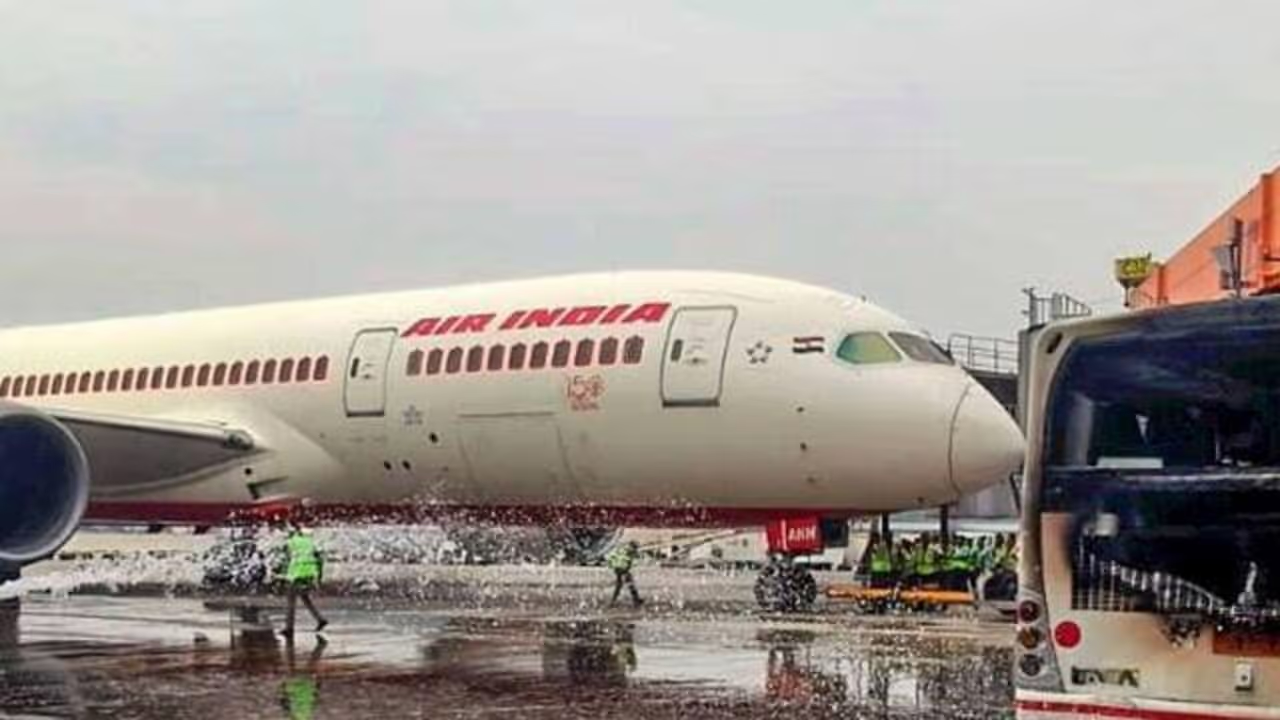
An Air India Boeing 787 Dreamliner was grounded in London after a fuel control switch moved unexpectedly towards the "Cutoff" position during pre-flight checks.
Air India has grounded one of its Boeing 787-8 Dreamliner aircraft after pilots reported a possible defect in a fuel control switch that caused it to move unexpectedly from “Run” to “Cutoff” during pre-departure checks at London Heathrow Airport on February 1.
The aircraft, operating flight AI 132 from Heathrow to Bengaluru, was taken out of service after the crew noted the left fuel control switch failed to remain securely in the RUN position during engine start-up and twice transitioned toward the cut-off position without the required locking action.
The fuel control switches on a Boeing 787 play a critical role in regulating the flow of fuel to each engine and are designed with a two-step action — requiring the switch to be lifted before movement between Run and Cutoff is possible. This safeguard is meant to prevent inadvertent fuel starvation and potential engine shutdown.
Related Articles

Air India confirmed the incident in a statement, saying it was “aware that one of our pilots has reported a possible defect” and that the airline had grounded the aircraft while involving Boeing and notifying India’s Civil Aviation regulator, the Directorate General of Civil Aviation (DGCA). Boeing said it was supporting Air India’s review of the matter.
The episode has revived safety concerns around fuel control switches on the Dreamliner, particularly in light of the June 12, 2025 crash of Air India flight AI 171 near Ahmedabad — a Boeing 787-8 that plunged shortly after takeoff, killing 241 passengers and 19 people on the ground.
A preliminary Aircraft Accident Investigation Bureau (AAIB) report into that accident found that, seconds after liftoff, both fuel control switches moved from RUN to CUTOFF, cutting off fuel to the engines and leading to catastrophic loss of thrust. Cockpit voice recordings captured one pilot asking the other why fuel had been cut off, with the reply that they had not done so.
After that crash, India’s regulator directed inspections of fuel switch locking mechanisms across the airline’s Boeing 787 fleet; Air India later reported that all checks had been completed with no defects found. But this latest incident at Heathrow raises fresh questions about the adequacy of those inspections and whether uncommanded fuel switch movement could be a real safety risk — an issue aviation experts say warrants thorough technical scrutiny.
Air India emphasizes that passenger and crew safety remains its top priority, and that the affected aircraft will undergo detailed inspection and maintenance before returning to service.