The AAIB’s preliminary report on the Air India crash cites uncommanded engine shutdown due to both fuel control switches moving to CUTOFF. All 260 aboard and on ground died. Cause under probe; no safety recommendations issued yet.
New Delhi: The Aircraft Accident Investigation Bureau (AAIB) has made the preliminary report into the Ahmedabad Air India plane crash public. The cause is likely to be a shutdown of the engines due to both fuel control switches moving to CUTOFF position during the initial climb, shortly after takeoff. The cause of what led to uncommanded switch-off is under a detailed investigation, including possible mechanical malfunction or inadvertent crew action. The report rules out bird strikes with no significant wind or weather issues.
The aircraft, a 12-year-old Boeing 787-8, was well within maintenance limits and had undergone recent engine replacements in 2025. Maintenance records showed no significant defects, and while several Minimum Equipment List (MEL) items were active, all were valid and unrelated to critical flight systems. However, a 2018 non-mandatory Federal Aviation Administration (FAA) advisory regarding the potential disengagement of the fuel control switch locking mechanism had not been complied with, as it was classified as an advisory and not considered an unsafe condition.
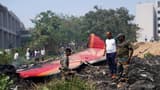
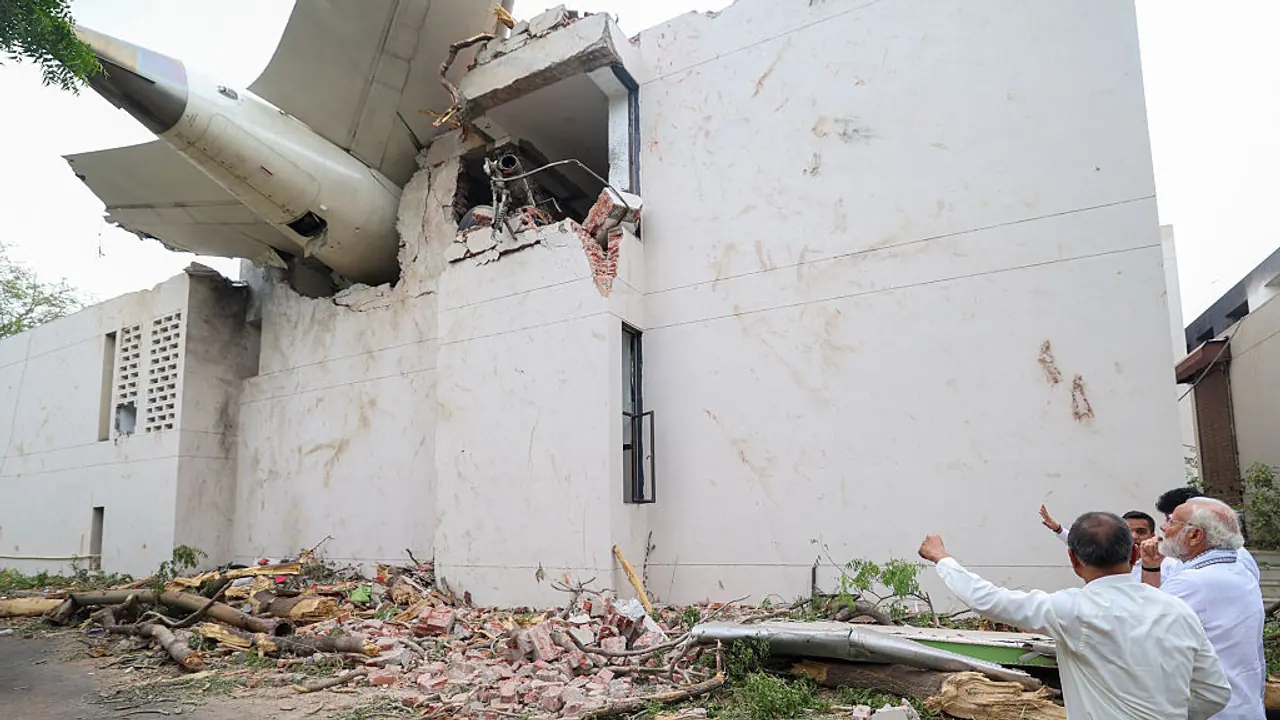
All 241 people on board (230 passengers, 12 crew) and 19 people on the ground have been confirmed dead after the flight crashed into BJ Medical College hostel. Five buildings in the area were damaged as the aircraft crashed into trees and buildings 0.9 NM from the runway end.
Related Articles

Pilot 1: “Why did you cut off?” Pilot 2: “I didn’t”
Shortly after takeoff, both engine fuel cutoff switches unexpectedly transitioned from RUN to CUTOFF within a second. This led to a loss of thrust, following which the pilots deployed the Ram Air Turbine (RAT). Pilots attempted engine restart, and one engine showed signs of recovery. However, a Mayday call was made shortly after and the aircraft lost altitude rapidly and crashed before clearing the airport perimeter. A chilling exchange between the pilots was also captured in the report. As the aircraft rapidly lost altitude, the cockpit voice recorder captured a brief but telling exchange in which one pilot asked, “Why did you cut off?” and the other replied, “I didn’t.”
The investigation is ongoing, with detailed analysis of the voice and flight data currently underway. Fuel samples collected from the aircraft and refueling sources have been tested and found satisfactory. Investigators are focusing on the possibility of a mechanical or electrical failure, including the uncommanded activation of the fuel cutoff switches. Statements from witnesses and the lone surviving passenger are being reviewed alongside post-mortem reports to support the technical findings. At this stage, no immediate safety recommendations have been issued for other aircraft or operators.