Will Tarique Rahman Lead Bangladesh Next? His Homecoming Ignites a Nation
Tarique Rahman returns to Bangladesh after 17 years in exile, greeted by massive crowds and soaring hopes as the BNP frontrunner vows safety, unity and justice ahead of the high-stakes 2026 elections.
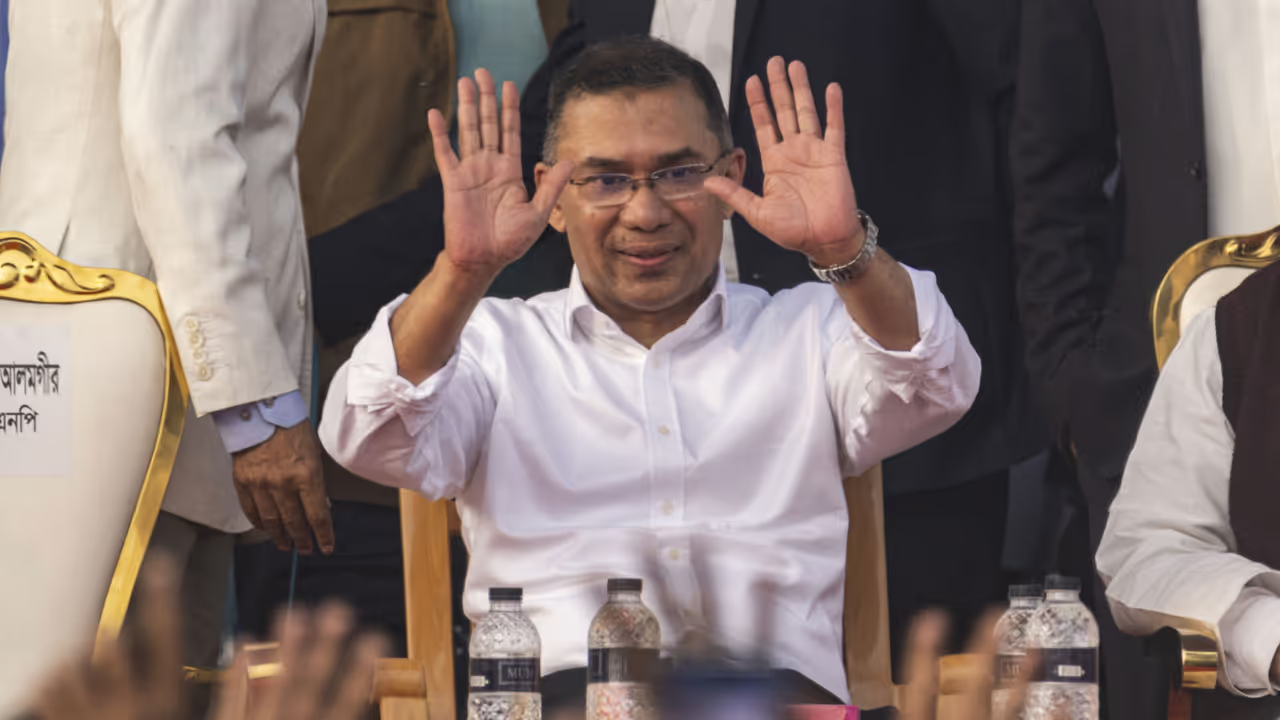
Tarique Rahman Comes Home
After 17 years in self-imposed exile, aspiring prime minister and political heavyweight Tarique Rahman finally came home.
The 60-year-old acting chairman of the Bangladesh Nationalist Party (BNP) landed in Dhaka to a sea of flags, banners and tears — his supporters waiting since dawn for a glimpse of the man many believe will lead the country into next year’s elections.
As he stepped onto the grass outside the airport, Rahman removed his shoes and bent down to scoop up a handful of soil. It was a quiet, deeply symbolic gesture — a man reconnecting with the country he left behind in 2008 amid corruption charges he has long described as political persecution.


'Have a Plan For My Country'
His first words cut through the noise: “Today, I want to say that I have a plan for my country... a safe state that people have long hoped for,”
Then, echoing a call for unity, he added:
“It is time we build a country together. This country belongs to the people in the hills and the plains, to Muslims, Buddhists, Christians and Hindus.”
Under heavy security, Rahman waved before stepping into a convoy as patriotic songs blared across the capital. His image — sometimes even depicted riding a stallion — fluttered from giant cut-outs lining Dhaka’s streets.
A Return Marked by Emotion — and High Stakes
Rahman’s return comes weeks before the February 12 general elections, the first since a student-led uprising toppled Sheikh Hasina’s government last year. With the Awami League barred from contesting, the BNP is seen as a frontrunner — and Rahman is widely expected to be its choice for prime minister should it secure a majority.
For many, the moment is both political and deeply personal.
His mother, former prime minister Khaleda Zia, now 80, lies in intensive care in a Dhaka hospital after years of imprisonment and ill health. Rahman said she had “sacrificed everything” for Bangladesh, returning home not only to take the political helm — but to see her and offer “my gratitude”.
Among the jubilant crowd was party supporter Alamgir Hossain, who said Bangladesh was in a “dire situation” — and that only Rahman “can fix it”.
A Nation on Edge
Rahman’s homecoming unfolds against rising unrest and shifting geopolitics.
The killing of Sharif Osman Hadi, a popular student leader known for his sharp criticism of India, has ignited violent protests. Hadi, 32, was shot by masked assailants in Dhaka earlier this month and later died in Singapore.
In the chaos that followed, mobs torched buildings — including two major newspapers perceived as pro-India — and even attacked the Indian High Commission in Chattogram, prompting visa services there to be suspended. Anti-India sentiment has been rising steadily since the uprising, compounded by the mob lynching of a Hindu garment worker accused of blasphemy on December 18.
Diplomatic tensions have only deepened. Sheikh Hasina, Bangladesh’s ousted leader and once-dominant political force, now lives in India as a fugitive. She has been sentenced to death in absentia for orchestrating the deadly crackdown on last year’s protests, and New Delhi says it is considering Dhaka’s extradition request.
In this volatile moment, Rahman urged restraint, warning supporters to stay watchful “in the face of conspiracies”.
He anchored his message in the country’s turbulent past: “If the nation is to repay the... debt owed to its martyrs, it must build the country the people have long yearned for."
Between Exile and Power
For years in London, Rahman kept a low public profile yet remained a loud voice on social media. His legal battles trailed him abroad — including a life sentence in absentia for a 2004 grenade attack, since overturned after Hasina’s fall.
But exile also reshaped his political persona. In June, he met Nobel laureate Muhammad Yunus, who now heads the interim government steering Bangladesh toward February’s polls.
Today, Rahman arrives as both heir and hopeful reformer — poised to take the reins from his mother and lead a party smelling electoral victory.
A Symbol — and a Test
For supporters like former BNP lawmaker Jahan Panna, 55, his return is more than strategy: “Rahman is the symbol of hope for this country,”
She believes his leadership could break what she called the “cycle of anarchy”.
But hope carries expectations. Crowds cheering beneath his banners see in Rahman both legacy and promise — a leader returning to a Bangladesh transformed by uprising, grief, and anger.
Tarique Rahman's Big Test
Whether he can knit together a fractured nation — uniting Muslims, Buddhists, Christians and Hindus, the hills and the plains — will define not only his political future, but the country’s.
For now, the man once known simply as Tarique Zia has come home — to a mother in hospital, a party on the brink of power, and a nation waiting to see what comes next.
Check the Breaking News Today and Latest News from across India and around the world. Stay updated with the latest World News and global developments from politics to economy and current affairs. Get in-depth coverage of China News, Europe News, Pakistan News, and South Asia News, along with top headlines from the UK and US. Follow expert analysis, international trends, and breaking updates from around the globe. Download the Asianet News Official App from the Android Play Store and iPhone App Store for accurate and timely news updates anytime, anywhere.