MalayalamNewsableKannadaKannadaPrabhaTeluguTamilBanglaHindiMarathiMyNation
Add Preferred SourceGoogle-icon
  • Facebook
  • Twitter
  • whatsapp
  • YT video
  • insta
  • Latest News
  • India
  • World
  • Business
  • Markets
  • Sports
  • Entertainment
  • Technology
  • Auto
  • Lifestyle
  • Home
  • Technology
  • Science
  • Jupiter and Saturn to give a rare treat in the sky this evening

Jupiter and Saturn to give a rare treat in the sky this evening

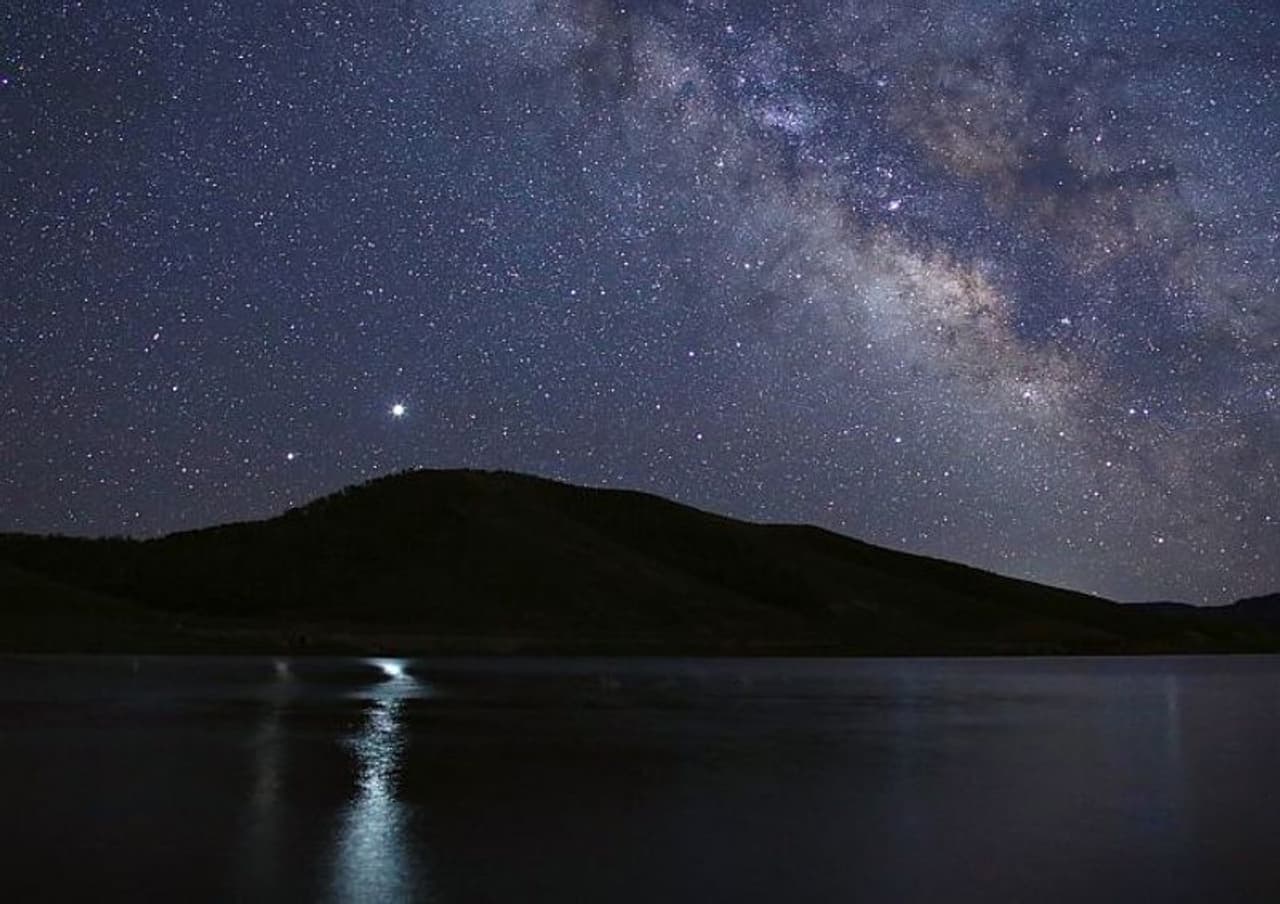
On the evening of closest approach on December 21, Jupiter and Saturn will look like a double planet, separated by only 1/5th the diameter of the full moon. The celestial treat will be visible across the planet, though the best viewing conditions will be near the equator.
2 Min read
Asianet Newsable English
Published : Dec 21 2020, 08:34 AM IST| Updated : Dec 21 2020, 08:36 AM IST
Share this Photo Gallery
  • FB
  • TW
  • Linkdin
  • Whatsapp
  • GNFollow Us
13
<p>Jupiter and Saturn will appear closer together in the night sky. On the evening of closest approach on December 21, they will look like a double planet, separated by only 1/5th the diameter of the full moon.<br />&nbsp;</p><p>The celestial treat will be visible across the planet, though the best viewing conditions will be near the equator.<br />&nbsp;</p><p>Rice University astronomer Patrick Hartigan said, "Alignments between these two planets are rather rare, occurring once every 20 years or so, but this conjunction is exceptionally rare because of how close the planets will appear to one another."</p>

<p>Jupiter and Saturn will appear closer together in the night sky. On the evening of closest approach on December 21, they will look like a double planet, separated by only 1/5th the diameter of the full moon.<br />&nbsp;</p><p>The celestial treat will be visible across the planet, though the best viewing conditions will be near the equator.<br />&nbsp;</p><p>Rice University astronomer Patrick Hartigan said, "Alignments between these two planets are rather rare, occurring once every 20 years or so, but this conjunction is exceptionally rare because of how close the planets will appear to one another."</p>

Jupiter and Saturn will appear closer together in the night sky. On the evening of closest approach on December 21, they will look like a double planet, separated by only 1/5th the diameter of the full moon.
 

The celestial treat will be visible across the planet, though the best viewing conditions will be near the equator.
 

Rice University astronomer Patrick Hartigan said, "Alignments between these two planets are rather rare, occurring once every 20 years or so, but this conjunction is exceptionally rare because of how close the planets will appear to one another."

Add Asianet Newsable as a Preferred SourcegooglePreferred
23
<p>"You would have to go all the way back to just before dawn on March 4, 1226, to see a closer alignment between these objects visible in the night sky."<br />&nbsp;</p><p>The &nbsp;next time Jupiter and Saturn will be this close together will be around March 15, 2080.&nbsp;<br />&nbsp;</p><p>For those who would like to see this phenomenon for themselves, here's what NASA suggests you should do:&nbsp;<br />&nbsp;</p><p>* Find a spot with an unobstructed view of the sky, such as a field or park. Jupiter and Saturn are bright, so they can be seen even from most cities.</p>

<p>"You would have to go all the way back to just before dawn on March 4, 1226, to see a closer alignment between these objects visible in the night sky."<br />&nbsp;</p><p>The &nbsp;next time Jupiter and Saturn will be this close together will be around March 15, 2080.&nbsp;<br />&nbsp;</p><p>For those who would like to see this phenomenon for themselves, here's what NASA suggests you should do:&nbsp;<br />&nbsp;</p><p>* Find a spot with an unobstructed view of the sky, such as a field or park. Jupiter and Saturn are bright, so they can be seen even from most cities.</p>

"You would have to go all the way back to just before dawn on March 4, 1226, to see a closer alignment between these objects visible in the night sky."
 

The  next time Jupiter and Saturn will be this close together will be around March 15, 2080. 
 

For those who would like to see this phenomenon for themselves, here's what NASA suggests you should do: 
 

* Find a spot with an unobstructed view of the sky, such as a field or park. Jupiter and Saturn are bright, so they can be seen even from most cities.

33
<p>* An hour after sunset, look to the southwestern sky. Jupiter will look like a bright star and be easily visible. Saturn will be slightly fainter and will appear slightly above and to the left of Jupiter until December 21, when Jupiter will overtake it and they will reverse positions in the sky.<br />&nbsp;</p><p>* The planets can be seen with the unaided eye, but if you have binoculars or a small telescope, you may be able to see Jupiter’s four large moons orbiting the giant planet.</p>

<p>* An hour after sunset, look to the southwestern sky. Jupiter will look like a bright star and be easily visible. Saturn will be slightly fainter and will appear slightly above and to the left of Jupiter until December 21, when Jupiter will overtake it and they will reverse positions in the sky.<br />&nbsp;</p><p>* The planets can be seen with the unaided eye, but if you have binoculars or a small telescope, you may be able to see Jupiter’s four large moons orbiting the giant planet.</p>

* An hour after sunset, look to the southwestern sky. Jupiter will look like a bright star and be easily visible. Saturn will be slightly fainter and will appear slightly above and to the left of Jupiter until December 21, when Jupiter will overtake it and they will reverse positions in the sky.
 

* The planets can be seen with the unaided eye, but if you have binoculars or a small telescope, you may be able to see Jupiter’s four large moons orbiting the giant planet.

About the Author

AN
Asianet Newsable English
Latest Videos
Recommended Stories
Recommended image1
India Unveils New Seismic Map, Puts Entire Himalayan Arc in Highest-Risk Zone VI
Recommended image2
You Spend 78 Minutes Travelling Each Day, No Matter Where You Live or How You Travel
Recommended image3
Talking to the Dead with AI: The Promise, the Illusion, and the Business Behind It
Recommended image4
Who Was James Watson: The DNA Pioneer Who Changed Science Forever
Recommended image5
How GSAT-7R Makes India's Navy More Connected, Secure and Ready at Sea
News
Breaking News TodayLatest News TodayIndia NewsWorld NewsKarnataka NewsKerala NewsIndian Defence NewsBengaluru News
Entertainment
Entertainment NewsOTT ReleaseBigg BossMovie ReviewsBox Office Collection
Sports
Sports NewsCricket NewsFootball NewsWWE NewsOther Sports
Lifestyle
Lifestyle NewsFood and RecipesHealth NewsAstrologyCareer NewsWeb Stories
Business
Business newsShare Market NewsGold PriceDA Hike8th Pay CommissionTechnology NewsAutomobile News
Weather
WeatherKolkata WeatherChennai WeatherBengaluru Weather
Asianet
Follow us on
  • Facebook
  • Twitter
  • whatsapp
  • YT video
  • insta
  • Download on Android
  • Download on IOS
  • About Website
  • Terms of Use
  • Privacy Policy
  • CSAM Policy
  • Complaint Redressal - Website
  • Compliance Report Digital
  • Investors
© Copyright 2025 Asianxt Digital Technologies Private Limited (Formerly known as Asianet News Media & Entertainment Private Limited) | All Rights Reserved