
30 things we learnt from the Economic Survey 2020-21
The Economic Survey 2020-21 released by the Narendra Modi government on January 29 pointed towards a V-shaped economic recovery in the next financial year. Asianet Newsable glossed through the survey report to did up some key statistics. Take a look.
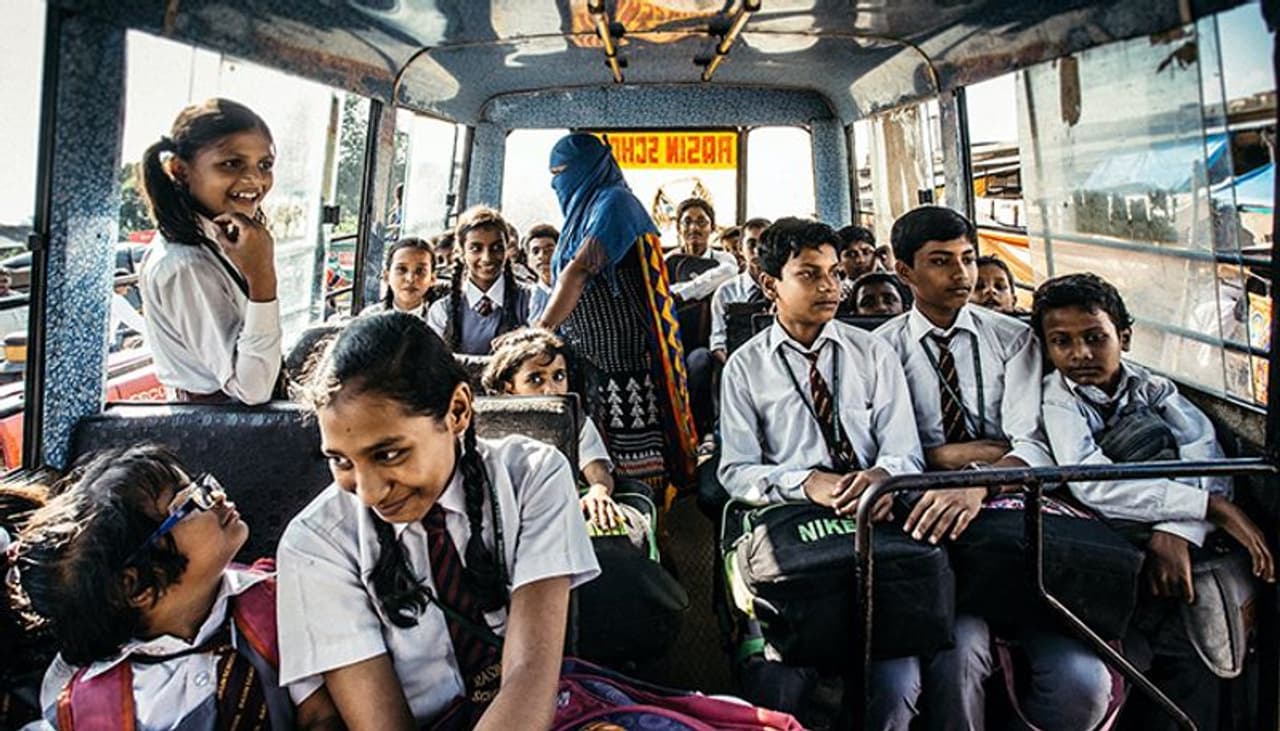
<p>* The percentage of enrolled children from government and private schools owning a smartphone increased enormously from 36.5 per cent in 2018 to 61.8 per cent in 2020 in rural India.</p> <p>* India has attained a literacy level of almost 96 per cent at the elementary school level. As per National Sample Survey (NSS), the literacy rate of persons of age 7 years and above at the All India level stood at 77.7 per cent. </p> <p>* The physical infrastructure of more than 9.72 lakh government elementary schools has improved significantly. Out of these, 90.2 per cent have girls’ toilet, 93.7 per cent have boys’ toilet, 95.9 per cent have provision of drinking water facility, 82.1 per cent have wash (drinking water, toilet and hand wash) facility, 84.2 per cent have medical check-up facility, 20.7 per cent have computer and 67.4 per cent have electricity Connection and 74.2 per cent have ramps among other essential services.</p>
* The percentage of enrolled children from government and private schools owning a smartphone increased enormously from 36.5 per cent in 2018 to 61.8 per cent in 2020 in rural India.
* India has attained a literacy level of almost 96 per cent at the elementary school level. As per National Sample Survey (NSS), the literacy rate of persons of age 7 years and above at the All India level stood at 77.7 per cent.
* The physical infrastructure of more than 9.72 lakh government elementary schools has improved significantly. Out of these, 90.2 per cent have girls’ toilet, 93.7 per cent have boys’ toilet, 95.9 per cent have provision of drinking water facility, 82.1 per cent have wash (drinking water, toilet and hand wash) facility, 84.2 per cent have medical check-up facility, 20.7 per cent have computer and 67.4 per cent have electricity Connection and 74.2 per cent have ramps among other essential services.


<p>* Only 2.4 per cent of the workforce of age 15-59 years have received formal vocational / technical training and another 8.9 per cent of the workforce received training through informal sources. Out of the 8.9 per cent workforce who received non-formal training, the largest chunk is contributed by on-the-job training (3.3 per cent), followed by self-learning (2.5 per cent) and hereditary sources (2.1 per cent) and other sources (1 per cent).</p> <p>* Access to bare necessities is highest in states like Kerala, Punjab, Haryana and Gujarat while lowest in Odisha, Jharkhand, West Bengal and Tripura. There has been improvement in each of the five dimensions -- access to water, housing, sanitation, micro-environment and other facilities</p> <p>* Life expectancy at birth in India has improved from 69.4 years in 2018 to 69.7 years in 2019<br /> </p>
* Only 2.4 per cent of the workforce of age 15-59 years have received formal vocational / technical training and another 8.9 per cent of the workforce received training through informal sources. Out of the 8.9 per cent workforce who received non-formal training, the largest chunk is contributed by on-the-job training (3.3 per cent), followed by self-learning (2.5 per cent) and hereditary sources (2.1 per cent) and other sources (1 per cent).
* Access to bare necessities is highest in states like Kerala, Punjab, Haryana and Gujarat while lowest in Odisha, Jharkhand, West Bengal and Tripura. There has been improvement in each of the five dimensions -- access to water, housing, sanitation, micro-environment and other facilities
* Life expectancy at birth in India has improved from 69.4 years in 2018 to 69.7 years in 2019
<p>* Time Use Survey 2019 showed females spending disproportionately large time on unpaid domestic and caregiving services to household members compared to their male counterparts. This explains the reason for the relatively low level of female LFPR in India.</p> <p>* Despite the disruptions being witnessed globally, FDI inflows into India's services sector grew by 34% Y-o-Y during April-September 2020 to reach $23.6 billion</p> <p>* FDI equity inflows were $49.98 billion in FY20 as compared to $44.37 billion during FY19<br /> </p>
* Time Use Survey 2019 showed females spending disproportionately large time on unpaid domestic and caregiving services to household members compared to their male counterparts. This explains the reason for the relatively low level of female LFPR in India.
* Despite the disruptions being witnessed globally, FDI inflows into India's services sector grew by 34% Y-o-Y during April-September 2020 to reach $23.6 billion
* FDI equity inflows were $49.98 billion in FY20 as compared to $44.37 billion during FY19
<p>* India's GNI per capita (gross national income divided by mid-year population) has increased from US$6,427 in 2018 to US$6,681 in 2019.</p> <p>* The shipping turnaround time at ports has almost halved from 4.67 days in 2010-11 to 2.62 days in 2019-20</p> <p>* 80.96 crore beneficiaries were provided foodgrains above National Food Security Act mandated requirement free of cost till November, 2020.</p>
* India's GNI per capita (gross national income divided by mid-year population) has increased from US$6,427 in 2018 to US$6,681 in 2019.
* The shipping turnaround time at ports has almost halved from 4.67 days in 2010-11 to 2.62 days in 2019-20
* 80.96 crore beneficiaries were provided foodgrains above National Food Security Act mandated requirement free of cost till November, 2020.
<p>* Food Processing Industries sector growing at an Average Annual Growth Rate of around 9.99% as compared to around 3.12% in agriculture and 8.25 % in manufacturing at 2011-12 prices during the last 5 years ending 2018-19</p> <p>* Rs 18000 crore have been deposited directly in the bank accounts of 9 crore farmer families of the country in December, 2020 in the 7th installment of financial benefit under the PM-KISAN scheme</p> <p>* 70 lakh farmers benefitted and claims worth Rs 8741.30 crore were transferred during COVID-19 lock down period.</p>
* Food Processing Industries sector growing at an Average Annual Growth Rate of around 9.99% as compared to around 3.12% in agriculture and 8.25 % in manufacturing at 2011-12 prices during the last 5 years ending 2018-19
* Rs 18000 crore have been deposited directly in the bank accounts of 9 crore farmer families of the country in December, 2020 in the 7th installment of financial benefit under the PM-KISAN scheme
* 70 lakh farmers benefitted and claims worth Rs 8741.30 crore were transferred during COVID-19 lock down period.
<p>* Agriculture set to cushion the shock of the COVID-19 pandemic on the Indian economy in FY21 with a growth of 3.4%</p> <p>* Total food grain production in the country in the agriculture year 2019-20 (as per fourth advance estimates), is 11.44 million tonnes more than than during 2018-19.</p> <p>* Sharp spike as investors turned to gold as a safe haven investment amid COVID-19 induced economic uncertainties. Compared to other assets, gold had considerably higher returns during FY2020-21.</p>
* Agriculture set to cushion the shock of the COVID-19 pandemic on the Indian economy in FY21 with a growth of 3.4%
* Total food grain production in the country in the agriculture year 2019-20 (as per fourth advance estimates), is 11.44 million tonnes more than than during 2018-19.
* Sharp spike as investors turned to gold as a safe haven investment amid COVID-19 induced economic uncertainties. Compared to other assets, gold had considerably higher returns during FY2020-21.
<p>* Inflation ranged from 3.2% to 11% across States/UTs during June-December 2020 compared to (-) 0.3% to 7.6% during the same period last year.</p> <p>* Gross Non-Performing Assets ratio of Scheduled Commercial Banks decreased from 8.21% at end-March, 2020 to 7.49% at end-September, 2020</p> <p>* At end-September 2020, India's external debt placed at US$ 556.2 billion -- a decrease of US$ 2.0 billion (0.4%) as compared to end-March 2020.</p>
* Inflation ranged from 3.2% to 11% across States/UTs during June-December 2020 compared to (-) 0.3% to 7.6% during the same period last year.
* Gross Non-Performing Assets ratio of Scheduled Commercial Banks decreased from 8.21% at end-March, 2020 to 7.49% at end-September, 2020
* At end-September 2020, India's external debt placed at US$ 556.2 billion -- a decrease of US$ 2.0 billion (0.4%) as compared to end-March 2020.
<p>* India has a current account surplus of US$ 34.7 billion (3.1% of GDP). India to end with an annual current account surplus after a period of 17 years.</p> <p>* India's merchandise trade deficit was lower at US$ 57.5 billion in April-December, 2020 as compared to US$ 125.9 billion in the corresponding period last year.</p> <p>* India's forex reserves at an all-time high of US$ 586.1 billion as on January 08, 2021, covering about 18 months worth of imports.</p>
* India has a current account surplus of US$ 34.7 billion (3.1% of GDP). India to end with an annual current account surplus after a period of 17 years.
* India's merchandise trade deficit was lower at US$ 57.5 billion in April-December, 2020 as compared to US$ 125.9 billion in the corresponding period last year.
* India's forex reserves at an all-time high of US$ 586.1 billion as on January 08, 2021, covering about 18 months worth of imports.
<p>* Monthly GST collections have crossed the Rs 1 lakh crore mark consecutively for the last 3 months, reaching its highest levels in December 2020 ever since the introduction of GST</p> <p>* India's business sector needs to significantly ramp up investments in R&D. India’s gross domestic expenditure on R&D (GERD) is lowest amongst top ten economies.</p> <p>* The fifth largest economy in the world has been rated as the lowest rung of the investment grade (BBB-/Baa3) in sovereign credit ratings.</p>
* Monthly GST collections have crossed the Rs 1 lakh crore mark consecutively for the last 3 months, reaching its highest levels in December 2020 ever since the introduction of GST
* India's business sector needs to significantly ramp up investments in R&D. India’s gross domestic expenditure on R&D (GERD) is lowest amongst top ten economies.
* The fifth largest economy in the world has been rated as the lowest rung of the investment grade (BBB-/Baa3) in sovereign credit ratings.
<p>* India was the only country among emerging markets to receive equity FII inflows in 2020</p> <p>* The Economic Survey 2020-21 has strongly recommended an increase in public spending on healthcare services from 1 percent to 2.5-3 percent of GDP.</p> <p>* The Indian start-up ecosystem has been progressing well amidst the Covid-19 pandemic. The ecosystem defied the odds and had added a record number of 12 start-ups to the unicorn list last year, taking the total to 38.</p>
* India was the only country among emerging markets to receive equity FII inflows in 2020
* The Economic Survey 2020-21 has strongly recommended an increase in public spending on healthcare services from 1 percent to 2.5-3 percent of GDP.
* The Indian start-up ecosystem has been progressing well amidst the Covid-19 pandemic. The ecosystem defied the odds and had added a record number of 12 start-ups to the unicorn list last year, taking the total to 38.
Stay updated with all the latest Business News, including market trends, Share Market News, stock updates, taxation, IPOs, banking, finance, real estate, savings, and investments. Track daily Gold Price changes, updates on DA Hike, and the latest developments on the 8th Pay Commission. Get in-depth analysis, expert opinions, and real-time updates to make informed financial decisions. Download the Asianet News Official App from the Android Play Store and iPhone App Store to stay ahead in business.