- Home
- Business
- How DMart Sells Products So Cheap And Still Earns Crores: The Business Model Explained
How DMart Sells Products So Cheap And Still Earns Crores: The Business Model Explained
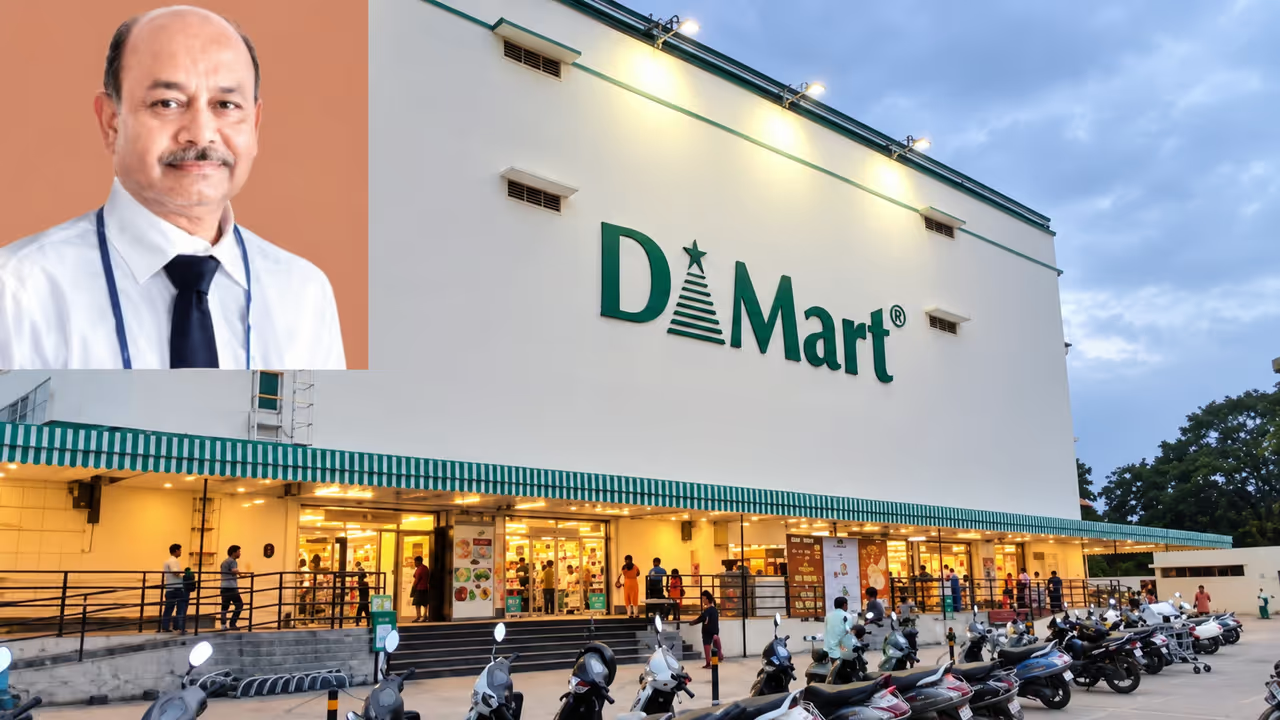
Ever wondered how DMart sells groceries at such cheap rates and still makes massive profits? We break down the ultimate business secrets of Avenue Supermarts, from bulk buying to fast inventory turnover, that bring in thousands of crores in profit.
The Mind-Blowing Business Secret Of DMart
You always get daily essentials like groceries, soaps, biscuits, and cooking oil at much cheaper rates when you visit DMart. But how does the company actually make money? They rely on a smart mix of low prices, massive sales volumes, strict cost control, and fast inventory turnover to drive their success.


1. Massive Discounts From Bulk Buying
DMart buys products directly from manufacturers in massive quantities. A small shop might buy 100 boxes of soap, but DMart orders thousands of boxes. Manufacturers give them heavy discounts for these giant orders. For example, DMart buys a Rs 100 item for Rs 95 and sells it for Rs 98. They keep a Rs 3 margin while the customer gets a great deal.
2. Low Profit Margins But Huge Sales Volumes
The company proves that selling items in huge volumes at a lower margin brings in more money than keeping a Rs 10 margin on a single item. If they make a Rs 5 margin per item, selling 100 items makes Rs 500, but selling 1,000 items makes Rs 5,000, and selling 10,000 items makes Rs 50,000. They calculate the final net profit only after deducting salaries, electricity, and transport costs.
3. Instant Cash Payments To Suppliers
Manufacturers and distributors always worry about getting their payments on time. Business reports show that DMart pays its suppliers extremely fast. Suppliers use this quick cash to reinvest in production. In return, these manufacturers give extra price discounts to DMart for the big orders and instant payments.
4. Keeping Store Operational Costs Low
Operational costs like rent, staff salaries, electricity, interiors, and transport directly eat into supermarket profits. DMart controls these costs by operating out of self-owned buildings. This removes the rent burden, though they still pay for maintenance and taxes. They also avoid flashy interiors and save money through smart space management.
5. Super Fast Inventory Turnover
Unsold goods block invested money and increase storage costs, expiry risks, and damage. DMart sells fast-moving daily items quickly and buys fresh stock immediately. This keeps the cash flowing back into the business cycle. If they sell Rs 1 lakh worth of stock quickly, they reinvest that same money to keep the business running smoothly.
6. The Power Of Private Labels
DMart sells many products under its own private labels, especially in the grocery, food grain, and home appliance sections. These in-house products cut out middleman costs and give the company better control over pricing. However, the company still has to manage packaging, quality control, transport, and manufacturing expenses for these items.
7. FY 2025-26: What Is The Actual Profit?
Avenue Supermarts Limited, the parent company of DMart, shared its FY 2025-26 annual report data. The company posted an operational revenue of around Rs 66,968 crore and a Profit After Tax (PAT) of about Rs 3,224 crore. This means the PAT margin sits at roughly 4.8%. Basically, the company makes Rs 4.80 in net profit for every Rs 100 in revenue.
8. Future Business Challenges
Selling at low prices alone does not guarantee permanent success. Changing consumer habits, competitor discounts, rising staff costs, and new branch investments constantly challenge their profits. The rapid rise of online quick commerce grocery delivery is now a massive threat to the traditional supermarket sector. DMart succeeds through a combined strategy of bulk buying, fast sales, and strict cost control.
Stay updated with all the latest Business News, including market trends, Share Market News, stock updates, taxation, IPOs, banking, finance, real estate, savings, and investments. Track daily Gold Price changes, updates on DA Hike, and the latest developments on the 8th Pay Commission. Get in-depth analysis, expert opinions, and real-time updates to make informed financial decisions. Download the Asianet News Official App from the Android Play Store and iPhone App Store to stay ahead in business.