- Home
- Business
- South Indian Curries to North Indian Laddoos: Why Coconuts Stole Spotlight in Budget 2026
South Indian Curries to North Indian Laddoos: Why Coconuts Stole Spotlight in Budget 2026
Union Budget 2026: FM Sitharaman announced a dedicated scheme to boost India's coconut production by replacing ageing trees, alongside support for cashew and cocoa.
Budget 2026
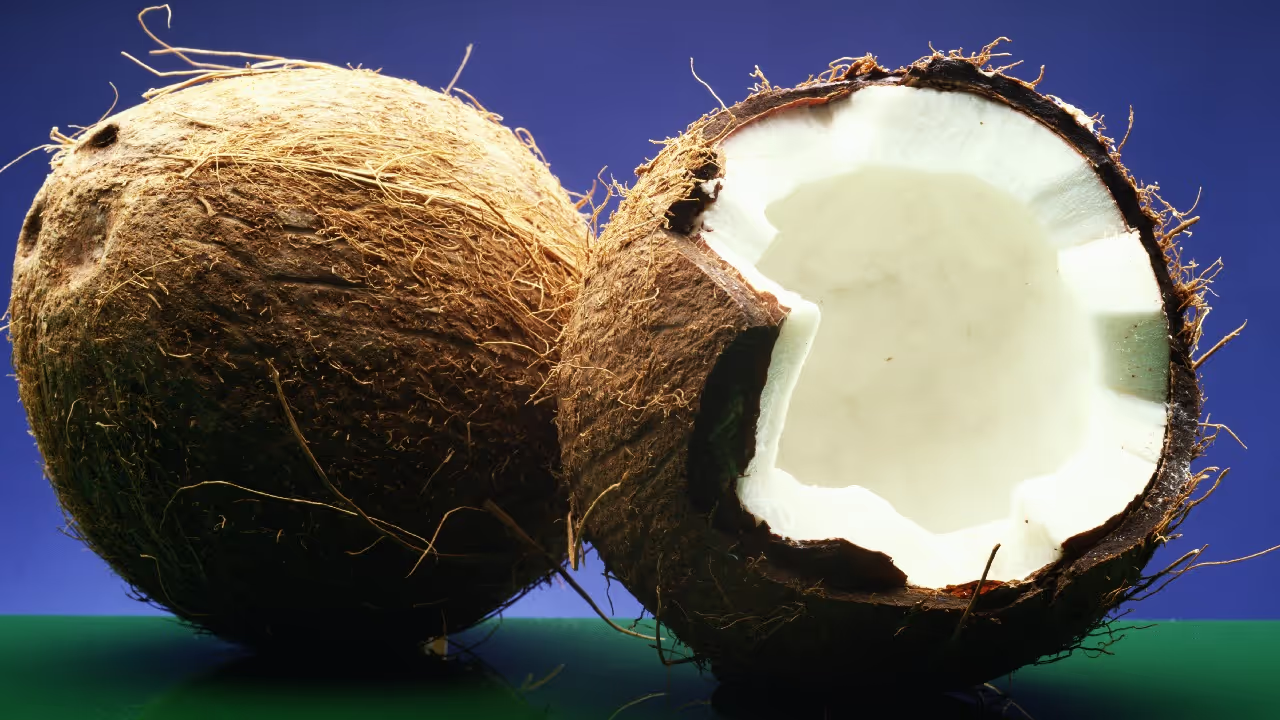
Coconut found a special mention in Budget 2026, and for good reason. While presenting the Union Budget, Finance Minister Nirmala Sitharaman announced a dedicated scheme aimed at strengthening India’s coconut sector.
The focus is clear: boost production and productivity by replacing ageing, low-yield coconut trees with high-quality saplings across major coconut-growing states. It’s a forward-looking move that blends modern farming practices with the need to protect a crop deeply rooted in India’s food habits, culture and rural economy.


Bigger Push for Cashew and Cocoa Too
Coconut wasn’t the only beneficiary. The Budget also rolled out targeted programmes for cashew and cocoa, signalling a broader push to strengthen plantation crops.
The goal is to make India self-reliant in raw production and processing, reduce import dependence, and improve export competitiveness. By 2030, the government wants Indian cashew and cocoa to be seen as premium products in global markets—much like coffee or tea today.
Together, these initiatives aim to support farmers, encourage value addition and build a stronger agri-export ecosystem.
Why Coconut Matters Beyond Farming
In India, coconut is far more than just another crop. It’s a kitchen staple, a health favourite and a cultural symbol rolled into one.
India is already among the world’s top coconut producers, with output of about 15.3 million metric tonnes in 2023–24, cultivated across 2.33 million hectares. With improved irrigation and better farm practices, production is projected to rise to nearly 17.6 million metric tonnes by 2026.
States Powering India’s Coconut Economy
Karnataka and Kerala
Karnataka currently leads the coconut race, producing around 6,151 million nuts in 2024–25. Tamil Nadu follows closely with 6,091 million nuts. Together, these two states account for more than half of India’s total coconut output.
Kerala, Andhra Pradesh and Telangana remain key contributors, though Karnataka has overtaken Kerala in recent years thanks to sustained policy support and technology-driven farming.
Productivity and Rural Livelihoods
India’s coconut productivity—ranging between 9,687 and 9,871 nuts per hectare—is among the highest in the world. Southern states dominate production and form the backbone of the sector.
The coconut economy supports nearly 12 million livelihoods and fuels a range of allied industries, from coir and coconut oil to food processing and handicrafts.
Health Benefits Fueling Rising Demand
Health Benefits
Coconut’s popularity isn’t just cultural—it’s nutritional too. Its high dietary fibre aids digestion and helps with weight management by keeping you fuller for longer.
Medium-chain triglycerides provide quick energy, potassium supports blood pressure control, and antioxidants help slow ageing. Add to that its natural antimicrobial properties, and it’s easy to see why coconut is a hit with health-conscious consumers.
From Kitchen Staple to Value-Added Products
From coconut water as a natural hydrator to coconut oil for cooking, skincare and hair care, the crop has endless uses. Copra remains central to oil extraction, but the real growth is happening in value-added products.
Coconut milk, cream, neera, jaggery and vinegar are gaining popularity, driven by vegan, keto and plant-based diet trends both in India and abroad.
What Could Drive Coconut Demand Further
Expanding urban retail presence, spreading awareness about health benefits and smart social media marketing can give coconut demand a fresh push. Showcasing its versatility, from fitness drinks to beauty routines, can help it reach newer audiences.
Government initiatives like One District One Product can also boost local processing and value addition, aligning coconut products with global health and plant-based consumption trends.
Coconut in the South: A Daily Essential
In South India, coconut is part of everyday life. Kerala’s cuisine relies heavily on it for dishes like avial, meen kuzhambu and erissery. Tamil Nadu uses coconut in thengai thuvaiyal, vegetable kootu and coconut rice, especially during festivals and temple meals.
Across coastal regions, coconut chutney is inseparable from idli, dosa and vada, while seafood dishes like chemeen curry depend on coconut-based gravies for balance and depth of flavour.
Coconut in the North: Selective but Special
In North India, coconut is used more selectively but still holds a special place. It shines in festive sweets like nariyal ki barfi and kopra pak, while coconut milk adds richness to gravies such as navratan korma.
Tender coconut water is a summer staple in street markets, and coconut oil continues to be trusted in traditional hair care routines—proof that the coconut’s appeal cuts across regions.
Stay updated with all the latest Business News, including market trends, Share Market News, stock updates, taxation, IPOs, banking, finance, real estate, savings, and investments. Track daily Gold Price changes, updates on DA Hike, and the latest developments on the 8th Pay Commission. Get in-depth analysis, expert opinions, and real-time updates to make informed financial decisions. Download the Asianet News Official App from the Android Play Store and iPhone App Store to stay ahead in business.