
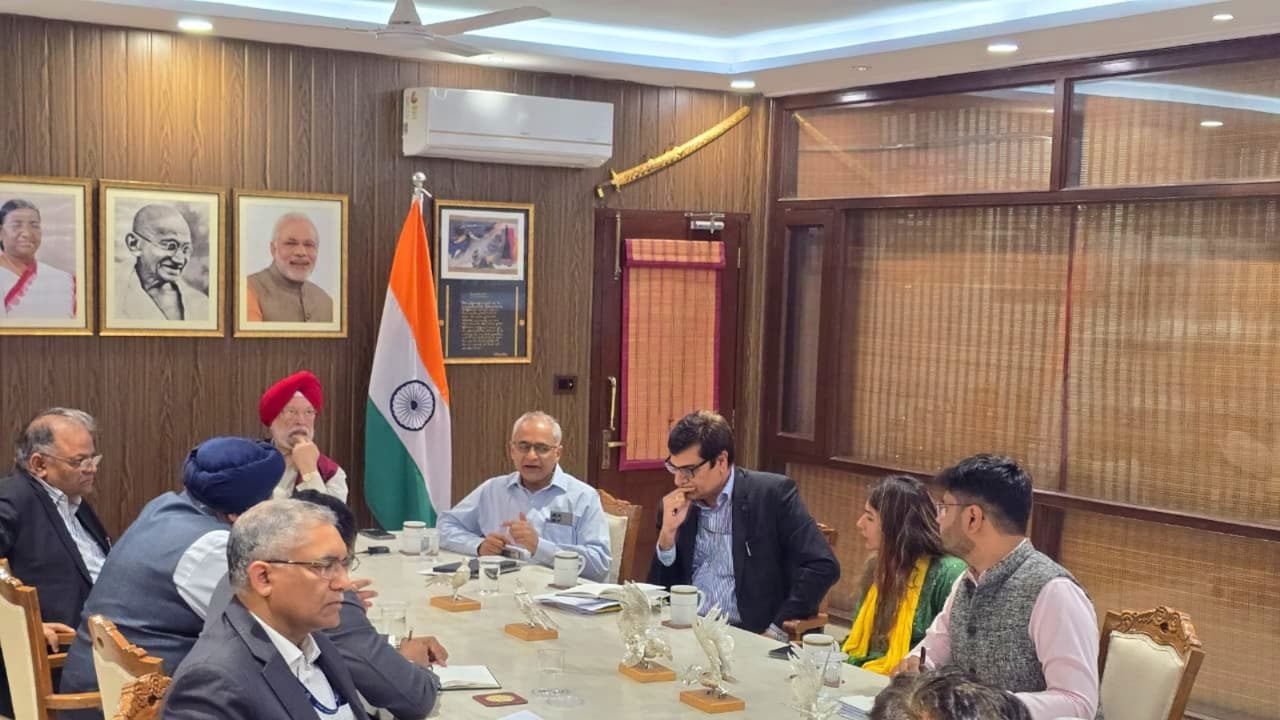
Union Minister Hardeep Puri reviewed India's crude oil and LPG supply amid West Asia tensions, with the ministry assuring availability. Separately, the Commerce Ministry assessed the impact on export-import cargo flows with key stakeholders.
Petroleum Ministry Reviews Supply Situation
Union Petroleum and Natural Gas Minister Hardeep Puri on Monday reviewed the supply situation for crude oil, LPG, and other petroleum products with senior officials from the Ministry and PSUs, amid tensions in West Asia.
The Petroleum Ministry has said it is continuously monitoring the evolving situation, and all necessary steps will be taken in order to ensure the availability and affordability of major petroleum products in the country. India is a major importer of crude oil and natural gas from West Asian countries. "We are continuously monitoring the evolving situation, and all necessary steps will be taken in order to ensure availability and affordability of major petroleum products in the country," the Ministry of Petroleum and Natural Gas said in a post on X.
Commerce Ministry Assesses Trade Impact
Moreover, the Department of Commerce, Ministry of Commerce and Industry, held a stakeholder consultation with all stakeholder ministries, key logistics and trade facilitation partners to review the emerging geo-political situation in West Asia and its potential impact on India's export-import cargo flows, including the export ecosystem.
According to the Ministry of Commerce and Industry, the meeting was chaired by Special Secretary, Department of Commerce, Suchindra Misra and Lav Agarwal, Director General of Foreign Trade (DGFT). The meeting was attended by representatives from logistics operators and shipping lines/forwarders, Central Board of Indirect Taxes and Customs, Department of Financial Services, Ministry of Petroleum and Natural Gas, Ministry of Ports, Shipping and Waterways, the Reserve Bank of India, export promotion ecosystem and other concerned agencies.
Stakeholders presented an assessment of the evolving operational environment, including routing and transit-time changes, vessel scheduling adjustments, container/equipment availability, freight and insurance cost trends, and implications for time-sensitive exports. "The discussions covered the need to maintain predictability in cargo movement, minimise avoidable delays, and ensure seamless documentation and payment processes for exporters and importers," the Commerce Ministry said in a statement. (ANI)
(Except for the headline, this story has not been edited by Asianet Newsable English staff and is published from a syndicated feed.)