
While PM Modi's visit to Russia is special as always, the relationship between the countries has changed Russia believes India has upgraded its relationship with the US, while Russia itself is closer to China Russian interests in Afghanistan also mean it is will to play ball with Pakistan to a large degree
PM's Modi's visit to Moscow has partly arrested the drift in the relationship between the two countries. Two major outcomes happened during this visit in the defence and energy sphere. The payment for these will be spread over a decade and will be in the region of $12 billion.
By signing the contract for the units 5 and 6 of the Kudankulam nuclear plant, India can look to a greater variety in her energy fuel mix and also free up those reactors not under safeguards for weapon-grade fuel.
The Russian assistance regarding a soft loan of $4.2 billion over a decade will help in building the nuclear power plant. The nuclear deal will eventually generate a 1000 MW of electricity and is an important step in energy security.
Defence purchases:
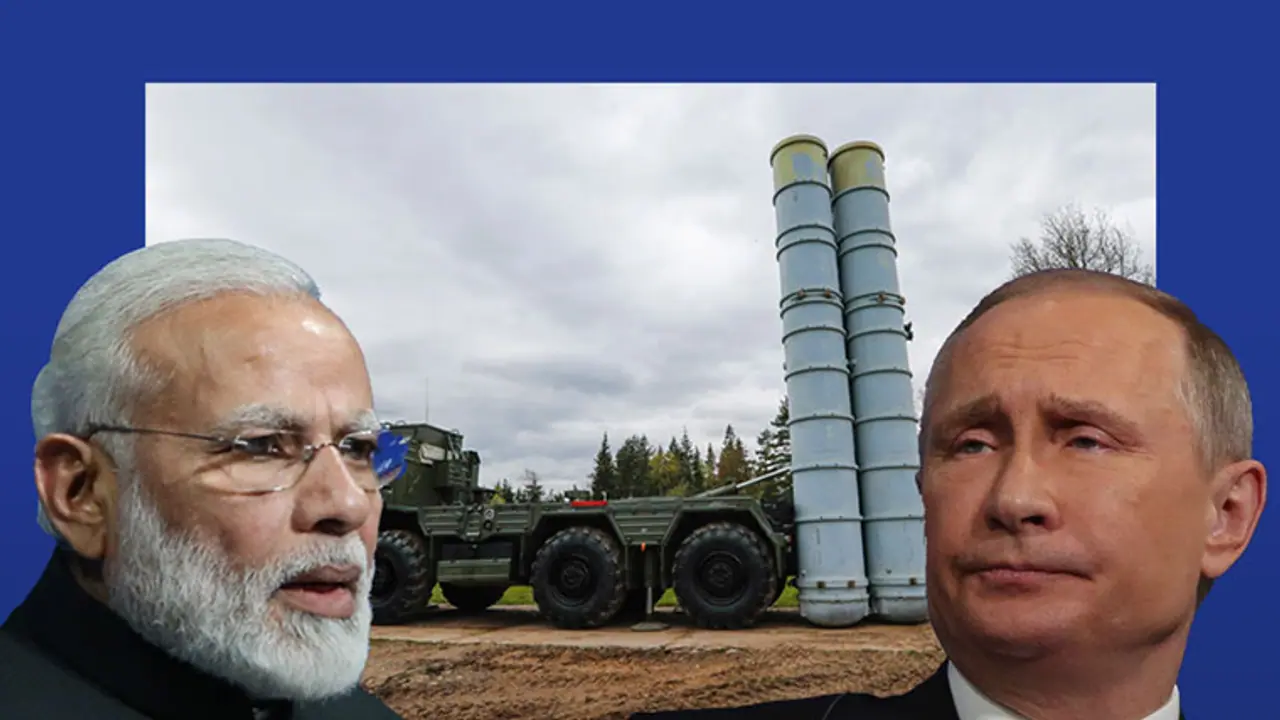
Russia's decision to supply the S-400 anti-missiles and aircraft system is the most important outcome for India. The S-400 Triumph long-range air defence missile system has the capability to destroy incoming hostile aircraft, missiles and even drones at ranges of up to 400 km.
It is a radical upgrade in India capabilities to defend her against fighter aircraft and nuclear missiles and adds a new dimension to her defensive capabilities. India will reportedly buy eight regiments of this missile each with 12 launchers and 24 missiles.
India also signed the joint venture for producing 200 Ka-228 helicopters. 160 of the multi-utility choppers will be made in India. However, media reports said that the cost of making them in India would be about two and a half times that of the off the shelf purchases - including new assembly line and retransfer of technology costs.
In the long run, costs will come down, and it will benefit India to manufacture the choppers indigenously boosting defence capability.
India also signed MOU's on co-producing three frigates with Russia. This falls in place with the Indian Navy's plan of having a 200-ship fleet by 2027. In a first, the two countries also decided to have a triservice exercise next year.
However, amongst all this good news the India-Russian fifth generation fighter development program seems to have lapsed with Russia not showing enthusiasm for co-developing the $50 billion project and not sharing technology.
A diplomatic dissonance:
Amid all the military cheer, diplomatically India's relation with Russia is moving away from being special to be one of the many in a multi-lateral world. In the Russian perception, India has upgraded its US relationship, and Moscow has moved closer to Beijing. Russia is China's largest oil supplier. It also supplies very high-end military hardware to China.
In December 2016, the first batch of SU35 advanced multi-role fighters was delivered, and the same S-400 air defence system will be delivered in 2018. Russia has also expressed interest and Putin attended the one-road-one-belt conference.
Russia may come to regret both decisions. In the past, China has copied Russian weaponry, and the one belt initiative will undercut Russia in her Central Asian backyard.
Afghan Jitters:
In Afghanistan, Russia and India are in a terrible face off. India believes that Taliban is the problem, while after the success in Syria, Russia thinks that the Taliban is a part of the solution.
In Russian perception, it can bog down both America and the Islamic state. There was no progress on this impasse during the visit. This is bad for India because for Taliban to succeed in Afghanistan - Russia may be prepared to work with Pakistan and her proxies. The last word has not been said in the great game yet.
An economy in disarray:
India's non-defense trade with Russia has fallen to $7.8 billion in 2016. This is on account of the shrinking Russian economy. For all its geostrategic heft, Russia is an economic pygmy with her economy at $1.3 trillion being half the size of California and just over 60 per cent the size of India. There are great commonalities between Russia and India should the later decides to diversify her economy away from oil - as was signalled by Putin at St. Petersburg.
It remains to be seen if the goal of $30 billion non-defense trade between the two countries translates into the actual business over the next decade. India will do well to be patient and persistent with Russia for rich long-term rewards. Setting up of a special Russia desk at the ministry of commerce is a good start.
