
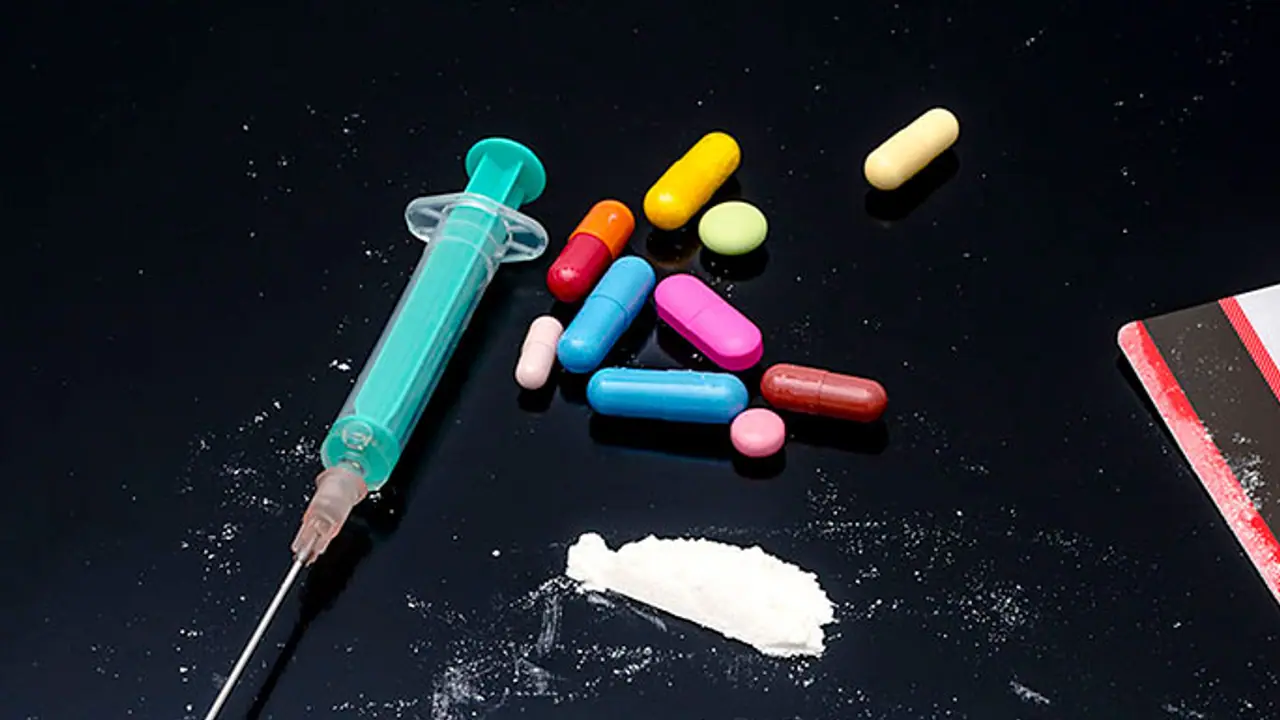
A few months ago, a class 10 student was brought by his parents to Hyderabad-based Hope Trust, a centre for Psychological Wellness and Deaddiction Treatment. He had been smoking weed for some time, resulting in erratic and irrational behaviour. Weed is considered a gateway drug since it is easily available and not too expensive. Added to that, is the myth that smoking weed helps in making the person more creative.
Rahul Luther, who runs Hope Trust says one in every five cases, he gets is a minor. He says the addiction is most often characterised by denial and a ``not my kid'' syndrome. Even schools do not accept the problem, arguing the smoking does not take place on school premises. What they do not realise is that addiction is not just about consumption. The planning to procure the drug and the post-smoking hangover invariably happens during school hours.
``It is the teachers who need to be taught how to look out for symptoms,'' says Rahul Luther. ``Every school needs a counsellor and the staff needs to be sensitised. It is also important for schools to focus on the all-round development of every child, engage him and her in games, debates instead of only academic pursuit in dimly lit classrooms.''
After the arrest of seven peddlers and busting of a major drug racket in Hyderabad since Saturday, the Prohibition and Excise Department has now sent notices to 20 prominent schools in the city, informing them that some of their students were indulging in substance abuse. Akun Sabharwal, the Director of the Department, has asked the schools to look out for deviant behaviour and check on easy availability of cash and credit cards with students.
``There will be no legal action against the minors. But the schools should sensitise the teachers and students about substance abuse, take it up as a campaign. Since our investigation has found that the delivery by peddlers most often happens in the vicinity of the school, areas around the school especially shops should be monitored as well,'' says Sabharwal.
In the last four days, 700 blots of LSD (Lysergic Acid Diethylamide) and 35 grams of MDMA (Methylene Dioxy Methamphetamine), referred to as the Ecstasy drug, valued at Rs 25 lakh were seized. The worrying part is that all orders are placed online, through Whatsapp which makes parental monitoring of social media behaviour by their children all the more important. Preliminary investigation of the contact list on the phones confiscated from the peddlers has revealed that they serviced nearly one thousand clients in Hyderabad alone. It included not just students but MNC professionals, film stars, celebrities as well.
But while the Excise department obviously means well, getting the schools to get their act together is not its job. The Education Department has surprisingly maintained radio silence, its lack of response almost suggesting that it does not think substance abuse is a problem.
``This is about child safety, a child protection issue,'' says Isidore Phillips, Child Rights activist. ``Just making drug abuse a chapter in the curriculum won't do. Despite the problem, India does not have a single deaddiction centre meant exclusively for children. It is a serious lacuna in our system. In fact, if a child comes into contact with an adult at a common rehab centre, the chances of he or she graduating to a higher form of drug are high.''
Activists also question the role of the National Health Mission in this entire debate. In January 2014, the NHM started the Rashtriya Kishor Swasthya Karyakram, targeted at adolescents and its aim is to enable children in the age group of 10 to 19, take informed decisions about their health and well-being. In fact, one of its stated objectives is to prevent substance misuse. Yet in the fragmented, fractured way of looking at school education, it focuses only on government schools and not on private institutions. So you have Excise officials, untrained in the task of looking at the issue from a health perspective, dealing with minors from a policing perspective. A classic case of governance models existing on paper but not translating into action, with each department oblivious to the existence of the other.
In the light of the revelations made by the Hyderabad raids, the immediate priority is to put the affected teenagers through a rehab session. Some of the Whatsapp messages give an indication of the extent of desperation and the extent of comfort between the minor and the peddler. Like this one from a 14-year-old student, asking the peddler for a blot of Molecule, a drug that costs Rs 6000 per blot (a blot is of the size smaller than a postage stamp that the addict snuffs the drug from).
``I liked the Molecule. It gave me a nearly 12-hour high. I want more, can you arrange?''
