
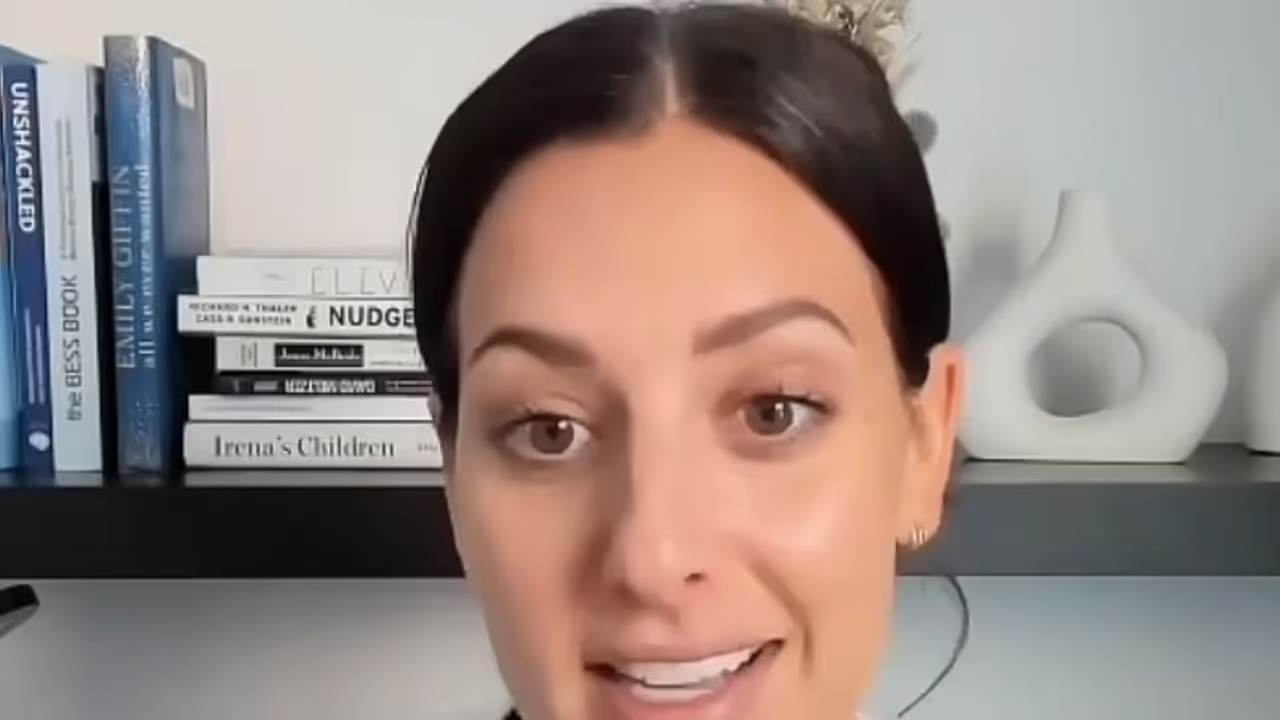
Proposed US student visa rule changes may harm international graduates, particularly Indians, and worsen talent shortages in tech and AI by eliminating the flexible 'Duration of Status' system, according to an expert.
Proposed changes to US student visa rules could make it harder for international graduates, particularly Indians, to remain employed in the United States after completing their studies, potentially worsening talent shortages in sectors such as artificial intelligence (AI), technology and engineering, according to Danielle Goldman, co-founder and CEO of Build. On May 5, 2026, the US Department of Homeland Security (DHS) proposed eliminating the "Duration of Status" (D/S) framework for F-1 student visas. Under the current system, international students are generally allowed to remain in the US as long as they maintain their student status and comply with visa requirements. The proposed rule would replace that system with a fixed admission period of up to four years for most students. Any extension beyond that period, including cases involving continued studies or post-graduation work authorisation, would require formal approval from the US Citizenship and Immigration Services (USCIS).
Impact on Student Flexibility and Training
Goldman said the move would fundamentally change how international students manage their immigration status in the US. "The duration of status rule that has been proposed is going to fundamentally change the flexibility that students have had to apply for Optional Practical Training and Curricular Practical Training," Goldman told ANI. OPT allows international students to work temporarily in jobs related to their field of study after graduation, while CPT enables students to gain work experience during their academic programme.
According to Goldman, students currently enjoy significant flexibility through their universities when seeking extensions or changes related to these programmes. Under the proposed framework, however, they would increasingly need to navigate formal immigration processes with USCIS.
She also pointed to another proposed change that could reduce the grace period available to F-1 students after their status ends from 60 days to 30 days, potentially limiting the time available to secure alternative visa options or employment sponsorship.
Disproportionate Effect on Indian Students
The proposal could have a disproportionate impact on Indian students, who form one of the largest international student groups in the United States and account for a significant share of applicants in the H-1B work visa lottery. Many graduates who fail to secure an H-1B visa currently rely on "Day 1 CPT" programmes, which allow them to enrol in another academic course while continuing to work legally in the country.
Goldman said that route may become significantly narrower if the rule is implemented. "For anyone who already has a master's degree, they are not going to be able to go back and say, 'I need another master's degree because I need work authorisation to continue working'," she said.
According to her, thousands of Indian professionals working in fields such as AI, machine learning, software engineering and data science could face uncertainty if they lose access to this pathway after repeated H-1B lottery rejections.
Consequences for US Employers and Tech Sector
Goldman warned that the impact would extend beyond students and affect US employers as well. "There's no doubt about it that this is going to have a massive impact on the companies that are in desperate need of top talent," she said.
She noted that foreign nationals make up a substantial portion of the US AI talent pool and that companies could struggle to recruit and retain skilled workers if existing immigration pathways become more restrictive.
Companies may either become more cautious about hiring international graduates or seek alternative immigration solutions, including cap-exempt H-1B programmes and O-1 visas for highly accomplished professionals, she said. "The companies will either struggle because they won't have the talent or they will have to get creative and find alternate solutions," Goldman added.
She advised international students to develop multiple backup plans rather than relying solely on H-1B lottery selection or Day 1 CPT programmes.
As the United States seeks to maintain its leadership in AI and emerging technologies, the proposed visa changes have reignited debate over whether tighter immigration rules could inadvertently constrain access to highly skilled global talent that many American companies depend upon. (ANI)
(Except for the headline, this story has not been edited by Asianet Newsable English staff and is published from a syndicated feed.)