
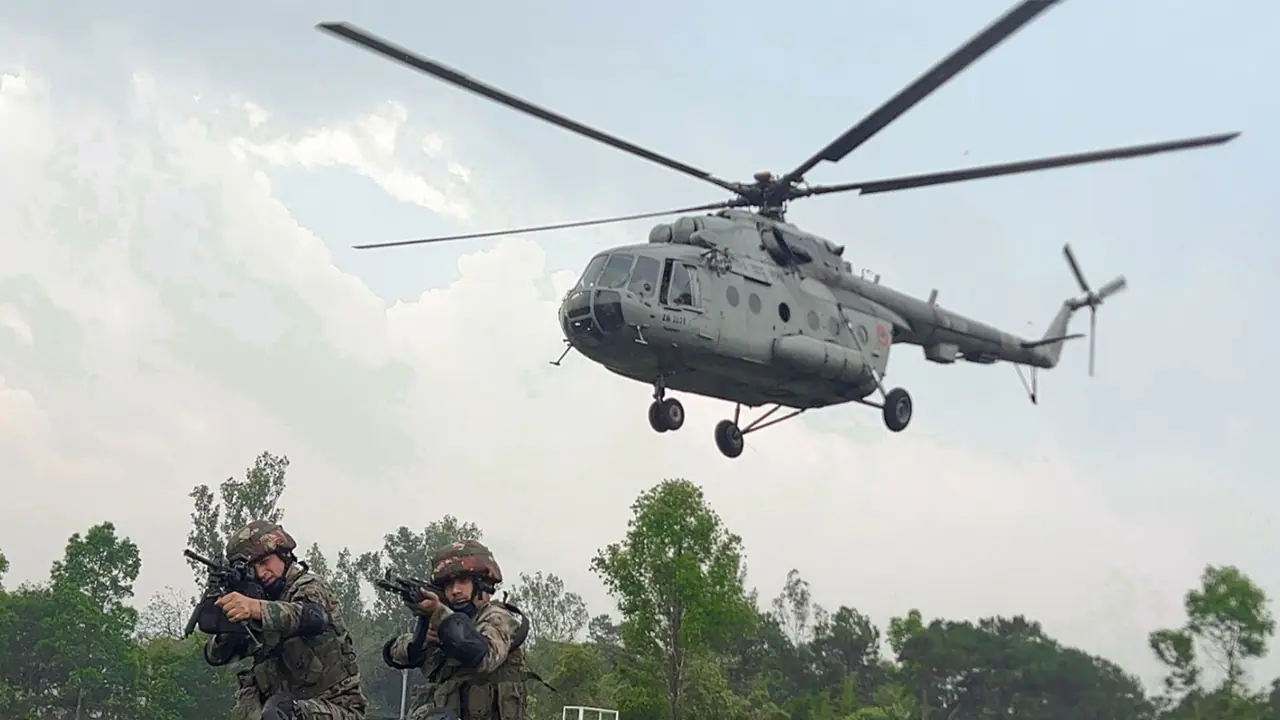
A TERI report suggests the Indian Armed Forces can save over Rs 1,000 crore annually by scaling up simulator-based training. This reduces fuel, ammunition, and logistics costs without impacting combat readiness, improving overall resource efficiency.
The Energy and Resources Institute (TERI) has said that wider adoption of simulator-based training by the Indian Armed Forces can help save more than Rs 1,000 crore annually while reducing fuel consumption, ammunition usage, logistics costs and equipment wear without affecting battlefield preparedness.
In its report, TERI highlighted that India's defence sector has a major opportunity to improve resource efficiency amid rising global energy prices and increasing pressure on imports. The report comes at a time when Prime Minister Narendra Modi has urged citizens to reduce fuel and resource consumption amid global crude oil volatility and import pressures. It stated "the Indian Armed Forces are sitting on a transformational opportunity: by scaling up simulator-based training, the military can save over Rs 1,000 crore annually, reducing fuel burn, cutting ammunition costs, slashing logistics expenditure, and freeing up thousands of man-hours across all combat arms, without compromising battlefield readiness"
Simulation-based training is an educational technique that creates a realistic, hands-on environment--physical or virtual--to replicate real-world scenarios, allowing trainees to practice skills, make mistakes, and learn without real-world consequences.
Significant Financial Savings Projected
According to TERI, the Indian Armed Forces can lead by example by replacing a significant portion of live-fire exercises with simulator-based training systems across combat arms.
The report assessed 13 simulator systems used across Infantry, Artillery, Army Air Defence, Armoured Corps and Mechanised Infantry and calculated savings in fuel, ammunition, logistics and equipment maintenance. Among the systems analysed, the Pinaka Simulator showed the highest projected savings with a Net Present Value (NPV) of Rs 10,228.55 crore at the present 15 per cent induction level. The 3ADS air defence simulator showed savings of Rs 2,289 crore, while the Artillery Forward Observer Simulator recorded projected savings of Rs 2,005 crore. The Tank Crew Gunnery Simulator showed annual savings of Rs 1,123 crore, translating to around Rs 3.08 crore per day due to reduced wear and tear on battle tanks and related systems.
TERI said that even at the current 15 per cent simulator induction level, Infantry Weapon Training Simulators alone are helping save Rs 461.20 crore annually, equivalent to Rs 1.26 crore per day. The report further stated that if simulator induction is increased by an additional 25 per cent, annual savings from Infantry Weapon Training Simulators alone could rise to Rs 3,219.50 crore.
Key Areas of Expenditure Reduction
According to TERI, simulator-based training reduces expenditure across four major areas including ammunition costs, fuel and logistics, equipment maintenance and training time.
The report estimated that a 15 per cent reduction in live artillery exercises through the Forward Observer Simulator could save around Rs 135 crore in ammunition costs.
It also noted that live-fire exercises require troop movement over long distances, often involving 1,000-kilometre round trips, consuming large quantities of fuel. Mechanised Infantry alone consumes nearly 2 lakh litres of diesel annually for such training, costing around Rs 1.7 crore. Driving Training Simulators can eliminate fuel consumption linked to vehicle training, the report said.
Improving Operational Readiness
TERI also highlighted that simulator-based training improves operational readiness as it reduces the time required for preparation, troop movement and post-exercise administration.
Future Recommendations
The report also suggested investing in AI-driven and virtual reality-based simulators, introducing data-driven performance analytics and aligning simulator adoption with the government's Atmanirbhar Bharat and defence modernisation agenda. (ANI)
(Except for the headline, this story has not been edited by Asianet Newsable English staff and is published from a syndicated feed.)