
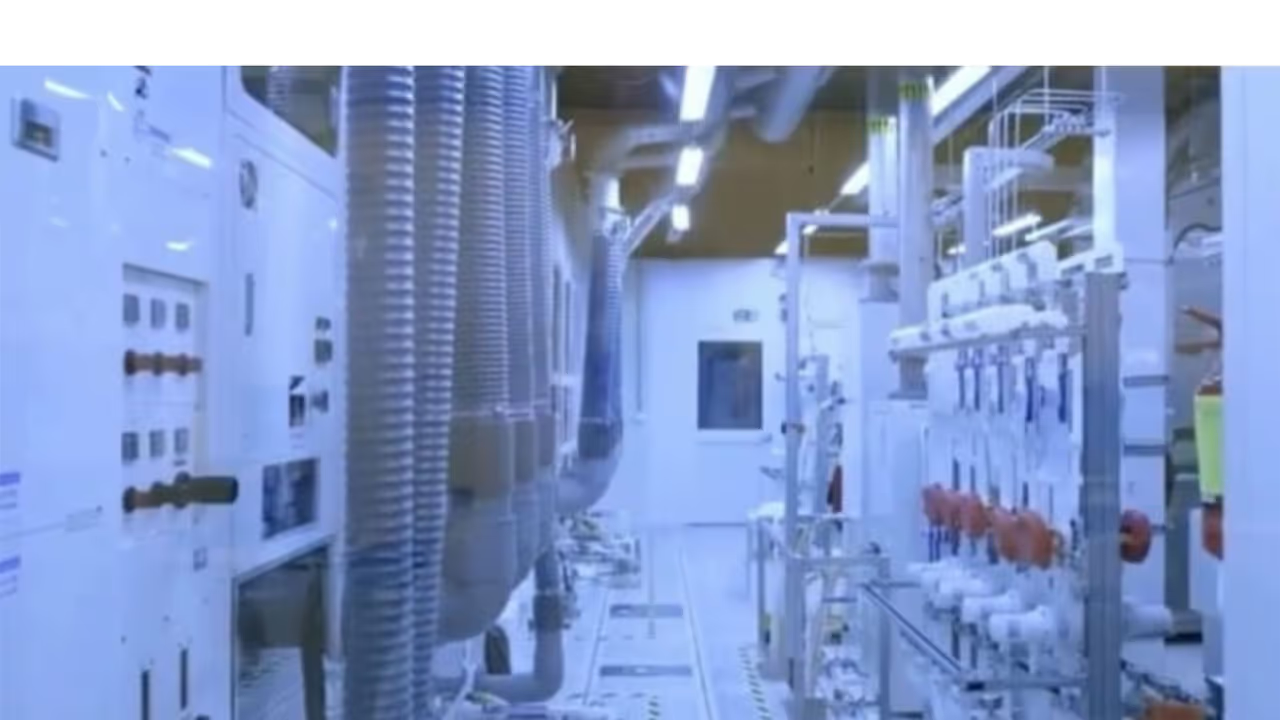
SEMICON India 2026 in New Delhi will host a dedicated session on the 'Semicon 2.0 Policy', focusing on the next phase of India's semiconductor journey. The event, inaugurated by PM Modi, aims to build a robust and resilient semiconductor ecosystem.
SEMICON India 2026, being held in the national capital later this month, will have a dedicated session on the “Semicon 2.0 Policy”, focusing on the next phase of India’s semiconductor journey.
According to a post by India Semiconductor Mission, the session will also focus on developing a robust and resilient semiconductor ecosystem. “SEMICON India 2026 is set to host a dedicated session on “Semicon 2.0 Policy”, with discussions focusing on the next phase of #India’s semiconductor journey and the roadmap towards building a robust and resilient #semiconductor ecosystem. Join us to witness the remarkable progress and growing momentum of India's semiconductor ecosystem,” the post said.
Event Details and Inauguration
The fifth edition of SEMICON India will be inaugurated by Prime Minister Narendra Modi on September 17 at Yashobhoomi, India International Convention and Expo Centre, New Delhi. The event will feature a range of activities, including keynote addresses, panel discussions, fireside chats and international country roundtables, providing a platform for dialogue and collaboration to further accelerate semiconductor innovation and growth.
India's Semiconductor Journey: From 1.0 to 2.0
India’s semiconductor journey has been gaining significant momentum under India Semiconductor Mission (ISM) through the Semicon India Programme. Twelve (12) projects approved under the Semicon 1.0, aimed at building a robust and resilient semiconductor ecosystem in the country. The Union Cabinet has approved the next phase i.e. Semicon 2.0, to accelerate the development of a robust and resilient semiconductor ecosystem in India.
Fostering Innovation and Self-Reliance
Recognising semiconductors as a foundational industry, the Government is also supporting research, innovation and design by providing state-of-the-art design tools to more than 332 academic institutes and 105 start-ups. In addition, 24 start-ups have been approved under the Design Linked Incentive (DLI) scheme, enabling Indian innovators to work on critical applications. These initiatives are contributing to the development of a robust and holistic semiconductor ecosystem in the country, aligned with the vision of Atmanirbhar Bharat. (ANI)
(Except for the headline, this story has not been edited by Asianet Newsable English staff and is published from a syndicated feed.)