
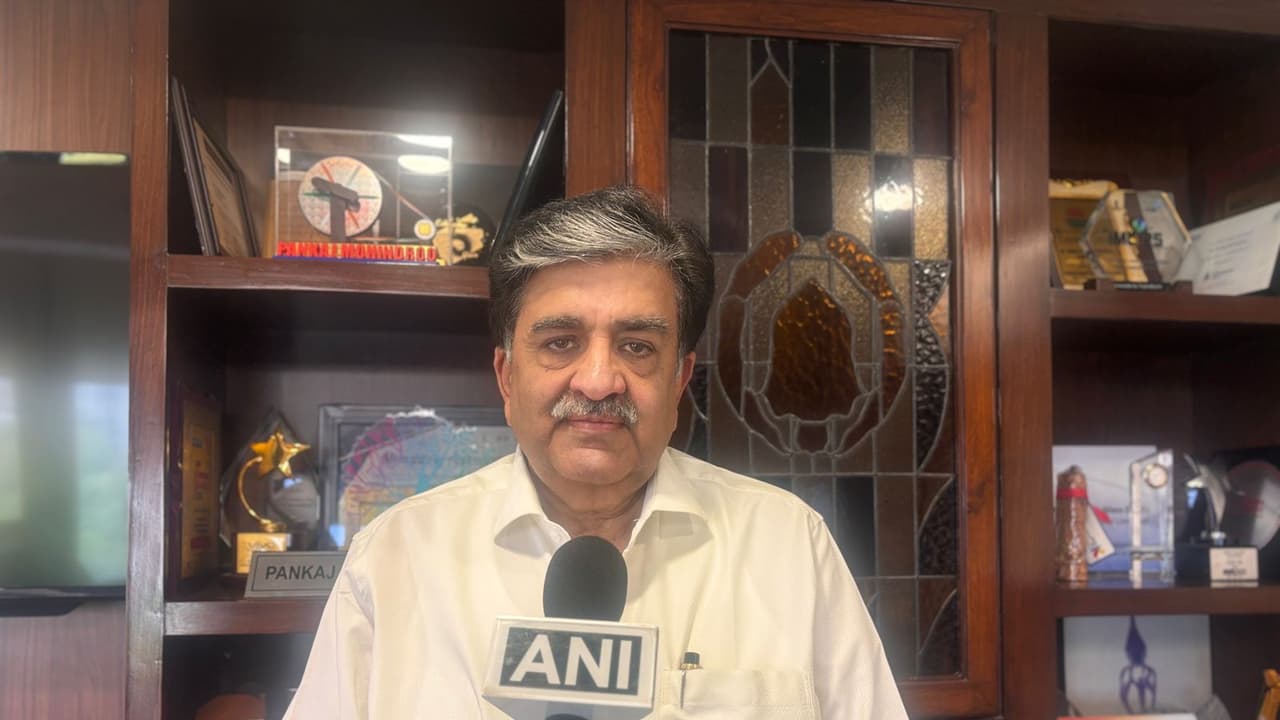
The Semicon 2.0 and Mobile Phone Manufacturing schemes could generate up to 5 lakh direct and 15 lakh indirect jobs, said ICEA Chairman Pankaj Mohindroo, adding that the benefits would span the entire electronics and semiconductor value chain.
The Union Cabinet's approval of the Semicon 2.0 programme and the Mobile Phone Manufacturing Scheme (MPMS) could generate up to 5 lakh direct jobs and around 15 lakh indirect jobs in the coming years, India Cellular and Electronics Association (ICEA) Chairman Pankaj Mohindroo said in an exclusive interaction with ANI.
Massive Job Creation Potential
Speaking on the employment potential of the two schemes, Mohindroo said the benefits would extend across the electronics and semiconductor value chain, from factory-level jobs to high-end chip design and research. "My estimate is that the additional job creation with all of this will be nothing short of 400,000 to 500,000 and indirect about I would say about 15 lakhs," he told ANI.
Cabinet Approves Major Outlay
The Union Cabinet on Wednesday approved Semicon 2.0 with an outlay of Rs 1,27,500 crore and the Mobile Phone Manufacturing Scheme (MPMS) with an allocation of Rs 62,500 crore as part of a broader package of seven major decisions with a total outlay of Rs 2,19,353 crore.
A Two-Pronged Strategy for Manufacturing
He said the semiconductor sector would also create employment opportunities in highly skilled areas, including semiconductor design and research and development. "In semiconductors, I'd like to point out one thing... these investments will lead to far bigger output because the semiconductor plants will have a life of 20-25 years. The output will be substantially more, the job creation will be very significant in all tiers from entry level jobs to high, very high quality semiconductor design jobs, and also R&D jobs," Mohindroo said.
Explaining the role of the two schemes, the ICEA Chairman said they have different objectives but together will help India build a complete electronics manufacturing ecosystem. "The mobile phone scheme is about scale, sustaining the huge success we've had in PLI 1.0 and to go from 15-17 per cent of global manufacturing to over 30 per cent," he said.
According to Mohindroo, the semiconductor programme, on the other hand, is aimed at building a strong domestic foundation for chip manufacturing and innovation. "The objective now is to build a 360 industry with also deep focus on R&D, deep focus on developing our own products, our own designs... the two schemes have a very divergent history, but in the end, they all collide with one objective, which is that to have an end-to-end mobile manufacturing and electronic manufacturing industry," he said.
He added that India has already built significant scale in mobile phone manufacturing and is now focusing on increasing domestic value addition and strengthening the semiconductor ecosystem.
Surpassing Production and Export Targets
Mohindroo also expressed confidence that the mobile phone manufacturing target announced under MPMS would be surpassed. "So Rs 39 lakh crores production is definitely not impossible. We will not only achieve it, we will cross it," he said.
On exports, he said smartphones have already emerged as India's largest exported commodity and the industry is aiming for even higher numbers in the coming years.
Vision for a Self-Reliant Ecosystem
He said the schemes would help India move towards a competitive and self-reliant electronics manufacturing ecosystem by the end of the decade through greater scale, higher domestic value addition, stronger exports and increased investments in semiconductor technology and innovation. (ANI)
(Except for the headline, this story has not been edited by Asianet Newsable English staff and is published from a syndicated feed.)
