
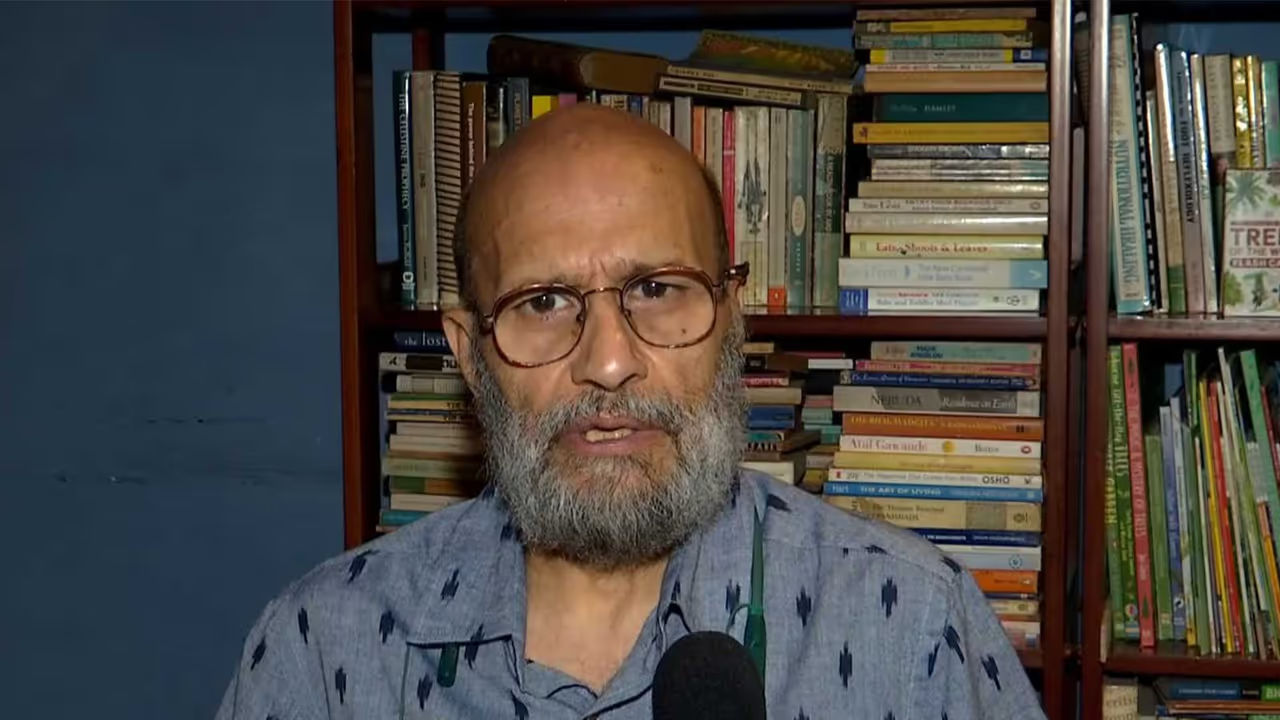
A 50% cut in Russian crude imports could hike India's annual oil bill by USD 5-10 billion, warns economist Santosh Mehrotra. He says the move could also push up inflation, and put pressure on the rupee and current account deficit.
India's annual oil import bill could rise by USD 5-10 billion if the country reduces its purchases of Russian crude by 50 per cent, economist and former UN advisor Santosh Mehrotra said, warning that such a move could also push up inflation and put pressure on the rupee and current account deficit.
In an interview with ANI, Mehrotra said India's high dependence on Russian crude and the discounted prices offered by Moscow have helped contain the country's oil import costs. "In today's date, we have to keep in mind that our dependence on Russia is about 50 per cent for the oil supply," Mehrotra said.
He said Russia also supplies crude to India at a discount to international prices, making any significant reduction in purchases potentially costly for the economy. "If we have to reduce our purchases from Russia by 50 per cent, then it will have an impact on the oil import bill of 5-10 billion dollars for the entire year," he said.
Wider Economic Ramifications
Mehrotra estimated that such a reduction could also increase inflation by around 0.3 percentage point. "Its impact on inflation will be about 0.3 percentage point increase. And if the government does not increase the price of petrol and diesel on us, then we will be able to save ourselves from it," he said.
Apart from inflation, Mehrotra said a decline in Russian oil purchases could affect the rupee and India's current account deficit (CAD), as the country would have to replace discounted Russian supplies with potentially more expensive crude from other sources. He said India's current account deficit has remained around 0.6-0.7 per cent of GDP in recent years, providing support to the economy, but higher oil import costs could put pressure on the external account.
Navigating US Trade Negotiations
Mehrotra also cautioned that any disruption to Russian oil supplies in the international market could push global crude prices higher, with consequences not only for India but also for the United States through higher fuel prices and inflation.
On India's ongoing trade negotiations with the US, Mehrotra said New Delhi should negotiate carefully and use its leverage rather than rush towards an agreement. He pointed to the proposed US measure that could allow tariffs of up to 100 per cent on major buyers of Russian energy, including India, but stressed that the tariffs have not yet taken effect and could still be subject to exemptions.
"It has not been implemented yet. When the President signs it, it may be possible and even then the President has the ability to give exemptions to India and other countries," Mehrotra said. He argued that India should continue negotiations while protecting its economic interests, particularly given the implications that any sharp reduction in discounted Russian crude purchases could have for inflation, the import bill and the country's external position. (ANI)
(Except for the headline, this story has not been edited by Asianetnews Editorial staff and is published from a syndicated feed.)