
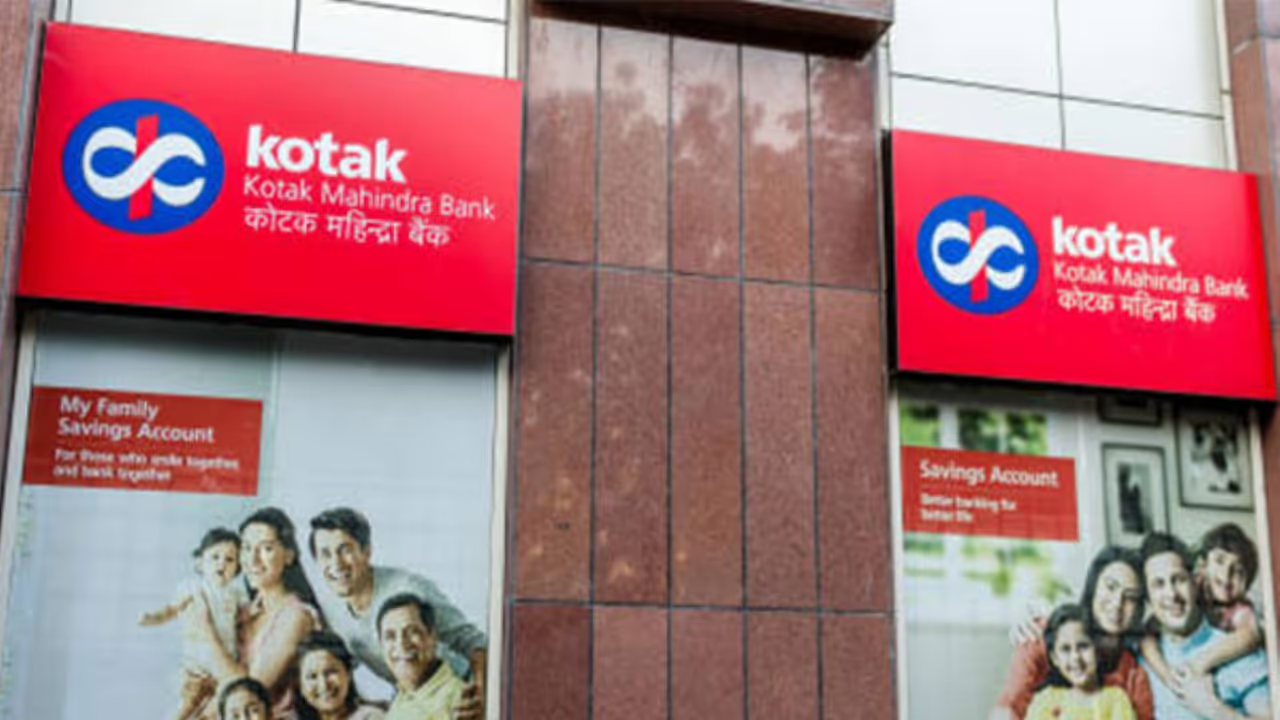
Kotak Equities reports RBI's proposed loan interest-rate rules may reduce pricing flexibility for large HFCs using a 'PLR minus' model. The changes could also lead to faster transmission of bank lending rate changes to NBFCs.
Impact on Housing Finance Companies (HFCs)
The Reserve Bank of India's proposed changes to loan interest-rate rules could reduce pricing flexibility for large prime housing finance companies (HFCs), while leading to faster transmission of changes in bank lending rates to non-banking financial companies (NBFCs), Kotak Institutional Equities said in a report.
Kotak said the proposed framework could affect HFCs that currently use an internal prime lending rate (PLR) and offer home loans at a discount to the benchmark. Under the new structure proposed by the central bank, floating-rate loans would have to be priced above the benchmark. This could reduce the flexibility lenders currently have under the "PLR minus" model.
Reduced Flexibility and Borrower Rate Disparity
The brokerage said large HFCs in the prime housing segment, particularly those with low spreads, could be impacted as the new framework may narrow the difference between rates offered to new and existing borrowers. Currently, lenders can offer lower rates to new customers when interest rates are falling, while existing borrowers may continue to pay higher rates. "The new regime (MCLR+) will take away/reduce this flexibility and hence, negative for these HFCs," Kotak said.
Lesser Impact on Affordable Housing Segment
It added that during a falling interest-rate cycle, HFCs may link prime home loans to external benchmark-based lending rates (EBLR) to remain competitive. However, the impact on affordable housing finance companies is expected to be lower as they generally have higher gross spreads and offer loans at a substantial spread over their cost of funds, the report said.
Kotak also said EBLR would not be mandatory for NBFCs and HFCs under the proposed framework, reducing concerns over their shift to external benchmarks.
Effect on Non-Banking Financial Companies (NBFCs)
The RBI's draft directions seek to bring interest-rate practices across regulated lenders in line with each other. The proposals include resetting floating-rate loans within a maximum period of three months. Existing floating-rate loans would have to shift to the revised framework by April 1, 2029.
Kotak said the shorter reset period could have a broader impact on NBFCs as they have significant borrowings from banks linked to the marginal cost of funds-based lending rate (MCLR). Many of these borrowings are currently repriced annually. Under the proposed framework, they could be repriced every three months, allowing changes in bank lending rates to be passed on to NBFCs more quickly.
Implementation and Timeline
The brokerage said the proposed guidelines are expected to come into effect from April 2027, giving lenders time to prepare and comply with the new framework. (ANI)
(Except for the headline, this story has not been edited by Asianet Newsable English staff and is published from a syndicated feed.)