
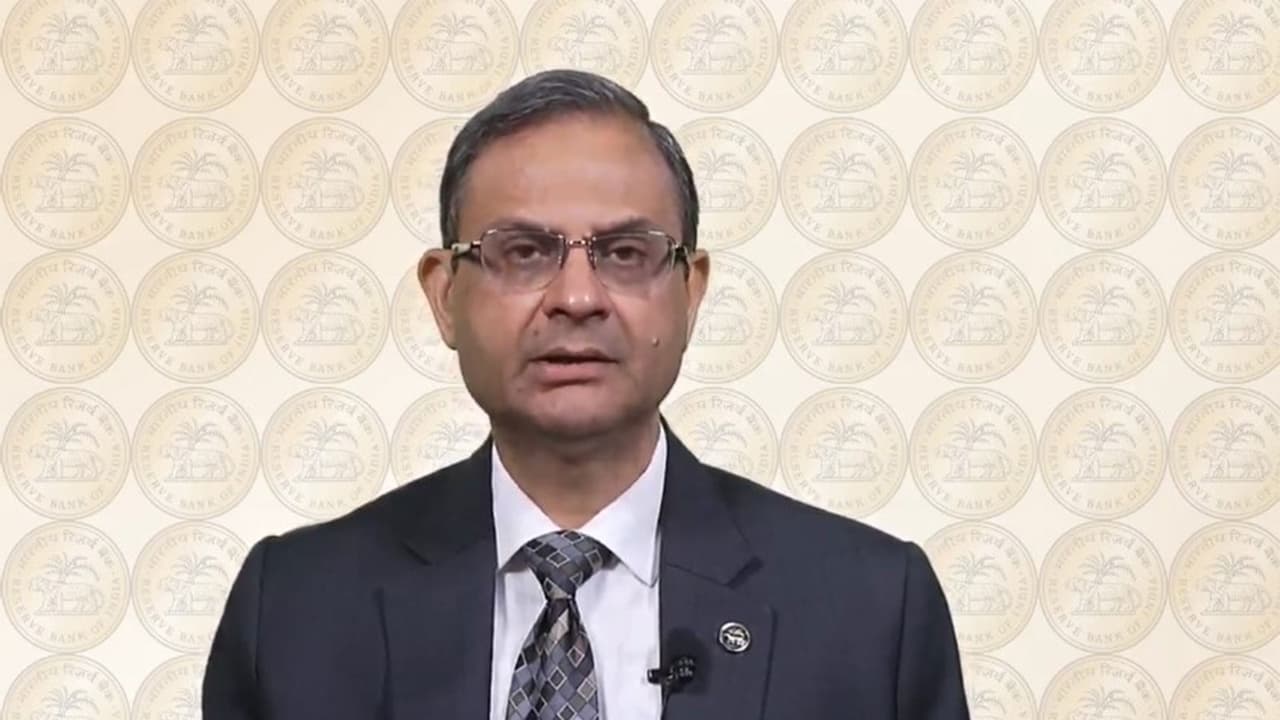
The RBI's Monetary Policy Committee unanimously kept the repo rate at 5.25%, maintaining a neutral stance. Governor Sanjay Malhotra cited global uncertainties, geopolitical tensions, and inflation as key factors for the decision.
The Reserve Bank of India's (RBI) Monetary Policy Committee (MPC) on Friday unanimously decided to keep the policy repo rate unchanged at 5.25 per cent, maintaining its neutral policy stance amid rising global uncertainties, geopolitical tensions in West Asia and concerns over inflationary pressures.
Announcing the decision, RBI Governor Sanjay Malhotra said that after a detailed assessment of evolving macroeconomic and financial conditions, the MPC voted unanimously to leave the policy repo rate under the Liquidity Adjustment Facility (LAF) unchanged at 5.25 per cent.
"Consequently, the Standing Deposit Facility (SDF) rate remains at 5 per cent and the Marginal Standing Facility (MSF) rate and the Bank Rate at 5.5 per cent," the Governor said.
Rationale Behind the Decision
Explaining the rationale behind the decision, the RBI Governor highlighted the challenging global economic environment marked by heightened uncertainty, disruptions to key trade routes and supply chains, increased market volatility and cautious business sentiment.
"The global economy has been shaped by heightened uncertainty, disruptions to key trade routes and supply chains, increased market volatility, and cautious business sentiment. Let me at the very outset emphasise that the Indian economy entered this episode of global turbulence with much better fundamentals than in previous similar episodes," he said.
The Governor noted that while India remains relatively well-positioned, policymakers must use the current phase of global turbulence to further strengthen the country's economic resilience.
"It is important to not only confront and address these challenges, but also, at the same time, take this as an opportunity to further enhance our resilience," he added.
Global Economic Context
The RBI Governor further pointed to the continuing geopolitical impasse in West Asia, escalating energy prices and global supply chain disruptions as key risks weighing on the world economy.
According to him, monetary policy across major economies has become increasingly cautious as central banks grapple with difficult trade-offs between supporting growth and containing inflation.
He also observed that major advanced economy central banks may increasingly lean towards monetary tightening.
While global equity markets continue to remain buoyant, supported by optimism surrounding artificial intelligence-led growth, global bond markets remain under pressure due to renewed inflation concerns and worries over debt sustainability, he said.
The latest decision follows the MPC's April policy meeting, where it had also unanimously voted to keep the repo rate unchanged at 5.25 per cent while retaining the neutral policy stance.
(Except for the headline, this story has not been edited by Asianet Newsable English staff and is published from a syndicated feed.)