
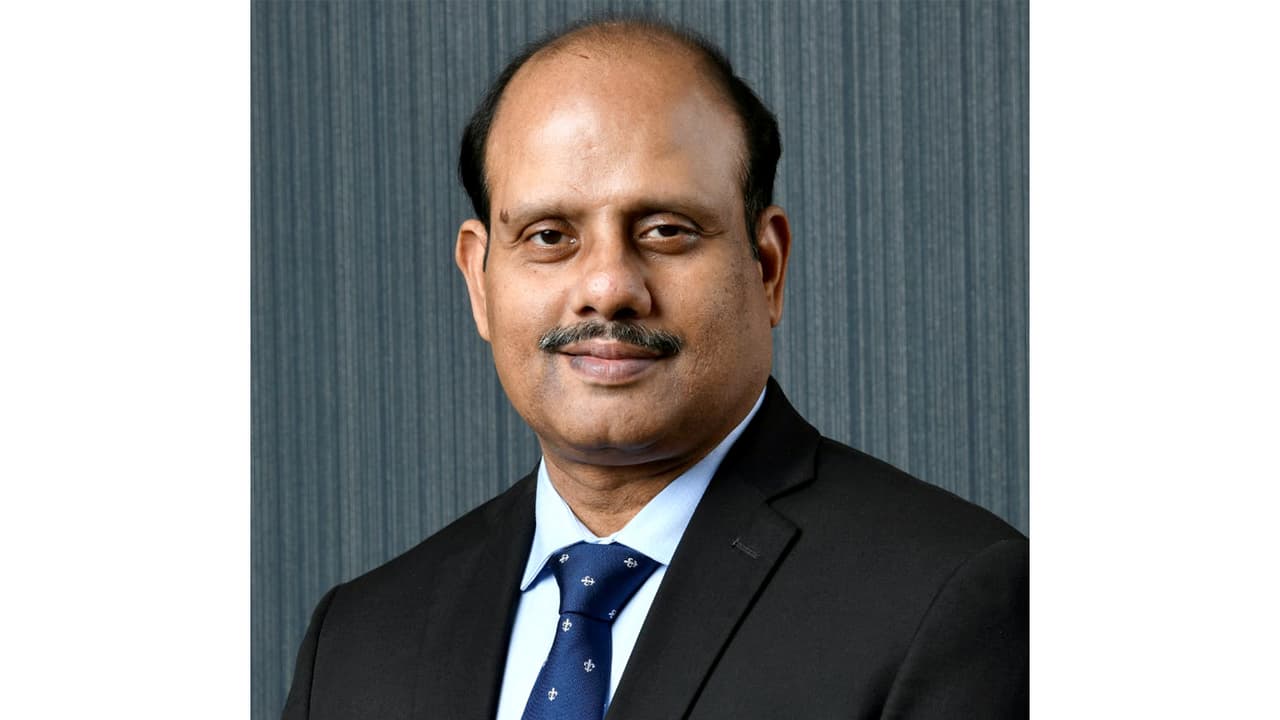
At IIM Jammu, RBI Deputy Governor Swaminathan J outlined a "career compass" for management students, advising them to respect customers, financials, and governance to become leaders for India's Viksit Bharat 2047 vision.
Reserve Bank of India (RBI) Deputy Governor Swaminathan J outlined a three-part "career compass" for management students at the Indian Institute of Management, Jammu, urging them to build leadership grounded in discipline, integrity and customer focus as India advances towards Viksit Bharat 2047.
Delivering the keynote address at the Third International Finance and Accounting Conference (IFAC) at IIM Jammu last week, whose excerpts were released, he spoke less like a regulator and more like someone speaking to future leaders. Emphasising the nature of leadership in finance, he noted, "Leadership in finance is not just about intelligence. It is about judgement. It is about discipline. It is about what you choose to reward, what you choose to question, and what you choose to fix early."
The Three-Part 'Career Compass'
Introducing his "career compass", he gave three lessons to the IIM students. The three principles, he explained, are "Respect the customer", "Respect the financials", and "Respect governance".
Respect the Customer
"First part of the compass is to respect the customer. In the long run, customer outcomes are the strongest business strategy. They reduce disputes, lower reputational risk, and sustain participation in formal finance," he told the IIM students. "Many problems in finance start small, sometimes, quite literally, in the 'small print'. A fee not explained clearly; A clause buried in the terms; A loan that is easy to take but hard to repay; or A product sold to meet a target, not to meet a need."
Respect the Financials
Putting a spotlight on the second compass, which is respecting the financials, he urged the students to look at financial statements closely to gauge asset quality. "The financial statements tells you what is sustainable and what is not. It tells you whether you are building strength, or simply postponing risk. Look beyond profits to the quality of assets, the stability of funding, the adequacy of buffers, and the concentration of exposures. Strength is built in good times and revealed in stress."
Respect Governance
The third and last part of the career compass, the central bank deputy governor said, is to respect governance. "Many failures in finance are not failures of knowledge. They are failures of governance. People knew what was going wrong, but they did not speak up. Or they spoke up, but no one listened. Or everyone noticed red flags, but incentives pushed them to look away," he explained.
The Mark of a Prudent Leader
He also urged the students to ask critical questions such as, "What could break?", "What assumptions are we making, and what happens if they go wrong?", "What happens if the customer's cash flows fall?", "What happens if the system is down for a day?", "What happens if a third-party service provider faces an outage?", and "What happens if fraud spikes in a new channel?". "These questions are not the mark of a pessimistic 'doubting Thomas'; they are the risk-sensitive questions, mark of a prudent leader. One of the most valuable skills in finance is not giving answers. It is asking the right questions at the right time," the deputy governor said.
Leaders for Viksit Bharat 2047
In conclusion, he stressed that India's 2047 vision would require leaders who can combine performance with principles and ambition with discipline. "If we align capital with capability, innovation with safeguards, and inclusion with well-being, the aspiration of 2047 will steadily become a lived reality for millions. It will call for leaders who can combine performance with principles, and ambition with discipline," Swaminathan J said. (ANI)
(Except for the headline, this story has not been edited by Asianet Newsable English staff and is published from a syndicated feed.)