
PNGRB has launched a comprehensive study comparing vehicular fuels to inform policymaking on reducing transport emissions and air pollution. Conducted by TERI, it aims to provide a clear perspective to government and industry stakeholders.
The Petroleum and Natural Gas Regulatory Board (PNGRB) on Wednesday announced the commencement of a comprehensive study to compare vehicular fuels, as India evaluates multiple technology pathways to reduce transport emissions and tackle urban air pollution.
Informing Policy and Industry
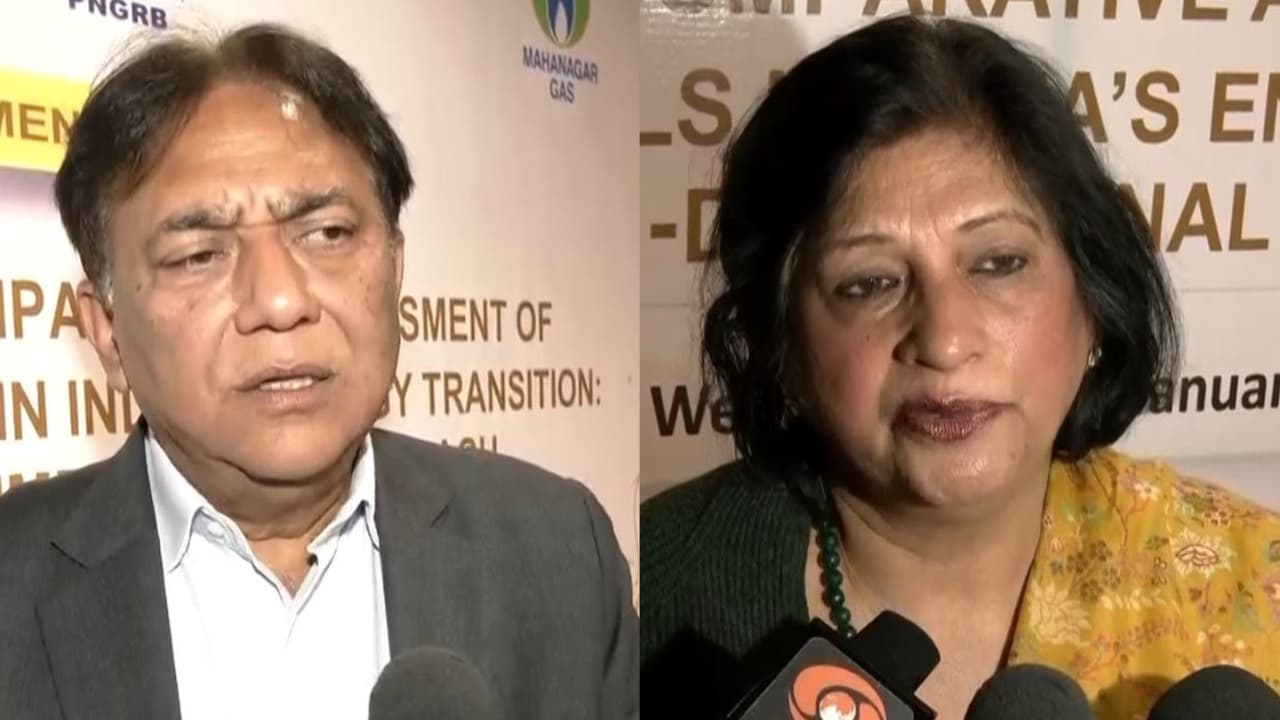
Speaking to ANI, PNGRB Chairperson Anil Kumar Jain said the study is intended to support informed policymaking across levels of government and industry. "This study will inform chief ministers, it will inform the ministries in the government of India. It will also give a very clear perspective to the stakeholders, to the industry," Jain said on the sidelines of the launch of the study titled "Comparative Assessment of Vehicular Fuels in India's Energy Transition: A Multi-Dimensional Approach".
According to the announcement, the study is being undertaken "under the aegis of PNGRB" as a joint effort involving Indraprastha Gas Ltd (IGL), Mahanagar Gas Ltd (MGL), GAIL Gas, Gujarat Gas, Assam Gas, Green Gas, and the Association of City Gas Distribution Entities (ACE). TERI - The Energy and Resources Institute has been entrusted with conducting the study as an independent, non-profit research organisation.
Role of Gaseous Fuels in Energy Transition
Highlighting the role of gaseous fuels, Jain said CNG and LNG would continue to be relevant in India's evolving energy landscape. "So, as I told you, there must be a setup which is driving electric, there is a set up which is driving hydrogen, there is a set up which is driving hybrid, so I am not minimizing their role, but CNG and LNG have also been identified as some of the fuels which will play a role in India's transport and energy economy. Especially in transition," he added.
India has set a net-zero target for 2070, with transport among the hardest sectors to decarbonise. The announcement noted that transport contributes around 10 per cent of India's total greenhouse gas emissions, with road transport accounting for 87 per cent of that share. The government also aims to raise natural gas's share in the energy mix to 15 per cent by 2030.
Jain said policymakers require robust inputs amid competing options. "Decision makers need good inputs to their decision making, and there is confusion; there are multiple technologies," he said.
Caution Against Uncontextualised Electrification
Cautioning against uncontextualised electrification, he noted, "Our grid still has 70% electricity mix," adding that electrification has "direct impact... on the coal producing areas and coal plant areas." He also flagged import dependence, saying, "In the case of many technologies, the inputs, let's say solar panels, etc., have to be imported."
Addressing Pollution and Climate Risks
TERI Director General Vibha Dhawan linked the transport transition to worsening pollution and climate risks. "The decisions that will be made today regarding fuels, technologies and infrastructure are going to shape the emission trajectories... over the coming decades."
Dhawan warned of climate impacts, saying warming is bringing "more frequent and intense extreme weather events," while "accelerated glacier retreat threatens the long-term water security." She noted that transport emissions "often contribute between 20-50% of PM2.5 concentrations in major Indian cities," and cited estimates that ambient air pollution caused "over 1.6 million premature deaths in India in 2019" with economic and social costs of USD 28.8 billion. (ANI)
(Except for the headline, this story has not been edited by Asianet Newsable English staff and is published from a syndicated feed.)