
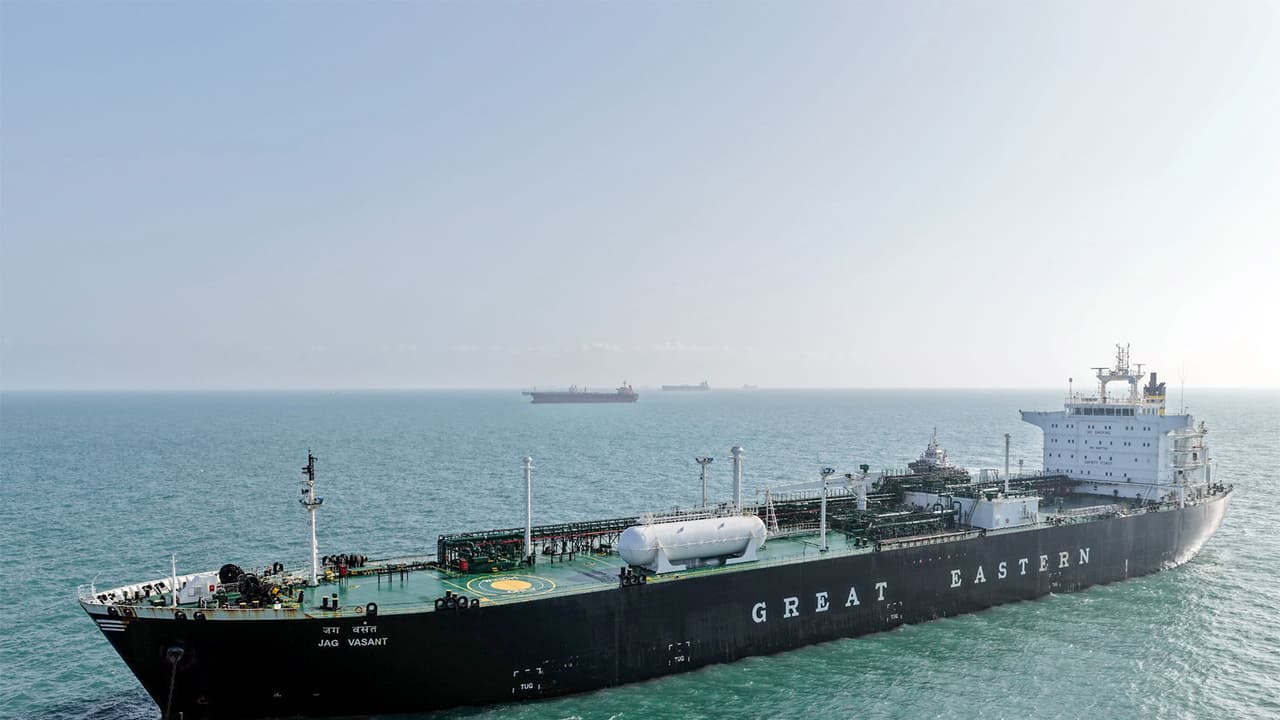
Global oil prices crashed after Iran fully reopened the Strait of Hormuz, ending a high-stakes standoff. Brent crude fell 11% to $88 and WTI dropped 10% to $81.5, easing fears of a massive supply shock and providing relief to importers.
Oil Prices Crash as Iran Reopens Key Waterway
Global energy markets experienced a dramatic correction on Friday as oil prices nosedived following the announcement that Iran has fully reopened the Strait of Hormuz. The move effectively dismantled the "war-risk" premium that had gripped the market during the recent high-stakes standoff between Washington and Tehran.
Iran on Friday declared the Strait of Hormuz "completely open" for commercial transit. The move followed a 10-day ceasefire between Israel and Lebanon and an optimistic tone from the US administration regarding broader regional de-escalation Benchmark Brent crude crashed 11% to around $88 a barrel, while US West Texas Intermediate fell 10% to $81.5 a barrel, as traders rushed to unwind the "war-risk" premium built up during the US-Iran standoff.
Trump and Tehran Confirm Breakthrough
The market slump was triggered by an announcement from US President Donald Trump, on Truth Social: "IRAN HAS JUST ANNOUNCED THAT THE STRAIT OF IRAN IS FULLY OPEN AND READY FOR FULL PASSAGE. THANK YOU," the President posted, signalling a breakthrough in regional tensions.
Iranian Foreign Minister Abbas Aragchi also confirmed the reopening, linking the move to the broader regional stability following the recently enacted truce in Lebanon. Aragchi stated that the waterway is now "completely open for the remaining period of the ceasefire," providing a vital window of relief for global shipping.
Economic Relief for Global Importers
The 30-kilometre-wide Strait of Hormuz is the world's most critical energy artery, handling roughly 20% of global oil consumption. Its effective closure during the recent weeks of conflict had threatened to trigger a massive global energy shock, forcing traders to price in a worst-case supply cutoff.
The price crash provides significant economic relief to major energy-importing nations, particularly India, which relies on imports for 89% of its crude requirements. The restoration of traffic through the Strait ensures the steady flow of Middle Eastern crude, easing the pressure on inflation-hit economies across Asia and Europe.
Analysts Urge Caution
While the markets have responded with immediate optimism, analysts remain cautious. Although crude has stabilised around the $80-$90 range for now, the permanence of this "breather" depends entirely on the durability of the ceasefire and the continued absence of renewed maritime friction in the Gulf. (ANI)
(Except for the headline, this story has not been edited by Asianet Newsable English staff and is published from a syndicated feed.)