
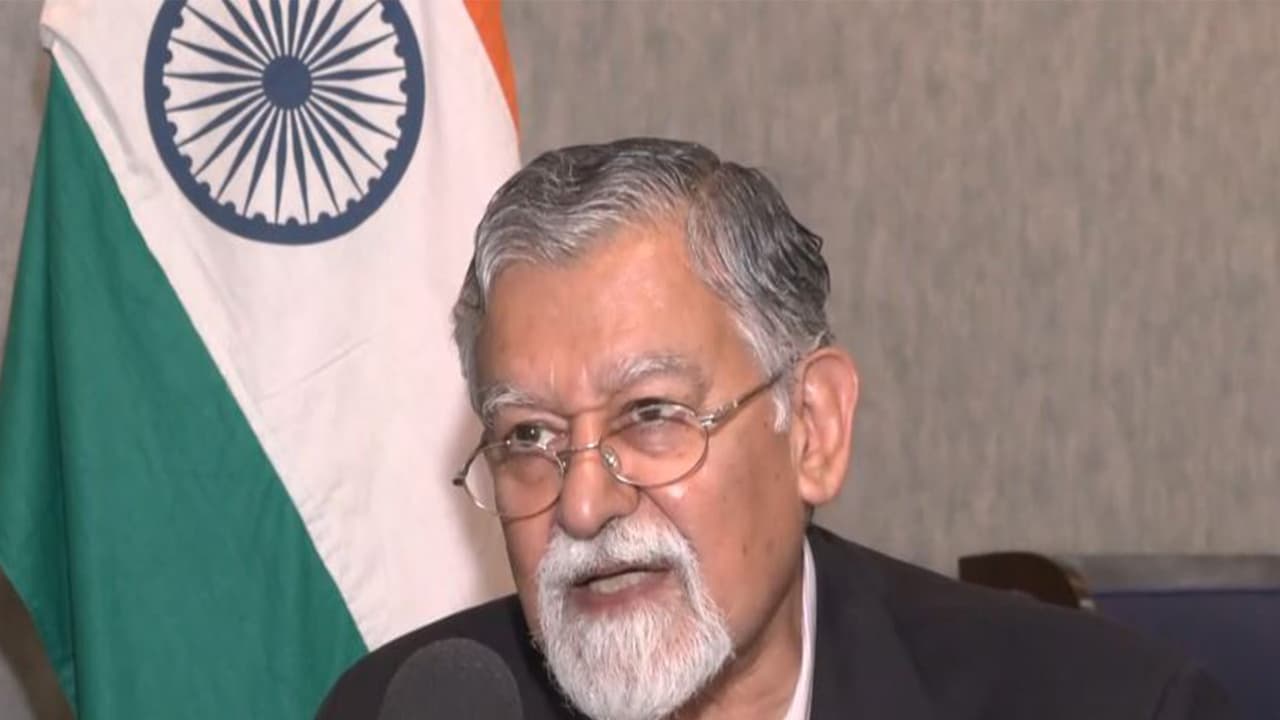
NITI Aayog's Arvind Virmani said the India-US trade deal is crucial for 'competitive integration,' not isolationism. He emphasized that FTAs and a focus on strategic goods like semiconductors are central to India's industrial strategy.
Competitive Integration, Not Isolation
While speaking with ANI, Virmani said, "Atmanirbhar Bharat does not mean isolation but competitive integration. Bilateral and free trade agreements are central to India's industrial strategy." The 2026 budget focused on semiconductors and rare earths as strategic goods to secure supply chains, positioning India as a key manufacturing hub in the "China plus one" strategy.
"India has signed FTAs with Australia, the UK, and the EU, with more in the pipeline, and has initiated a bilateral trade agreement (BTA) with the United States. We are not protectionist. These agreements eliminate tariffs on most goods and make India integral to global supply chains," he said.
Budget 2026: Focus on Strategic Goods
Speaking further on the Union Budget 2026 announced by Finance Minister Nirmala Sitharaman, he highlighted the government's focus on semiconductors and rare earth minerals. Virmani described them as "strategic economic goods," especially after supply disruptions during and after the pandemic.
"With semiconductors embedded in nearly all modern products and rare earths critical for magnets used in EVs and electronics, India's Semiconductor Mission 2.0 and proposed rare earth corridors across states such as Odisha, Tamil Nadu, Kerala and Andhra Pradesh are essential for supply security," he said.
"Every country is now trying to promote domestic capacity in these areas," he said, adding that recent Budgets have emphasized infrastructure and ecosystem support to enable this transition. Virmani stressed that the Budget should not be viewed in isolation but as part of a continuous policy process. He pointed to NITI Aayog's work on a state-level manufacturing competitiveness index, which will help identify strengths and weaknesses in attracting investment.
Supporting the 'Neglected' Medium Enterprises
A key Budget intervention, he said, is the new equity support fund for medium-sized enterprises. "The MSME ecosystem has traditionally focused on very small firms or large corporates. The medium segment was neglected," Virmani said. Equity support will help these firms scale up, improve quality, and compete globally as exporters.
Attracting Diaspora and Foreign Investment
On foreign portfolio investment (FPI) and overseas Indian capital, Virmani highlighted procedural reforms to make it easier for Indians abroad to invest in India. He linked this to rising anti-Indian sentiment in some countries and said the Budget creates a smoother pathway for diaspora funds to return home, particularly into new growth areas such as artificial intelligence, data centres, and advanced services.
"These incentives are competitive in nature," he said, pointing out that countries like Malaysia and others offer tax holidays. "India is not operating in isolation. We must respond to what our competitors are doing."
Jobs vs. Skills: A New Perspective on Employment
Virmani offered an unconventional view on job creation, arguing that skills, not job titles, are the real drivers of employment. He noted that only about 19% of India's workforce is in formal jobs, while nearly 58% is self-employed.
"Jobs and skills are two sides of the same coin. A degree alone has no value if you cannot do something." He described the government's expanded focus on skilling across manufacturing and services as revolutionary, highlighting growing employment of women in electronics manufacturing and the rise of service jobs linked to industrial growth. (ANI)
(Except for the headline, this story has not been edited by Asianet Newsable English staff and is published from a syndicated feed.)