
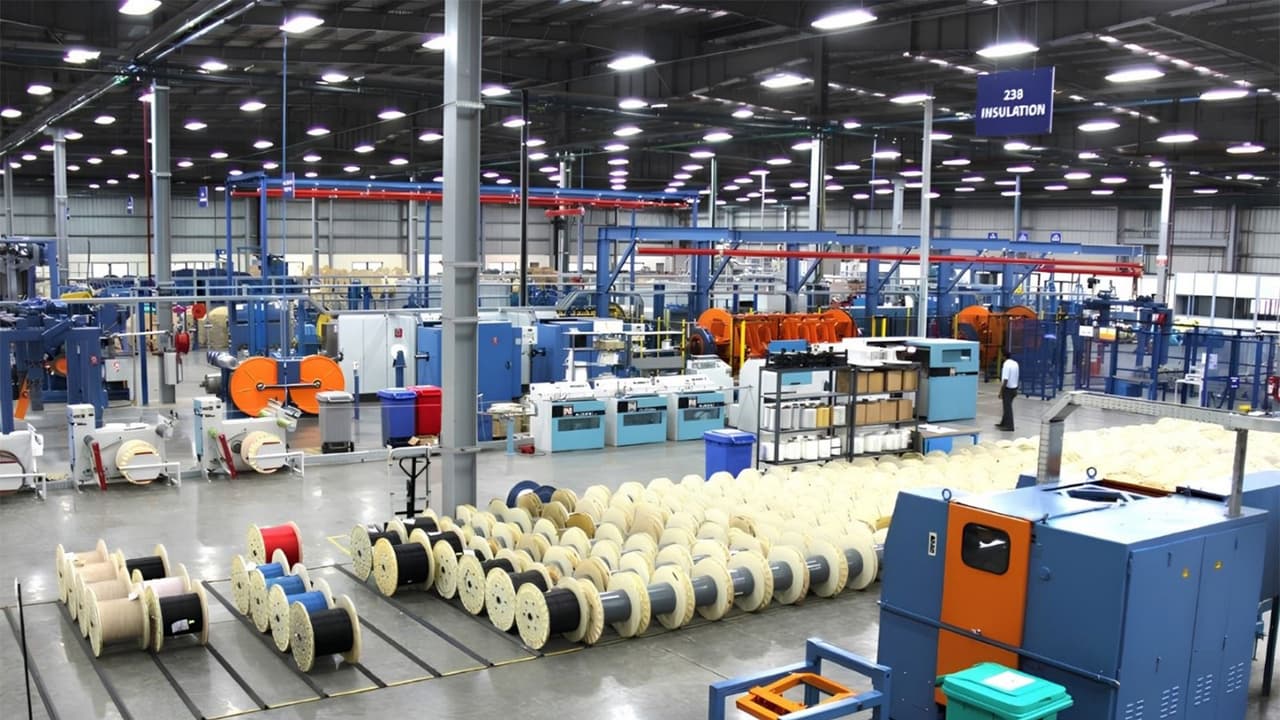
India's winding wire industry is set for a structural growth phase, says a PhillipCapital report. This is driven by electrification, power infra investments, renewable energy adoption, and rising demand from EVs, data centres, and industrialisation.
The brokerage said winding wires, which are essential components in transformers, motors and generators, provide direct exposure to India's expanding power infrastructure and energy transition. Rising demand from electric vehicles, data centres, industrial automation and heating, ventilation and air-conditioning (HVAC) is expected to support sustained volume growth and create opportunities for margin expansion among organised players.
Power Infrastructure Expansion Fuels Demand
India plans to nearly double its installed power generation capacity from around 442 GW in FY24 to approximately 900 GW by FY32, supported by more than Rs 9 trillion of planned investments in transmission infrastructure. The expansion of substations, transmission lines and transformer capacity is expected to drive long-term demand for distribution, power and specialty transformers, thereby supporting winding wire manufacturers.
Growth from Renewables and Grid Modernisation
Renewable energy and grid modernisation are also emerging as important growth drivers. India's non-fossil power capacity target of 612.7 GW by 2032, from 194 GW in 2024, implies a 15.5 per cent CAGR, according to the report. The deployment of battery energy storage systems, smart grids and green hydrogen projects is expected to generate additional demand for specialised winding wires used in transformers, generators, inverters and other electrical equipment.
Shift Towards High-Value Products
PhillipCapital said the industry is also moving towards higher-value products, including continuously transposed conductors, paper-insulated conductors, rectangular wires, corona-resistant wires and EV-grade winding wires. These products typically involve stringent qualification requirements and higher entry barriers, supporting improved profitability for organised manufacturers.
Industry Formalisation and China+1 Strategy
The brokerage expects industry formalisation and the China+1 strategy to create additional opportunities as global supply chains diversify and exports of Indian transformers, motors and electrical equipment increase.
Copper's Role and New Opportunities
Copper is expected to remain the preferred conductor for critical applications due to its superior electrical conductivity, thermal efficiency and durability. Demand is likely to remain strong from EV traction motors, renewable energy equipment, HVDC transformers, industrial automation and data centres.
The report also highlighted a structural opportunity in copper tubes, supported by India's expanding HVAC market, low room air-conditioner penetration and import substitution. (ANI)
(Except for the headline, this story has not been edited by Asianet Newsable English staff and is published from a syndicated feed.)