
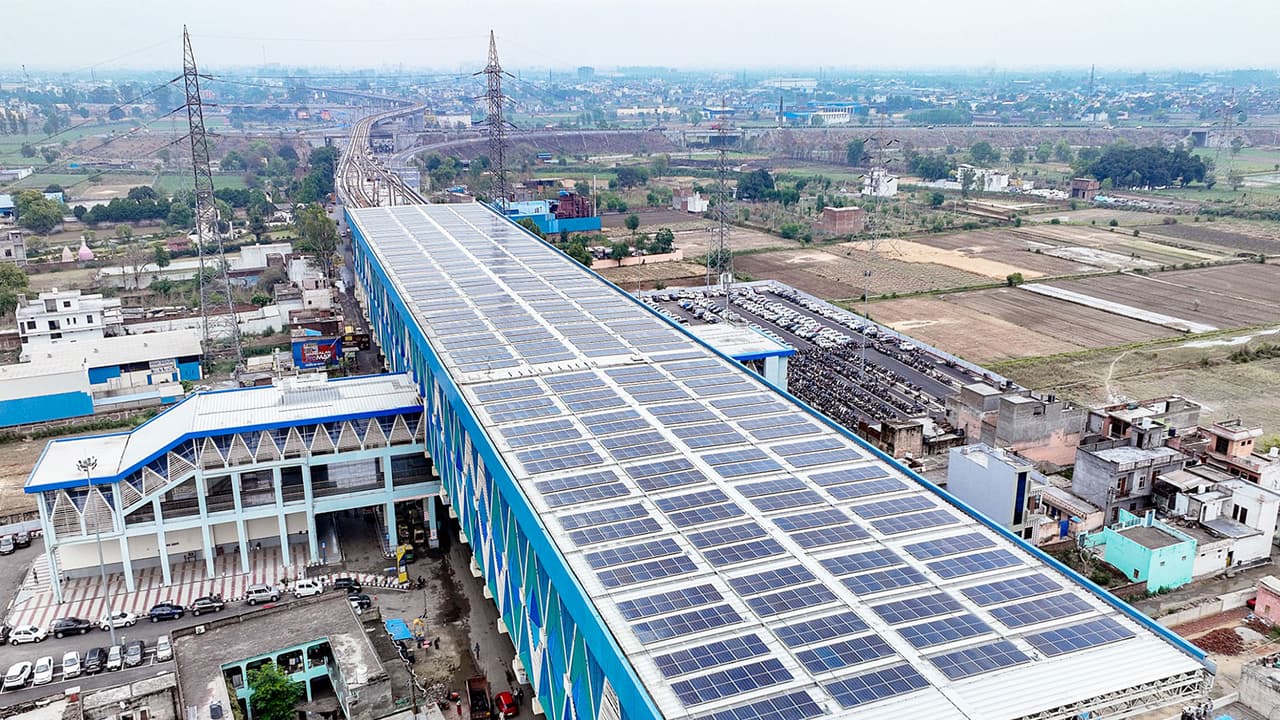
Zurich's report warns that Rajasthan, Gujarat, and Arunachal Pradesh face the highest risks for India's renewable energy expansion. These states hold the largest Value at Risk, threatening India's goal of 500 GW non-fossil capacity.
Prioritising resilience in Rajasthan, Gujarat and Arunachal Pradesh is critical to safeguarding India's renewable build-out, with Zurich's portfolio analysis showing the three states carry the highest absolute Value at Risk and the largest share of assets in critical risk categories by 2030.
High-Risk States in Focus
Rajasthan: Solar Under Stress
"India's largest renewable energy generating state by a considerable margin, Rajasthan holds 272 assessed sites spanning 82,149 MW of planned capacity and carries the highest absolute Value at Risk in the portfolio at USD 16.4bn," the report said. "Solar dominates the mix, making Rajasthan central to India's 500 GW non-fossil target," with 85% of assets in categories 4 or 5. "Temperatures regularly exceed 50°C in the state, simultaneously stressing solar panels and the balance-of-plant they depend on."
Gujarat: Complex Hazard Profile
Gujarat has 172 sites and 47,530 MW across solar and wind, with "90% of assets in categories 4 or 5" and a VaR of USD 8.6bn. "The hazard profile is particularly complex: in addition to the hail and tornado exposure it shares with Rajasthan, Gujarat's long coastline introduces cyclone and storm surge risks that affect coastal solar and wind assets," Zurich noted. Demand pressure is rising from "expanding EV manufacturing base and growing green hydrogen ambitions."
Arunachal Pradesh: Severe Hydropower Risk
Arunachal Pradesh "presents the most striking risk profile in the portfolio. Just 30 assessed sites carry a VaR of USD 13.1bn and 96% of those assets sit in the critical risk categories 4 and 5." The portfolio is "almost entirely hydropower, concentrated in the eastern Himalayan foothills where high precipitation, slope instability, seismic activity and flood risk create a severe and compound hazard environment."
Varied Exposure in Other States
Other states show varied exposure. Karnataka has the lowest critical-risk rate at "just 5%," while Uttarakhand has "94% of assets in the highest risk categories" due to "extremes in Himalayan precipitation - flood risk, slope instability and changing hydrology." Uttar Pradesh has "78% of assets in the highest risk categories," with "flood exposure from the Ganga river system and extreme heat events" as key hazards.
Zurich's Recommendations
Zurich said "multi-hazard stress-testing of the most exposed projects helps quantify the difference between the Value at Risk and the losses with mitigation actions," and stressed that "forward-looking climate screening should be a standard requirement in site selection, project approval, and permitting." (ANI)
(Except for the headline, this story has not been edited by Asianet Newsable English staff and is published from a syndicated feed.)