
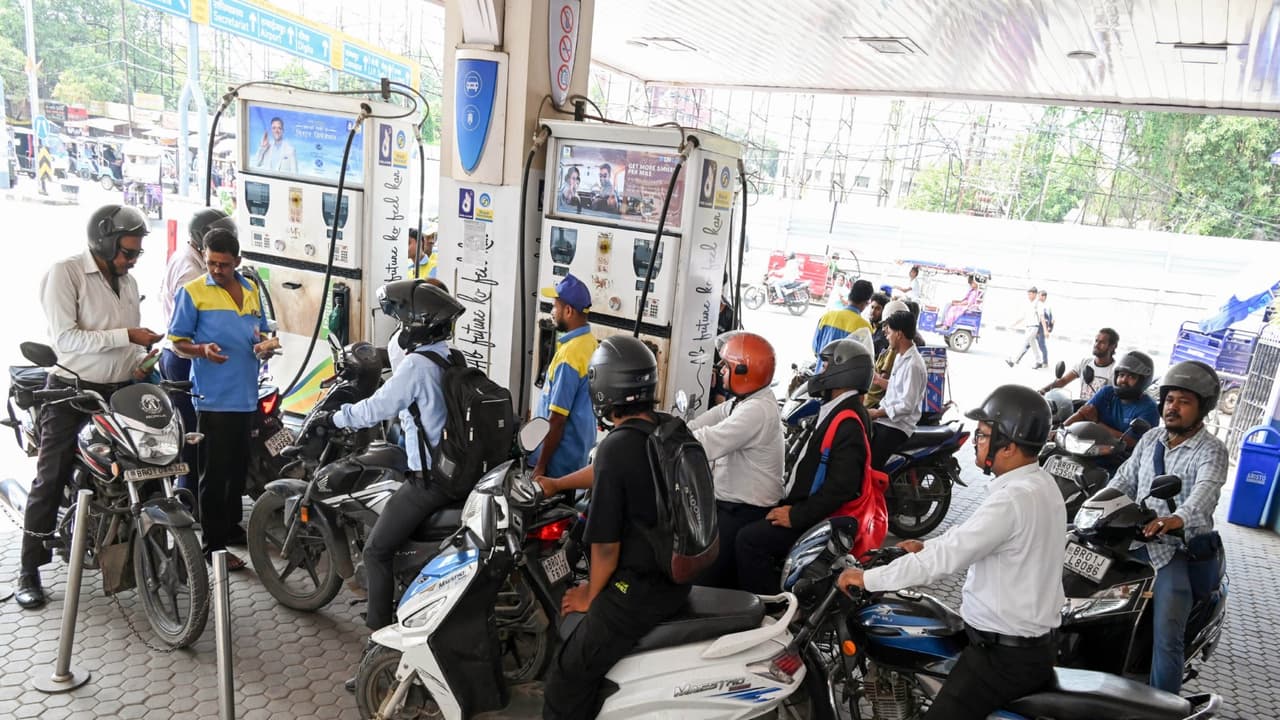
Despite a global oil supply disruption pushing crude prices over $120, India saw a minimal petrol and diesel price hike of under 4.5%. This contrasts with huge increases in neighbouring nations and was moderated by government excise duty cuts.
India's Fuel Price Hike Muted Compared to Global Surge
India witnessed a relatively much lower hike in petrol and diesel prices as compared to neighbouring and several other countries following the global oil supply disruption that began in February 2026 due to the Strait of Hormuz crisis.
International Brent crude oil prices have surged sharply since the disruption, crossing USD 120 per barrel and currently trading around USD 110 per barrel as global energy supply chains faced pressure and oil inventories were tightened.
The petrol prices in India increased by 4.2 per cent between February and May 2026, while diesel prices rose by 4.4 per cent during the same period. While as per data by the GlobalPetrolPrices, in comparison, Myanmar recorded petrol price increases of 89.7 per cent and diesel price increases of 112.7 per cent. Several other countries, like Malaysia, Pakistan, Sri Lanka, U.S, China and a number of European countries, also saw high double-digit increases in fuel prices during the same period.
Government Intervention Cushions Price Impact
Most of the countries have passed on the increase in crude oil prices directly to consumers, while India implemented multiple excise duty reductions and retail fuel price cuts between 2021 and 2026 to moderate the impact of rising crude oil prices.
As per the government data, these included excise duty cuts in November 2021 and May 2022, retail fuel price reductions in March 2024, another excise reduction in April 2025 and a Special Additional Excise Duty (SAED) reduction announced on March 27, 2026. The March 2026 SAED cut reduced petrol excise duty to Rs 3 per litre and diesel excise duty to zero.
A part of the increase in global crude oil prices during the Hormuz disruption was absorbed through government revenue adjustments and support from oil marketing companies. The March 2026 excise duty reduction alone could have an impact of around Rs 30,000 crore on government revenues during the fiscal year.
Oil bonds worth around Rs 1.34 lakh crore were issued to oil marketing companies by the UPA government between 2005 and 2010. More than Rs 1.30 lakh crore in principal has since been redeemed along with interest payments over the last few years.
State-wise Fuel Price Variation
Fuel prices also vary across Indian states due to differences in Value Added Tax (VAT) rates imposed by state governments. According to the data by govt, Andhra Pradesh, Telangana and Kerala were among the states with relatively higher VAT, translating into higher petrol and diesel prices, while Gujarat, Uttar Pradesh, Delhi, Haryana, Goa and Assam recorded comparatively lower fuel prices because of lower VAT rate. (ANI)
(Except for the headline, this story has not been edited by Asianet Newsable English staff and is published from a syndicated feed.)