
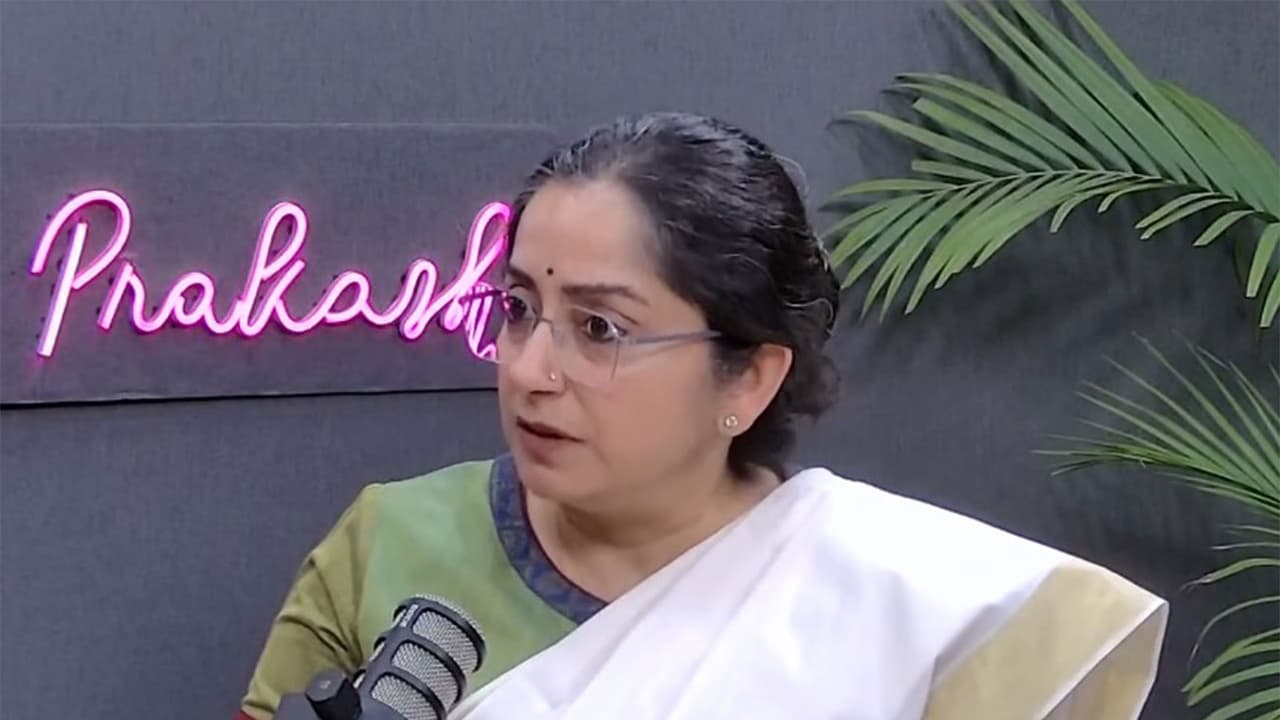
India's economy is in a sustained high growth phase and has shown resilience against global shocks due to its domestic demand-driven model, says EAC-PM member Shamika Ravi. She highlights prudent fiscal management and record FDI inflows.
India's economy continues to remain in a phase of sustained high growth and has demonstrated resilience against major global shocks over the past decade, according to Shamika Ravi, Member of the Economic Advisory Council to the Prime Minister (EAC-PM).
Domestic Demand as a Bulwark
In an exclusive interview with ANI, Ravi said India's growth model, driven largely by domestic demand and consumption, has helped shield the economy from the full impact of global disruptions. "Indian economy is in a phase of sustained high growth," Ravi said.
She noted that unlike export-led economies such as South Korea, Vietnam, Taiwan and China, India's economic growth is primarily supported by domestic demand. "We are fundamentally a domestic demand-driven economy," she said.
According to Ravi, this has enabled India to absorb external shocks more effectively than many other economies. "In the past also when you've had big shocks, it has not translated into big shocks for us, at least in the last 10 years. And that is on account of the fact that your domestic demand works as a bulwark," she said.
Fiscal Management and Global Pressures
She also highlighted the role of prudent fiscal management in supporting economic resilience. According to her, the government's fiscally conservative approach has helped maintain stability rather than pursuing short-term growth at the cost of long-term sustainability.
Referring to the ongoing global challenges, Ravi acknowledged that higher oil prices and geopolitical tensions could put pressure on India's oil and foreign exchange reserves. However, she expressed confidence that the economy is well-positioned to withstand these pressures. "I have reason to believe we are going to weather this," she said.
Understanding Foreign Investment Flows
On concerns surrounding foreign portfolio investor (FPI) outflows and the recent shift of some global capital towards other markets, Ravi said such developments should not be interpreted as a sign of weakness in India's economy. She pointed out that gross foreign direct investment inflows into India are currently at record levels.
"The most reassuring thing to me as an economist is that the gross inflow is at an all-time high," Ravi said.
According to her, the steady rise in foreign direct investment reflects continued confidence in India's long-term growth potential. She explained that some investors are repatriating capital as investments mature, while others are responding to higher interest rates in the United States. At the same time, Indian companies are increasingly investing overseas, which she described as a sign of a maturing economy.
Ravi stressed that international capital flows are influenced by several global factors and should not be confused with the fundamental strength of the Indian economy. She said India's defining feature today is not macroeconomic instability but stable economic fundamentals. (ANI)
(Except for the headline, this story has not been edited by Asianet Newsable English staff and is published from a syndicated feed.)