
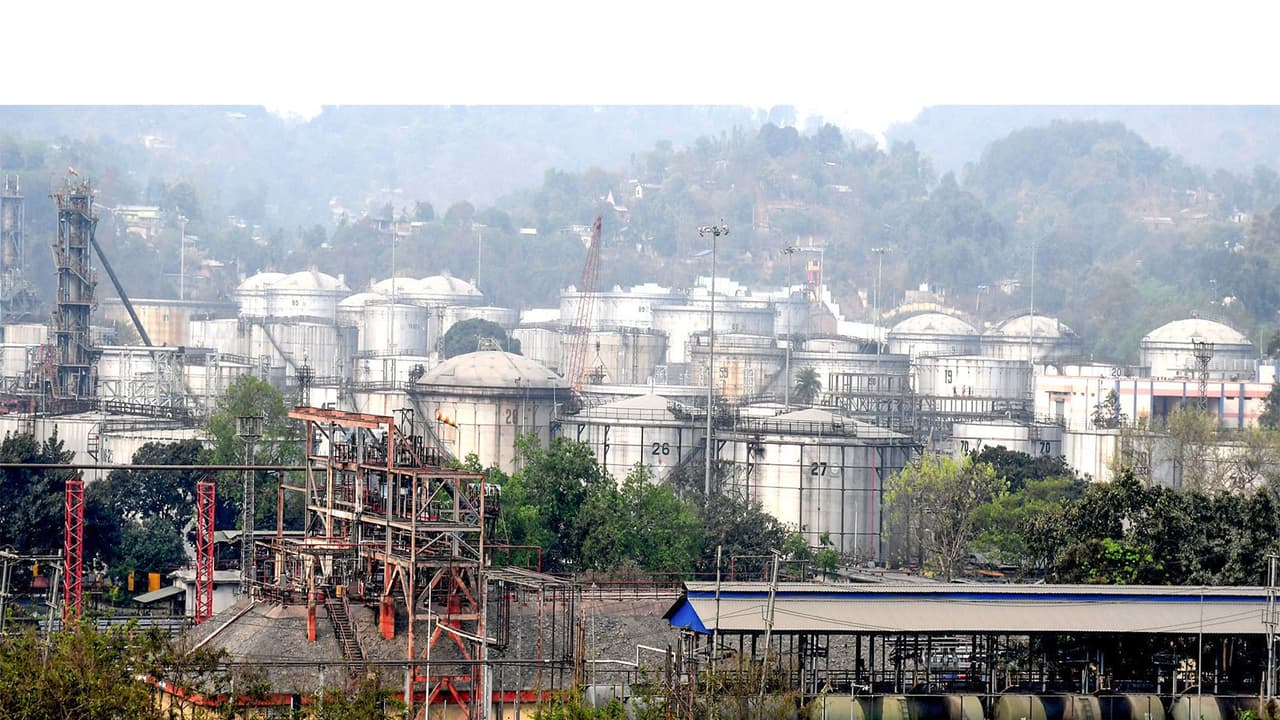
An Equirus report warns India's clean energy transition is at risk due to a projected four-fold rise in natural gas demand by FY40. The country faces severe structural constraints in its gas supply infrastructure, hindering its ability to scale up.
Soaring Demand Meets Constrained Supply
India's clean energy transition could face a major bottleneck as natural gas demand is expected to rise nearly four times by FY40, even as the country continues to face structural constraints in gas supply infrastructure, according to an infrastructure sector trends report by Equirus.
The report said India's natural gas demand is projected to rise from 131 million metric standard cubic metres per day (mmscmd) in FY16 to 496 mmscmd by FY40, driven by the country's transition toward cleaner sources of energy. However, Equirus said the challenge is not just increasing demand, but the limited ability of the gas supply chain to respond quickly. "Gas demand is set to ~4x--intensifying pressure on constrained supply and infrastructure," the report said.
Structural Hurdles in India's Energy Mix
The report highlighted that while several major economies use natural gas as a key transition fuel, India remains heavily dependent on coal, with gas accounting for only around 7 per cent of the country's energy mix, compared with nearly 24 per cent globally. "India's low gas share is a structural constraint--not a transition lag," the report noted, adding that this keeps the country "far behind global energy mix shifts."
The report explained that unlike crude oil, natural gas and liquefied natural gas (LNG) require a tightly connected infrastructure chain, making the sector more vulnerable to disruptions and capacity shortages. "Gas is critical--but structurally harder to scale than oil," the report said.
Bottlenecks Across the Gas Supply Chain
According to the report, constraints exist at every stage of the gas supply chain, including production, liquefaction, LNG shipping, regasification terminals, pipelines and last-mile connectivity to consumers.
The report further said that limited availability of specialised LNG vessels, terminal capacity restrictions and inadequate pipeline connectivity are preventing gas from becoming a free-flowing energy commodity like oil. "Gas flow is constrained at every stage--making supply rigid, fragmented, and non-responsive to demand," the report said.
It also noted that high price sensitivity among consumers often leads to fuel switching, making demand volatile and reducing reliability in gas consumption planning.
The report comes at a time when India is aggressively expanding renewable energy capacity and increasing investments in cleaner fuels as part of its long-term energy transition strategy. (ANI)
(Except for the headline, this story has not been edited by Asianet Newsable English staff and is published from a syndicated feed.)