
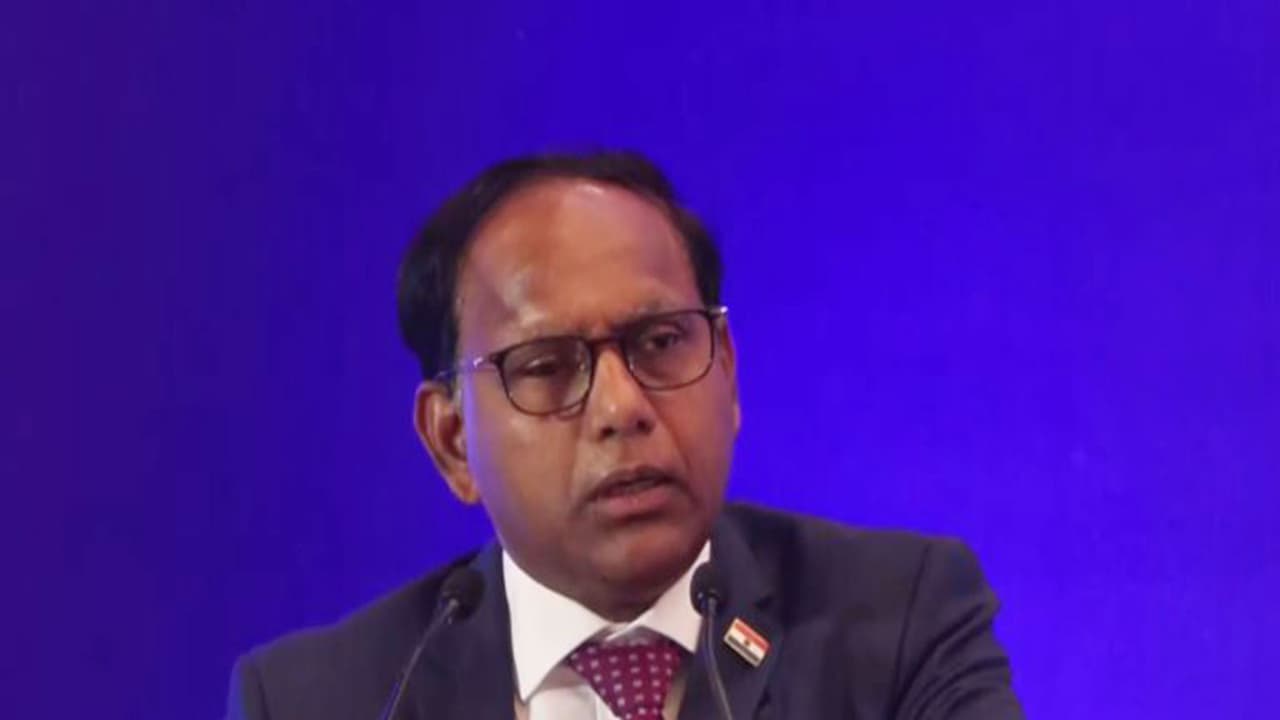
India's banking sector is robust and resilient, with record-low net NPAs at 0.47% and a provision coverage ratio of 94%, says DFS Secretary M. Nagaraju. Credit growth is healthy at 12%, with MSME lending showing a sharp 17% increase.
India's banking sector is "very robust and resilient," with asset quality at its best-ever levels and strong credit growth across key segments, said M. Nagaraju, Secretary, Department of Financial Services (DFS), while addressing an industry gathering post Budget organised by the Confederation of Indian Industry (CII) on Monday.
Key Performance Indicators and MSME Focus
Highlighting key performance indicators, Nagaraju said the provision coverage ratio (PCR) of banks stands at around 94%, while net non-performing assets (NPAs) have declined to 0.47%, the lowest level recorded so far. Credit growth remained healthy at 12%, while deposit growth stood at 10%.
Sector-wise, agriculture credit grew by 10%, while lending to micro, small and medium enterprises (MSMEs) rose sharply by 17%, the highest growth rate in recent years. Public sector banks, he noted, have overtaken private sector banks in MSME lending over the last two quarters. "Outstanding loans to MSMEs currently stand at around Rs 37 lakh crore, with banks consistently expanding credit over the last three quarters," he said.
Nagaraju also pointed to the rollout of a new digital credit model for MSMEs, announced in the Union Budget last year, which leverages borrowers' digital footprints. "The model has been implemented across all public sector banks and offered to private banks as well, enabling MSME borrowers to access loans without visiting bank branches," he said.
Future Reforms for Viksit Bharat 2047
Turning to long-term reforms, Nagaraju said the government plans to constitute a high-level expert committee on banking for 'Viksit Bharat 2047'.
India's credit-to-GDP ratio, currently at about 56%, remains among the lowest globally. He noted that nearly 300-350 million adults are outside the formal credit system, underscoring the need to expand access to credit to support micro and small enterprises and livelihoods.
"To bring more people into the credit ecosystem, the banking system needs capital. The capital could be mobilised through internal generation, market instruments such as qualified institutional placements (QIPs), external sources, and regulatory measures aimed at capital preservation. The proposed committee will chart a roadmap for expanding credit access, strengthening banks' capital base, and supporting priority sectors such as agriculture," he said.
Call for Larger, Stronger Banks
Nagaraju also stressed the need for larger and stronger banks capable of financing big-ticket infrastructure and corporate projects. At present, he said, large projects require consortium lending by multiple banks due to limited balance sheet capacity. "For a country of India's size and aspirations, we need bigger banks that can take higher risks and finance large projects," he said.
Role of NBFCs and Regulation
On non-banking financial companies (NBFCs), Nagaraju said both government-owned and private NBFCs play a significant role in funding infrastructure and reaching borrowers underserved by banks. "While NBFCs have shown strong growth, profitability, and outreach, he noted the continuing debate over regulatory oversight. NBFCs cannot seek banking powers without being regulated like banks," he said, reiterating the government's position that regulation must match the nature of activities.
He added that many issues raised by NBFCs over the past year have been addressed and that the government remains engaged with the sector.
Urging Private Sector Capex and Policy Stance
Nagaraju also shared findings from a recent analysis of the top 50 NSE-listed companies, which showed that over the last four years, 19% of net cash flows were deployed for capital expenditure, 21% for debt repayment, 26% for dividends, and 18% for other investments. Without drawing conclusions, he said the data indicates significant scope for the private sector to step up capital expenditure, particularly in infrastructure.
"The government, both at the Centre and in the states, has put in place robust infrastructure policies and improved dispute resolution mechanisms," he said, urging the private sector to match the government's infrastructure push, which he described as a key driver of economic momentum.
On capital markets, Nagaraju said the government would largely take a step back, given the presence of multiple regulators, and engage as needed at the policy level. (ANI)
(Except for the headline, this story has not been edited by Asianet Newsable English staff and is published from a syndicated feed.)