
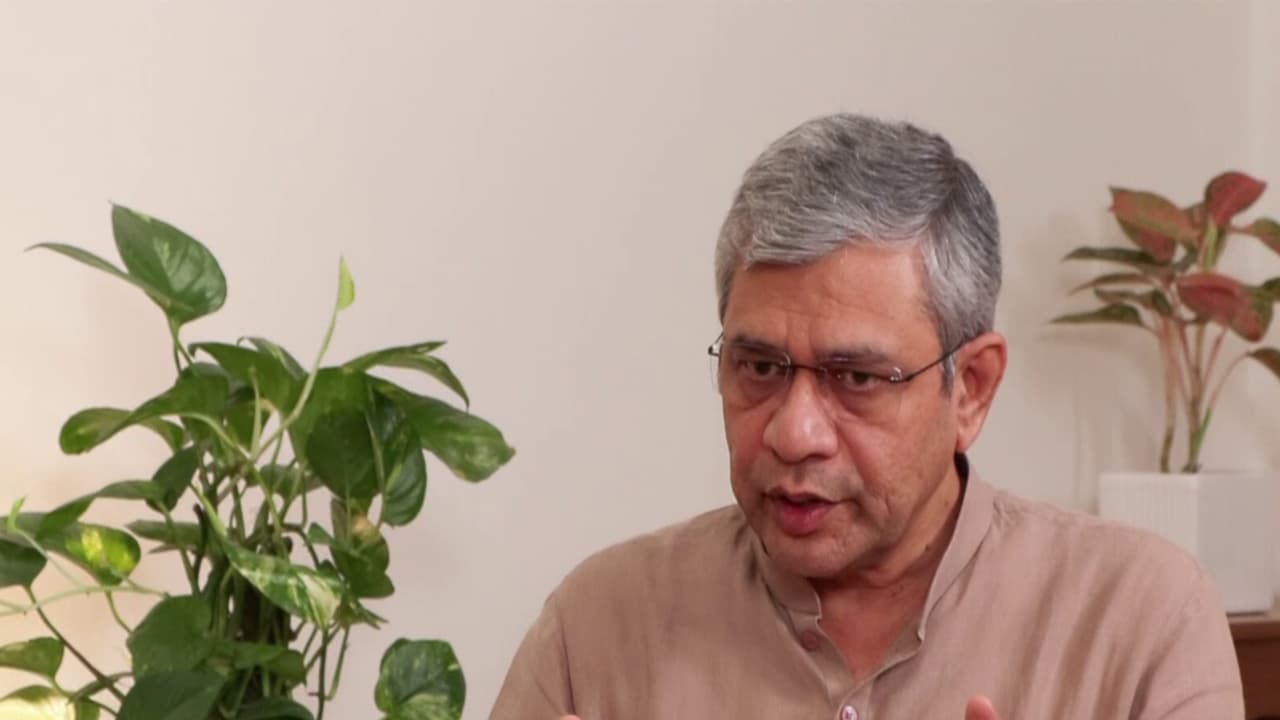
Union Minister Ashwini Vaishnaw says India has transformed into an aspirational nation in 12 years under PM Modi, citing grassroots changes, a focus on manufacturing, and the goal of Viksit Bharat 2047 as key drivers of this shift.
As India marks 12 years of Prime Minister Narendra Modi leading the Union Government, it also marks a period where India has transformed into an aspirational nation driven by opportunity, innovation and self-belief. Union Minister Ashwini Vaishnaw says that this period symbolises a shift towards a citizen-centric governance model with a clear future goal of Viksit Bharat in 2047.
Grassroot Transformation and Viksit Bharat 2047
Speaking to ANI, the Union Minister highlighted the changes seen in people's live at the grassroot levels. "If you look at the journey of the last 12 years, the change in people's lives which has happened at the grassroots level is really visible. Look at the way toilets brought dignity to women. Look at the way financial inclusion happened. More than 54 crore accounts have been opened under the Jan Dhan Yojana. All those people today have access to investment opportunities, access to loans, and access to savings instruments. That thing has entirely changed. Look at the number of houses w hich have been constructed. 4 crore houses, more than 4 crore houses constructed in the entire country. Look at the way every village has got the basic facilities like good roads and electricity connections. All these things have really made a big difference in people's lives. Our Prime Minister has given us the target of 2047 Viksit Bharat, which means a lot more has to be done to reach that level where the basic needs and the basic human needs and the basic infrastructure which we have been able to achieve till today need to be taken to the level of a developed country. A lot more needs to be done on that and we are relentlessly working in that direction," he said.
Four Pillars of Growth Strategy
Over the last 12 years, India has witnessed many transformations. Minister Vaishnaw says that at the core of these changes is the welfare of the poor and downtrodden. "The entire growth strategy is very clearly thought through. It's basically that there are four pillars on which this entire growth strategy rests. Pillar one is focused on investment. Investment in physical, digital and social infrastructure. Pillar two is a huge amount of inclusive growth. The examples I gave you about toilet construction, house construction, opening Jan Dhan accounts, and having 80 crore people get the basic ration every month. This is probably the biggest inclusive growth program that we have seen anywhere in the world. Third is the big focus on manufacturing and innovation. Fourth is a lot of simplification. More than 1,600 laws have been removed from the statute book," he told ANI.
Atmanirbhar Bharat: A Manufacturing Revolution
Vaishnaw, who heads the Ministry of Railways and the Ministry of Electronics, also highlighted the success of Atmanirbhar Bharat, especially in the sector of electronics production. The Government is developing a complete manufacturing ecosystem for electronics goods in the country. The production of electronic goods has increased 6 times from 1.9 lakh cr in 2014-15 to 12 lakh cr in 2024-25, while the export of electronic goods has increased 8-fold from 38 thousand cr in 2014-15 to 3.3 lakh cr in 2024-25. India has also emerged as an export hub for mobile phones, which saw an increase of 127 times from 1500 cr in 2014-15 to 2 lakh cr in 2024-25.
"I'll give you two examples of successful Make in India. First is electronics. If you look at the export categories throughout the last 30-40 years, electronics were never among the top 4 or top 5 exported items. It would have been maybe far below. In 2025, electronics emerged as the third-largest category for exported goods out of India. And if you look at the single most exported item, earlier it used to be traditionally diesel and then used to be gems and jewellery, then used to be textiles, garments, and engineered goods. Last year, it was mobile phones. Our electronics production has grown six times in the last decade and exports have grown eight times in the last decade," Vaishnaw said.
The rapid strides have also meant a generation of new jobs, leading to increased employment opportunities "We are having employment of about 25 lakh persons employed in the electronic sector. Okay. So, that kind of thing we have seen how. These are new jobs you are talking about? These are new jobs. 25 lakh new jobs in the electronics sector in the last few years. So, that kind of expansion is there in defence manufacturing, in technical textile manufacturing, in automobile manufacturing, sector after sector. I can give you one more example. When you look at the railway manufacturing, the most important and the most difficult part is the whole railway electronics part of it, which is like 40% of the cost of a train is railway electronics. Last year we started exporting railway electronics to guess what, to Germany, to Switzerland, to France, to Italy and to the US," Vaishnaw highlighted.
With a sharp focus on self-reliance, innovation, and citizen empowerment, the government under Prime Minister Modi is moving forward as a globally confident, technologically advanced, and economically resilient country. (ANI)
(Except for the headline, this story has not been edited by Asianet Newsable English staff and is published from a syndicated feed.)