
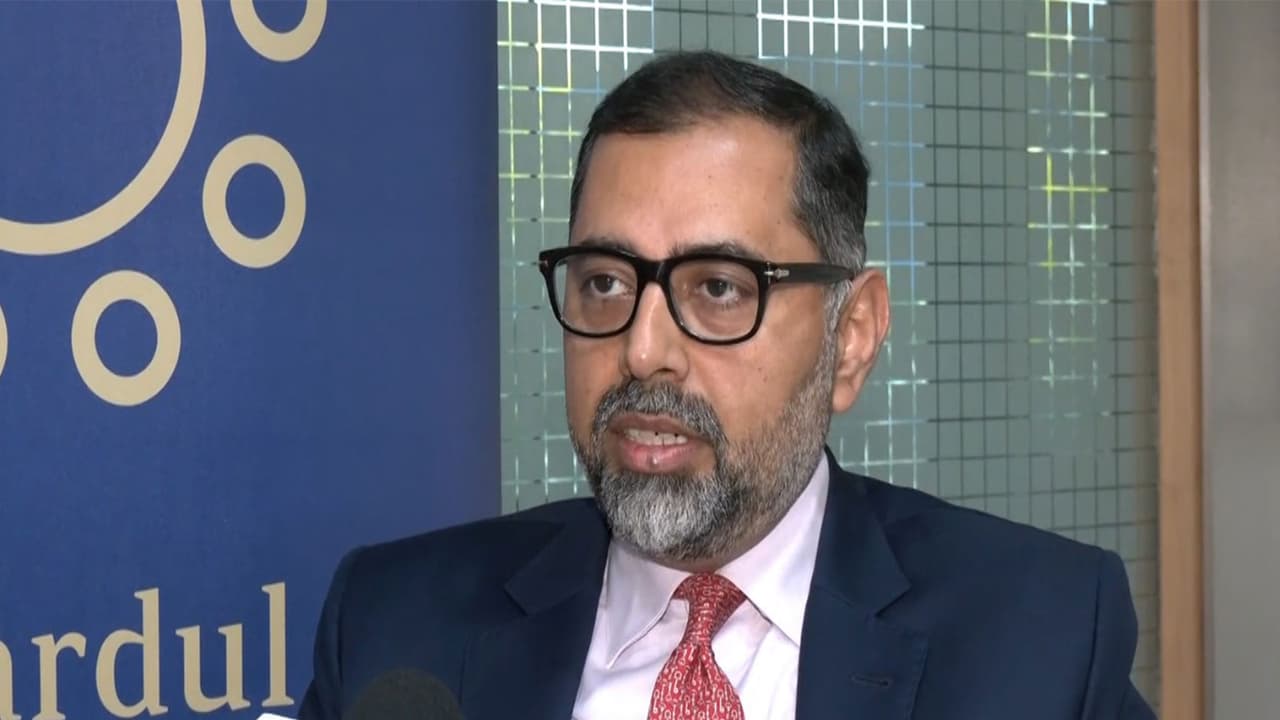
The India-EU FTA will create unprecedented trade opportunities, boosting FDI and ODI for both regions. While Indian firms must adapt to higher EU compliance standards, the pact will deepen global supply chain integration, says Rudra Kumar Pandey.
The India-EU FTA is set to unlock major trade expansion across sectors, even as certain teething issues are expected during the rollout of the landmark pact between India and the European Union according to Rudra Kumar Pandey, Partner at Shardul Amarchand Mangaldas & Co "India-EU FTA is set to bring unprecedented opportunities for both the EU and India in trade and services, and it is expected that both FDI and ODI will increase," Pandey told ANI on Thursday.
The Free Trade Agreement between the European Union and India was signed on January 27 in the national capital. According to Pandely, while the agreement is being seen as a major milestone after long negotiations, Indian companies will need to prepare for higher compliance requirements and evolving EU standards as implementation approaches.
A 'Mother of All Deals'
Pandey described the India-EU free trade agreement, often referred to as the "mother of all deals", as a major milestone after prolonged negotiations, crediting the Union Ministry of Commerce and Industry for pushing the agreement over the past two to three years, following an overall 18-year negotiating process.
Unlocking Economic Opportunities
He said the pact would help India integrate more deeply into global supply chains, opening new export opportunities and positioning Indian companies more firmly within international manufacturing and sourcing networks.
Pandey said the agreement could also attract higher foreign direct investment (FDI) into India, alongside technology inflows and expanded collaboration in research and development. He added that there could be greater cooperation in areas such as R&D and design centres, certification and testing laboratories, and low-carbon manufacturing footprints--areas that he said have been persistent challenges for Indian companies.
He pointed to the rise in India's outbound direct investment (ODI) in recent years, saying India invested close to USD 30 billion overseas last year. While Singapore remains a key holding structure for both inward and outward investments, Pandey said the EU is among the most important regions for Indian expansion, particularly in the technology and automotive sectors.
He added that EU firms could shift sourcing to India from countries such as China, Japan, South Korea, and in some cases Turkey and Mexico, as tariff benefits under the FTA make Indian supply chains more competitive.
Beneficiary Sectors and Preparation
On the one-year preparation window before the agreement becomes effective, Pandey said the timeframe would allow both sides to prepare, identify partners, and build compliance systems needed to meet EU standards. He said sectors such as textiles, gems, and jewellery could be among the biggest beneficiaries, especially after disruptions caused by U.S. tariffs. He cited an example where exports to Spain increased by 50 per cent as companies diverted shipments.
Addressing Challenges and Concerns
Addressing concerns raised by India's liquor and automotive industries about competition and the lack of a level playing field, Pandey said niche Indian whisky brands were unlikely to be significantly impacted, while the automotive sector stood to gain from deeper integration into the global ecosystem.
On the US response, Pandey said India should focus on expanding opportunities rather than worrying about Washington's view of the deal.
The CBAM Hurdle
The European Union's Carbon Border Adjustment Mechanism (CBAM) could emerge as the biggest future hurdle for Indian exporters under the India-EU free trade agreement (FTA), potentially raising compliance costs, though small and medium enterprises (SMEs) may get some operational leeway, he said.
"The CBAM, the carbon adjustment mechanism tax that is going to be imposed, could be a challenge," Pandey said, adding that the EU has not agreed to grant India an exemption. He said that based on information available in the public domain, SMEs may be allowed to issue self-certification on CBAM-related compliance, which could help reduce time and costs.
Budget Expectations
Separately, on budget expectations, he said industry is looking for higher personal income tax thresholds and faster resolution of tax disputes, which foreign investors continue to flag as a concern. (ANI)
(Except for the headline, this story has not been edited by Asianet Newsable English staff and is published from a syndicated feed.)
