
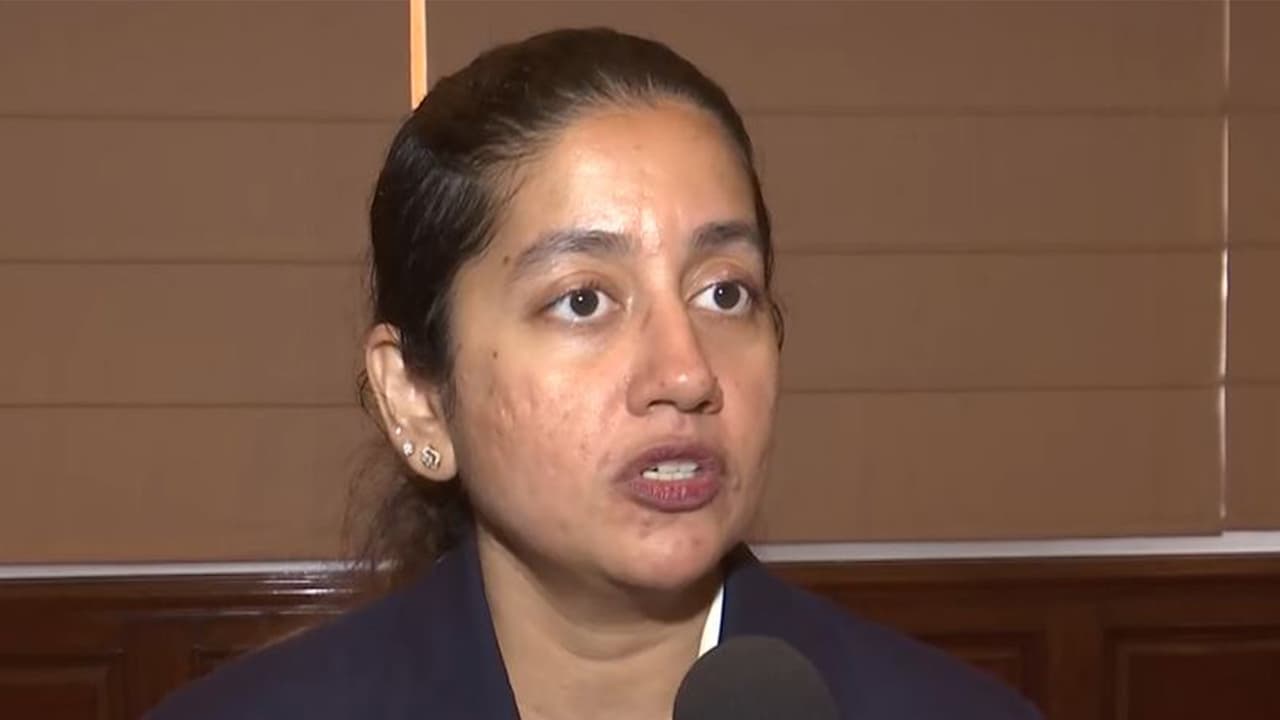
India is shifting from managing immediate crises to building long-term economic resilience. An S&P Global expert highlights a two-pillar strategy: boosting self-sufficiency and using strategic diversification via modern FTAs and global partnerships.
India is shifting its focus from immediate geopolitical crisis management to building long-term economic resilience against future global and domestic shocks, according to Deepa Kumar, Head of Asia-Pacific Country Risk and Co-Lead of the India Research Chapter at S&P Global.
"What we're trying to highlight is that India is at a moment where it's not just thinking anymore about immediate risk management as a consequence of the conflict and changes in the geopolitical environment, but also about what its medium-term and long-term strategies are," Kumar told ANI.
Speaking on the sidelines of the S&P Global India Research Chapter event in New Delhi, Kumar highlighted that India is preparing policy measures not only for current challenges but also for future crises.
"So it's not just thinking about preparing policy options to prepare for today's crisis, but it's also thinking of these in terms of what might be future crises or what might be the future buffers that India would need to develop to deal with challenges that emerge both in the external environment and internally to buttress Indian economic growth," she said.
Two Pillars of India's Economic Strategy
Kumar said the government's approach is based on two key pillars -- self-sufficiency and strategic diversification.
"The first is the bucket of self-sufficiency," she said, adding that India is exploring ways to strengthen resilience in critical sectors during global disruptions.
Strategic Diversification and FTAs
"The second is strategic diversification. There is nothing or no one in the world that can manage everything only domestically. You do need alliances, you do need partners," Kumar added.
She noted that India is increasingly using free trade agreements (FTAs) as strategic tools to strengthen economic partnerships.
"We've seen a flurry of free trade agreements being signed," she said, referring to ongoing trade discussions with the US and countries across Asia, Latin America and Africa.
According to Kumar, modern FTAs are now aimed at aligning regulatory and operational frameworks between countries beyond just reducing tariffs.
"They are not simply FTAs that are negotiating goods trade," she said. "They're looking at something more significant, which is how do you align regulatory models, how do you align operating models so that two countries can work more strategically together."
Kumar added that services trade and overseas employment opportunities for Indians are also becoming important aspects of trade negotiations.
"It's also supporting that remittances angle because remittances are an important part of about 3.5 per cent of Indian GDP," she said.
Managing Geopolitical Risks and Domestic Pressures
On geopolitical tensions in West Asia, Kumar said India has already begun efforts to manage supply-side risks through diversification and sanctions-related negotiations.
"How is it that you diversify your suppliers, how do you negotiate waivers where some of them are linked to sanctions -- those things have already started happening," she said.
She also said the government is trying to protect consumers from inflationary pressures in sectors such as LPG and transport, while maintaining subsidy support despite fiscal constraints.
Despite global uncertainties, Kumar said India is expected to grow at 6.6 per cent in the current fiscal year and remain the world's fastest-growing major economy. (ANI)
(Except for the headline, this story has not been edited by Asianet Newsable English staff and is published from a syndicated feed.)