
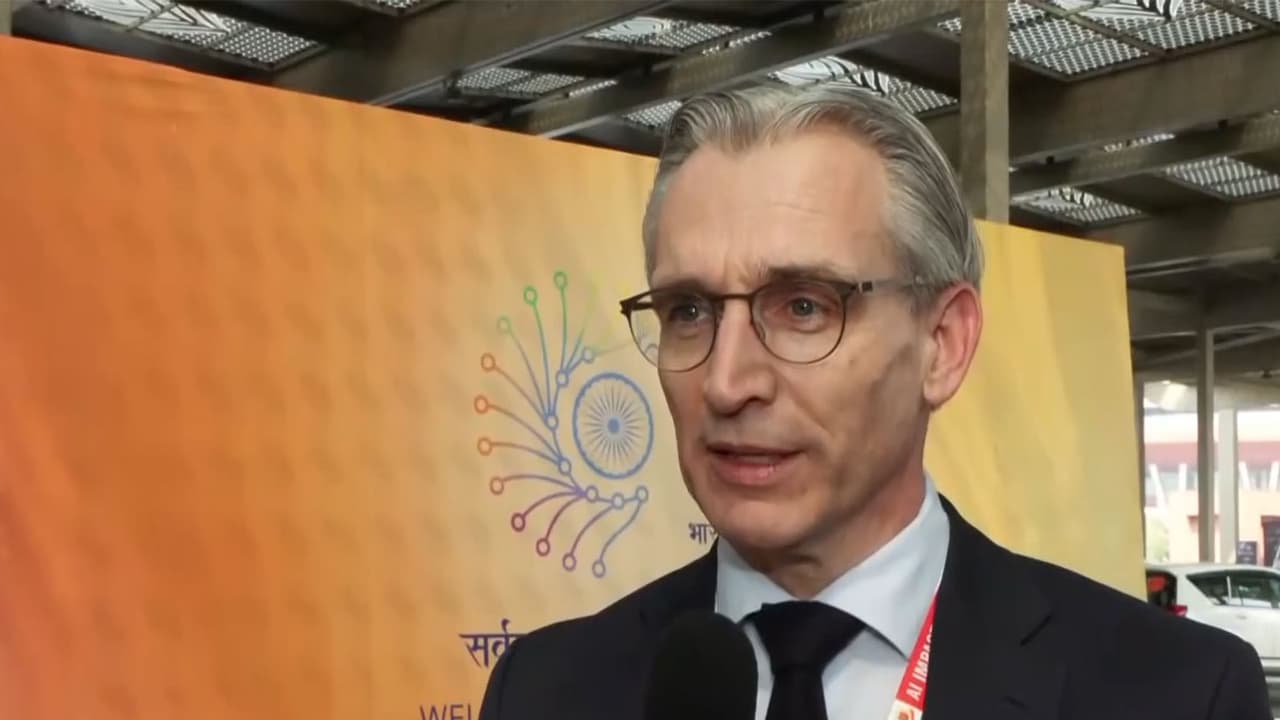
Royal Philips CEO Roy Jakobs says India is well-positioned to take a leadership role in developing AI for the world, building on its strength as a software powerhouse. He highlighted healthcare as a primary beneficiary of AI innovation.
India has always been a powerhouse in software and is now positioned to take a leadership role in developing Artificial Intelligence for the world, said Roy Jakobs, CEO of Royal Philips, on Thursday.
Speaking to ANI at the sidelines of the India AI Impact Summit 2026 in New Delhi, Jakobs said, "I strongly believe that India should be a powerhouse in AI. India has always been a powerhouse in software. I think India is very well positioned to take a leadership role, not only developing AI for India, but also developing AI for the world."
Philips' Commitment to AI in India
Jakobs noted that Philips, which has operated in India for 97 years, maintains its largest population of software innovators in the country. These innovators are currently focused on AI development. "As Philips, we have been in India for 97 years. We have the biggest population of software innovators in India, and they're now working on AI," Jakobs said.
Transforming Healthcare with AI
The CEO highlighted healthcare as the primary sector that stands to benefit from these technological advancements. "Healthcare is, in my view, the primary area that will benefit most, but also have the most necessity to use AI for the big challenges we have in healthcare. There are too many patients, too many disease states and not enough people, but also not enough cost to take care of that. So innovation and AI innovation have to step in to really help solve that problem," he explained.
Improving Accessibility for the Global South
Regarding the impact on the global South, Jakobs emphasised that AI can make healthcare more accessible to large populations. He stated that the technology allows for the digitisation of services, moving care away from centralised hospitals and into rural areas. "You can actually serve all of India, not only the populated cities," he said, adding that AI brings healthcare to the people instead of requiring people to travel to hospitals.
The Need for a Collaborative Ecosystem
Jakobs also stressed the importance of a collaborative ecosystem involving the government and policymakers to ensure AI progresses in a responsible manner. He noted that forums like the AI Summit are critical for bringing together stakeholders to navigate the development of the technology.
"Innovation and AI innovation have to step in to really help solve that problem," Jakobs said in reference to global healthcare demands. (ANI)
(Except for the headline, this story has not been edited by Asianet Newsable English staff and is published from a syndicated feed.)