
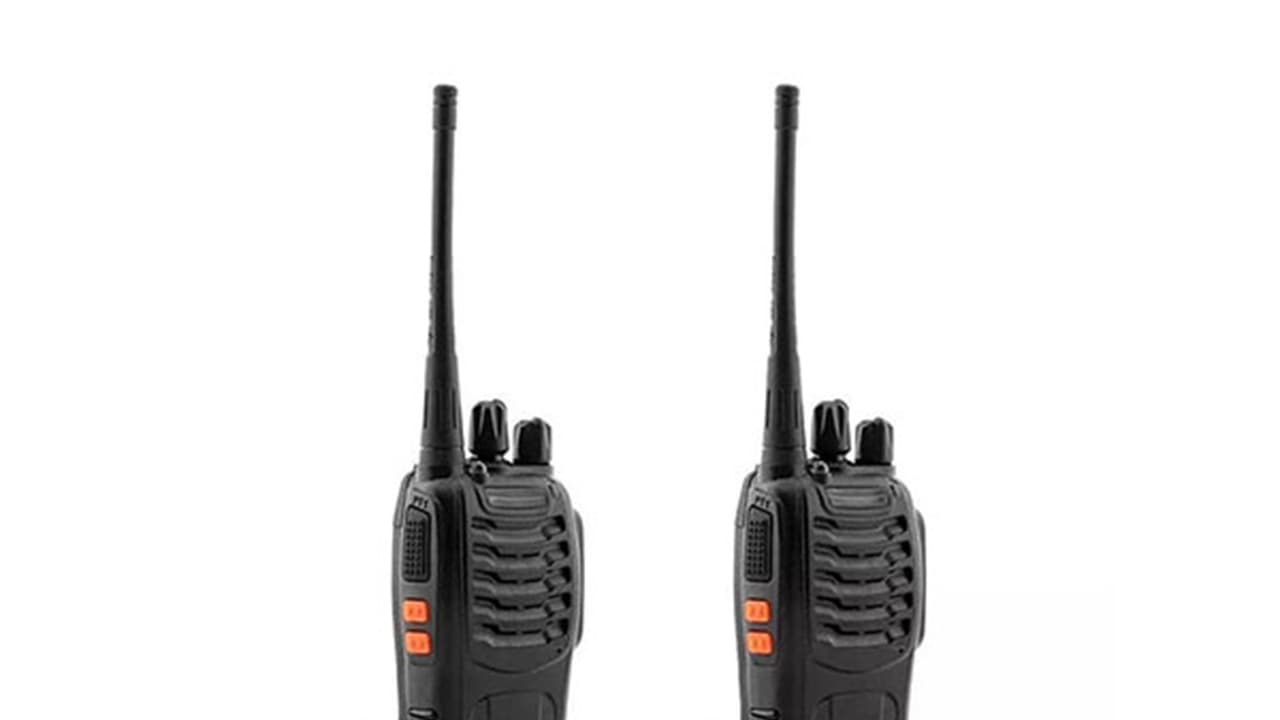
The CCPA has fined major e-commerce platforms, including Amazon, Flipkart, and Meta, Rs 10 lakh each for the large-scale illegal sale of walkie-talkies. The devices were sold without mandatory government approvals or consumer disclosures.
The Central Consumer Protection Authority (CCPA) has taken suo motu cognisance of the large-scale illegal listing and sale of walkie-talkies (Personal Mobile Radios/PMRs) on e-commerce platforms and imposed monetary penalties on leading online marketplaces for violations of consumer protection and telecom regulations.
Hefty Fines on Major E-commerce Platforms
The Authority imposed penalties of Rs 10 lakh each on Meesho, Flipkart, Amazon and Meta Platforms Inc, and Rs 1 lakh each on Chimiya, JioMart, Talk Pro and MaskMan Toys. It said several platforms have paid penalties, while payments from remaining entities are awaited.
CCPA Issues Directives for Compliance
The CCPA directed platforms to ensure walkie-talkies and other radio equipment are not listed or sold without the required government approvals. It also asked platforms to conduct regular self-audits, publish compliance certificates, and ensure regulated wireless equipment is sold only in full compliance with the law.
Investigation Uncovers Widespread Non-Compliance
The action followed the identification of over 16,970 non-compliant walkie-talkie listings across platforms. Notices were issued to 13 e-commerce entities, including Amazon, Flipkart, Meesho, JioMart, Meta (Facebook Marketplace), Talk Pro, Chimiya, MaskMan Toys, India Mart, TradeIndia, Antriksh Technologies, Vardaanmart and Krishna Mart.
The Authority found that several platforms were facilitating the sale of walkie-talkies operating on restricted and sensitive radio frequency bands without mandatory statutory approvals or disclosures. These devices were sold without informing consumers about the radio frequency range, whether the device requires a government licence, and whether it has obtained Equipment Type Approval (ETA), a mandatory technical approval issued by the Department of Telecommunications (DoT) through the Wireless Planning and Coordination (WPC) Wing. Many of these devices were found to operate in the Ultra High Frequency (UHF) band, which is a regulated spectrum also used by police, emergency services, disaster response agencies and other critical communication networks.
Misleading Advertisements and Lack of Information
Several products were wrongly advertised as "license-free" or "100% legal," even though their use requires government approval, the Ministry of Consumer Affairs said in a statement.
In some cases, walkie-talkies were sold as toys but had very long communication ranges of up to 30 kilometres. In addition, many product listings did not clearly mention important details such as the operating frequency or whether the device had Equipment Type Approval (ETA), making it difficult for consumers to know if the product was legal to buy and use, it added.
Legal Framework and Consumer Protection Breaches
The sale, import and use of walkie-talkies in India are regulated under the Indian Telegraph Act, 1885, the Indian Wireless Telegraphy Act, 1933, and the Use of Low Power and Very Low Power Short Range Radio Frequency Devices (Exemption from Licensing Requirement) Rules, 2018. Under these rules, only walkie-talkies operating strictly within the 446.0-446.2 MHz band are exempted from licensing, though even such devices must obtain ETA certification before being imported or sold.
Non-compliance, the Authority said, also constitutes misleading advertisement, unfair trade practice and deficiency in service under the Consumer Protection Act, 2019, and violates the Consumer Protection (E-Commerce) Rules, 2020. (ANI)
(Except for the headline, this story has not been edited by Asianet Newsable English staff and is published from a syndicated feed.)