
A WEF report finds global cooperation stable despite pressures, but its form is changing. Traditional multilateral frameworks are weakening, while smaller, interest-based partnerships gain ground, especially in trade, tech, and climate.
Global cooperation has broadly remained stable despite mounting geopolitical and economic pressures, according to the Global Cooperation Barometer 2026, released by the World Economic Forum (WEF) in collaboration with McKinsey & Company.
The report highlighted that while the overall level of cooperation has not significantly declined, the report found that its form is changing, with traditional multilateral frameworks weakening and smaller, interest-based partnerships gaining ground. "The overall level of global collaboration has held steady in the face of sustained pressure but its shape is changing as geopolitical tensions, conflict and fragmentation strain traditional multilateral approaches," it said in a report earlier this month.
Pillar-wise Cooperation Analysis
The Barometer assessed cooperation across five pillars: trade and capital; innovation and technology; climate and natural capital; health and wellness; and peace and security. Across these areas, cooperation increasingly reflected pragmatic, flexible arrangements rather than broad multilateral agreements.
Trade and Capital
In trade and capital, overall cooperation has flattened. Goods trade has grown more slowly than the global economy and is increasingly concentrated among geopolitically aligned partners. At the same time, services trade and select capital flows continued to expand, particularly where they support domestic industrial and strategic priorities. Initiatives such as the Future of Investment and Trade Partnership illustrated how smaller coalitions are filling gaps left by strained global trade institutions.
Innovation and Technology
Innovation and technology cooperation have strengthened, driven by surging data flows, IT services trade and investment in digital infrastructure. International bandwidth has quadrupled since before the COVID-19 pandemic. However, tighter controls on critical technologies and knowledge, especially between major powers, are reshaping collaboration, pushing cooperation toward trusted partners and new formats in areas such as artificial intelligence and advanced infrastructure.
Climate and Natural Capital
Climate and natural capital cooperation has also increased, supported by rising climate finance and record deployment of clean energy technologies. Yet the report cautioned that progress remained insufficient to meet global climate goals. Multilateral negotiations are proving difficult, prompting regional groupings, including the European Union and ASEAN, to link decarbonization with energy security and competitiveness.
Health and Wellness
Health and wellness cooperation has held steady, with outcomes remaining resilient following the pandemic. Beneath the surface, however, development assistance for health has declined sharply, raising concerns about future vulnerabilities in low- and middle-income countries, it noted.
Peace and Security
Peace and security remain the weakest pillar, with all tracked metrics below pre-pandemic levels, escalating conflicts, record-high displacement, and strained multilateral conflict-resolution mechanisms.
Adapting to a Fragmented World
The report summed up that while cooperation is not disappearing, leaders must adapt - remapping international engagement, strengthening resilience and matching the right cooperative format to each challenge in an increasingly fragmented world.
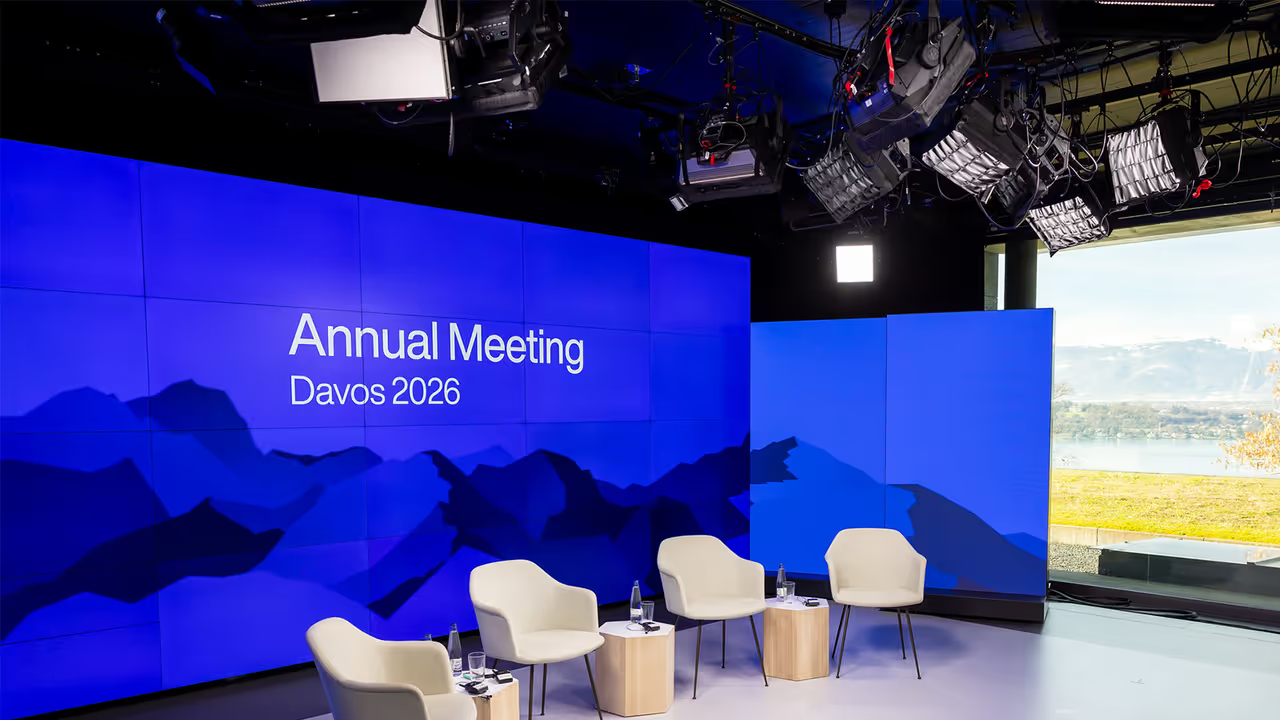
WEF Annual Meeting 2026
The World Economic Forum (WEF) will convene its 56th Annual Meeting in Davos from January 19 to January 23, 2026, bringing together nearly 3,000 leaders from more than 130 countries at a moment of heightened geopolitical tension, economic uncertainty and rapid technological transformation. Held under the theme "A Spirit of Dialogue," Davos 2026 seeks to provide an impartial platform for global leaders from government, business and civil society to reconnect, rebuild trust and explore collaborative solutions to challenges that increasingly transcend borders. (ANI)
(Except for the headline, this story has not been edited by Asianet Newsable English staff and is published from a syndicated feed.)