
While Western malls face a crisis, India's retail market is booming, attracting global capital. A report by Anarock highlights strong consumer demand, investor confidence, and an undersupply of quality space as key drivers for this growth.
As malls in western countries brace for an existential crisis, global capital is pivoting toward a market that seems to defy every global retail trend - India, according to real estate consultancy firm Anarock.
While the US has witnessed a net closure of nearly 1,200 mall stores since 2020, with rising vacancies forcing almost 40 per cent of empty malls to undergo rezoning or repurposing, India is experiencing a retail resurgence driven by strong consumer demand and growing institutional investor confidence, Anarock said this week.
Capital Inflow and Foreign Brand Entry
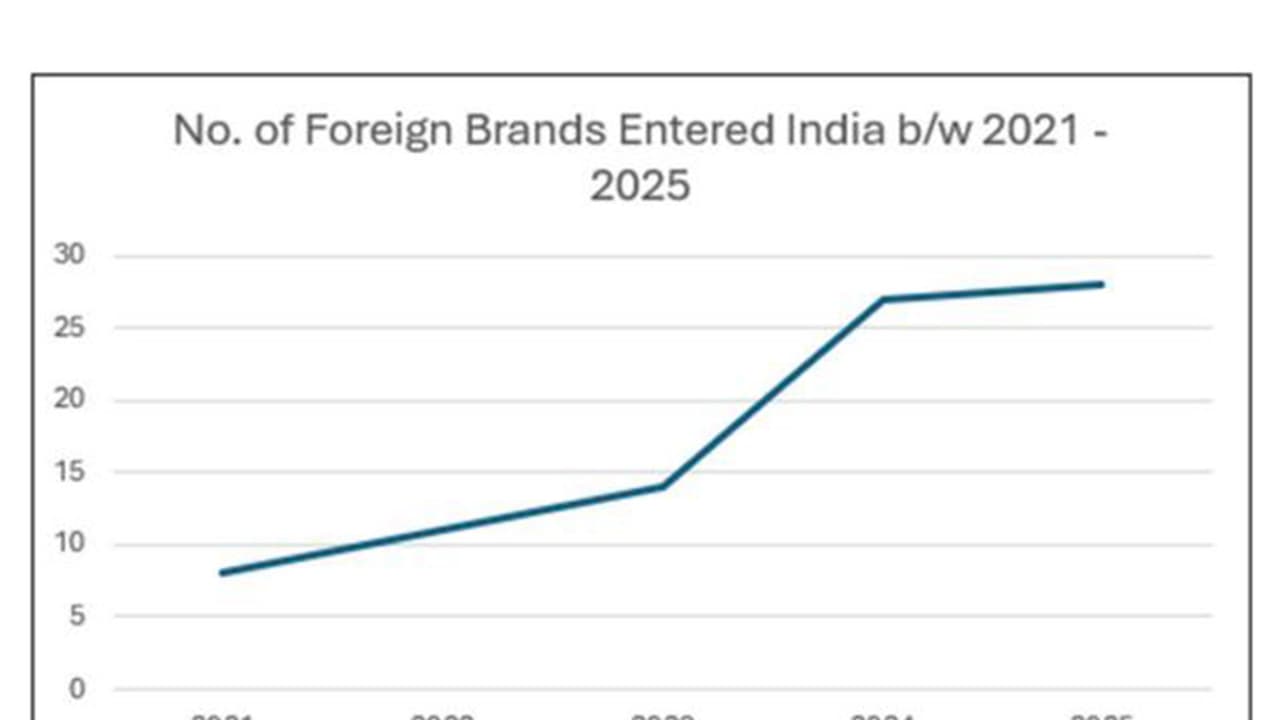
According to Anuj Kejriwal, CEO, Retail Leasing and Industrial and Logistics, Anarock Group, Indian malls are set to see over USD 3.5 billion in capital inflows over the next 3 years. "88+ foreign brands have entered the Indian retail market and are seeking to expand aggressively. Several more global brands are in the pipeline, seeking space in the severely restricted Grade-A assets currently available," Anuj Kejriwal added.
Drivers of India's Retail Boom
As a sharp counterpoint to Western countries' markets, India's massive unmet demand from a young consumer base and limited organised retail competition, backed by supportive FDI policies, are precisely what foreign brands and investors now seek.
Undersupply of Quality Retail Space
According to Anarock, a primary confidence driver is the extreme undersupply of quality retail space in the country. India's per capita retail stock remains among the lowest in the world, compared with the US and China. "This gap, combined with India's per-capita income nearly doubling in the last decade, has created a demand-supply mismatch virtually unheard of in global retail," added Kejriwal.
"Grade-A malls are running near-full occupancy, reporting 95-100 per cent occupancy with long waitlists for key zones. Rental growth has consistently surpassed pre-pandemic levels, and developers now find leasing cycles outpacing construction cycles - a rarity anywhere in the world."
A USD 6 Trillion Consumption Economy in the Making
With its rare combination of demographic demand drivers, India's consumption story is creating new headlines. Anarock said that the country is on track to become a USD 6 trillion consumption economy by 2030.
Malls as Lifestyle and Entertainment Hubs
Unlike their Western counterparts, Indian malls are lifestyle destinations anchored in entertainment, dining, and social experiences. Daily foot traffic in major malls routinely exceeds 20,000 on weekdays and surges to over 40,000 on weekends. F&B (food and beverage) and entertainment now account for 30-35 per cent of footfall, resulting in a resilient retail mix that is largely immune to the online retail disruptions undermining Western malls.
Resilience Against E-commerce Disruption
Among the most attractive dynamics for global investors is that Indian malls have not capitulated to e-commerce - they are, in fact, benefiting from it, Anarock has asserted, noting that India's e-commerce penetration remains around 8 per cent, far below the 20 per cent plus levels seen in China and the US. (ANI)
(Except for the headline, this story has not been edited by Asianet Newsable English staff and is published from a syndicated feed.)